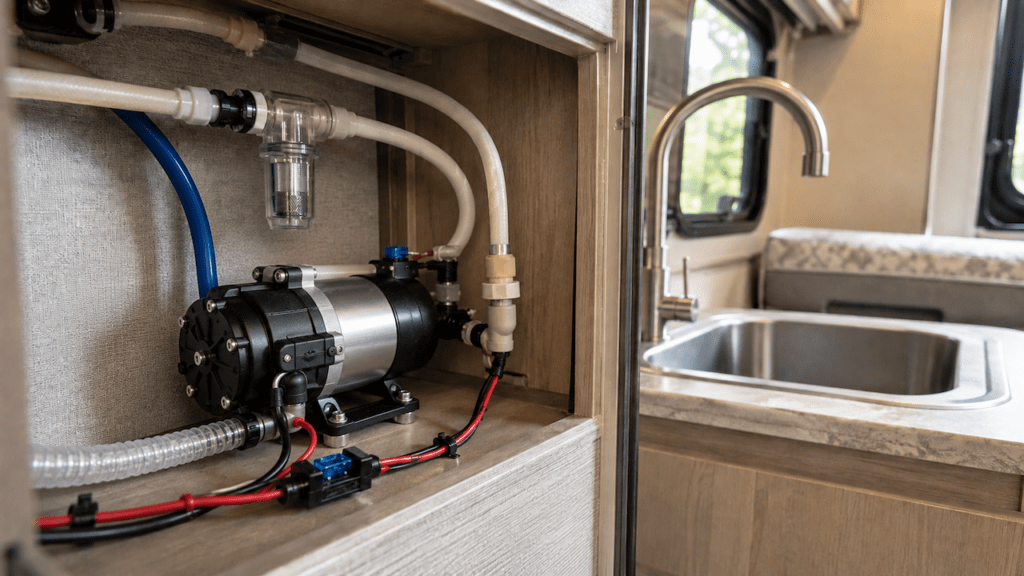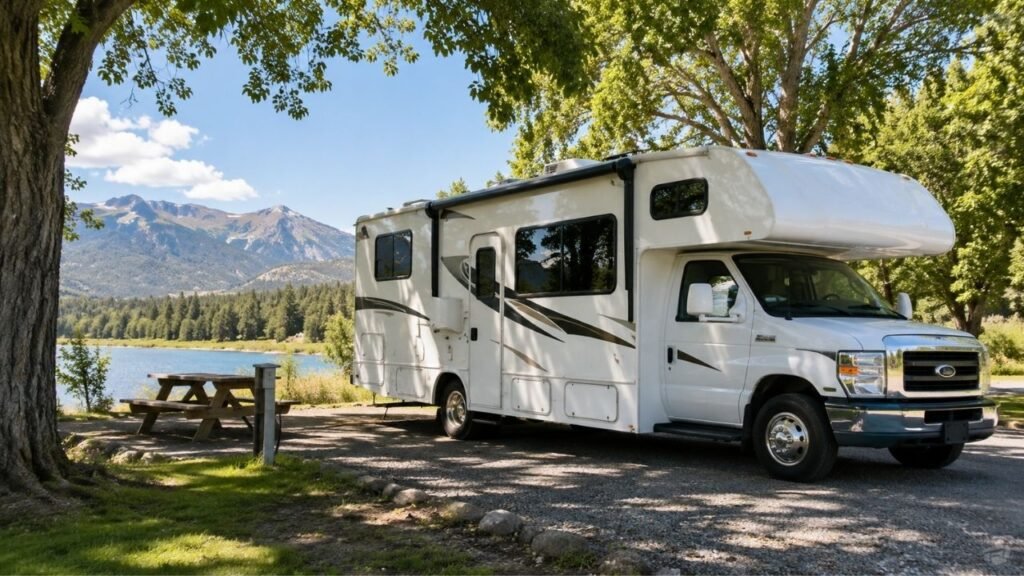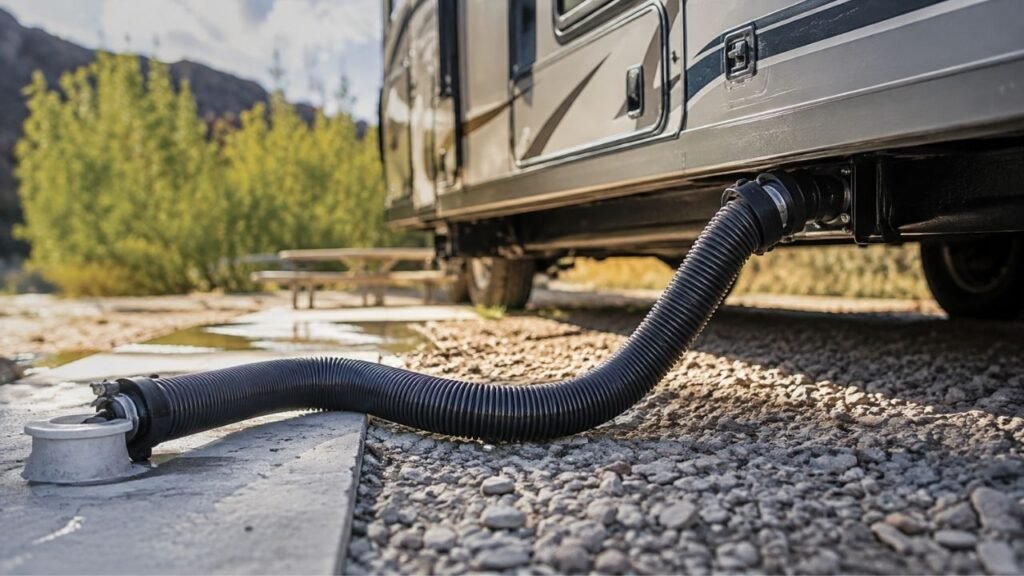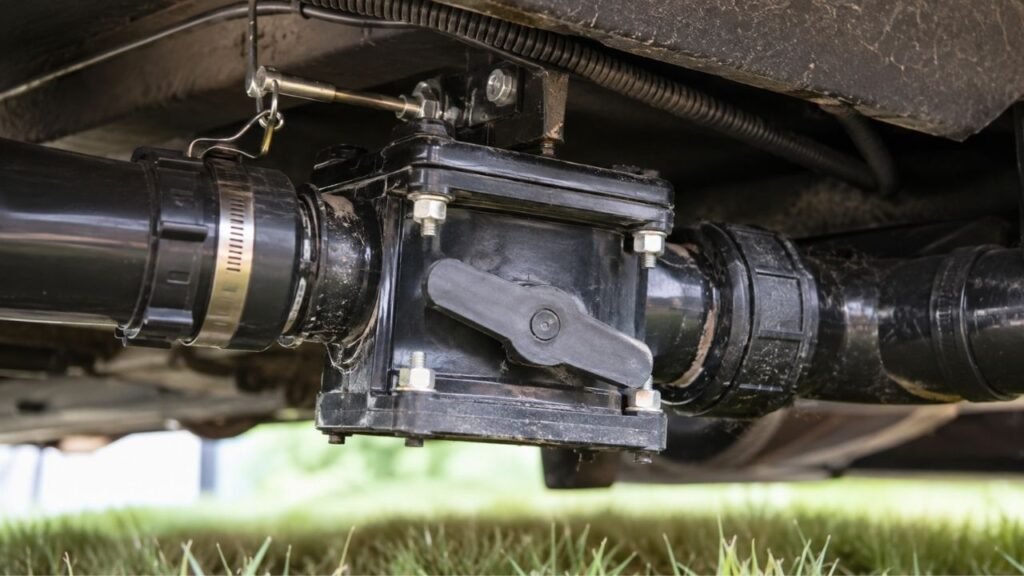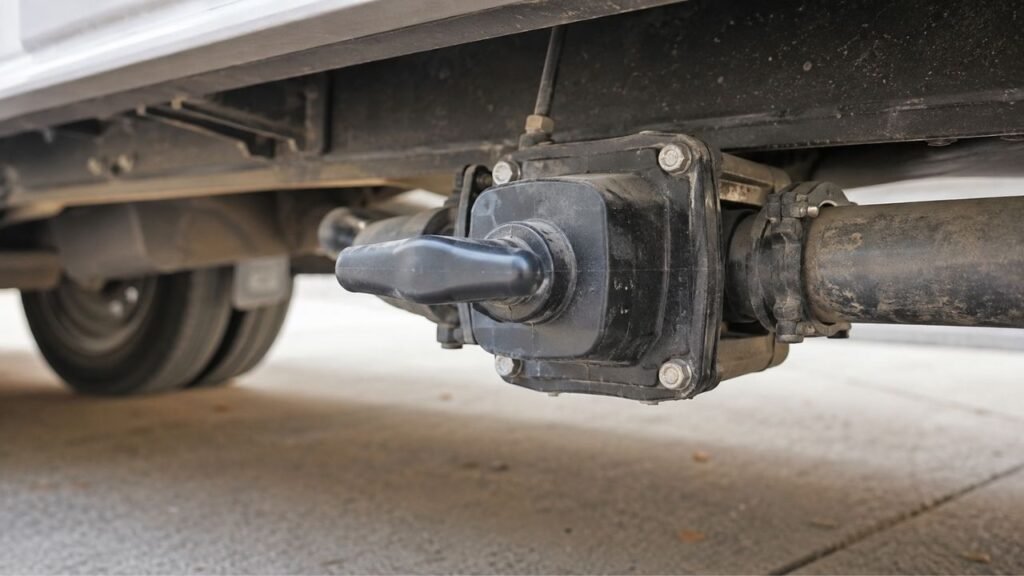
An RV macerator pump grinds waste and pumps it through a smaller hose, while gravity dumping lets wastewater flow naturally through a larger 3-inch sewer hose. Gravity dumping is usually simpler and faster for nearby downhill connections. A macerator gives you more flexibility when the sewer inlet is farther away, difficult to reach, or slightly uphill.
In this guide, I’ll compare how both systems work, dumping speed, distance, maintenance, cleanup, reliability, cost, and the situations where each option makes the most sense.
Key Takeaways
- Gravity dumping uses a large sewer hose and requires no electricity.
- A macerator grinds waste before pumping it through a smaller hose.
- Gravity dumping usually works best at normal RV dump stations.
- A macerator is helpful for longer or difficult sewer connections.
- Macerator pumping distance depends on the specific pump and hose.
- Gravity systems have fewer electrical and mechanical failure points.
- Macerator pumps require more cleaning and occasional maintenance.
- Keeping gravity-dumping capability provides a useful backup option.
RV Macerator Pump vs Gravity Dumping: Quick Comparison
Both systems empty the same RV holding tanks, but they move wastewater very differently. This table gives you the main differences before we look at each one closely.
| Comparison | Gravity Dumping | RV Macerator Pump |
| Waste movement | Natural gravity flow | Powered pumping |
| Waste processing | Waste passes through normally | Solids and paper are macerated |
| Typical hose | Large 3-inch sewer hose | Smaller discharge hose |
| Downhill slope needed | Yes | Not always |
| Can pump uphill | No | Yes, within pump limits |
| Long-distance dumping | Limited | Better suited |
| Dumping speed | Usually fast with good slope | Depends on pump and hose |
| Electrical power | None | Usually 12V DC |
| Moving parts | Essentially none | Motor and internal pump components |
| Setup complexity | Simple | Slightly more involved |
| Cleaning | Sewer hose and fittings | Pump and discharge hose |
| Maintenance | Low | Moderate |
| Storage | Large hose takes more room | Smaller hose, plus pump and wiring |
| Main failure risks | Leaks, kinks, poor slope | Clogs, fuse, wiring, motor, impeller |
| Best use | Standard campground connections | Long, uphill, or awkward connections |
| Upfront cost | Lower | Higher |
For most campground hookups, gravity dumping remains the easier choice. The macerator becomes valuable when your dumping situation prevents gravity from doing the job properly.
What Is Gravity Dumping in an RV?
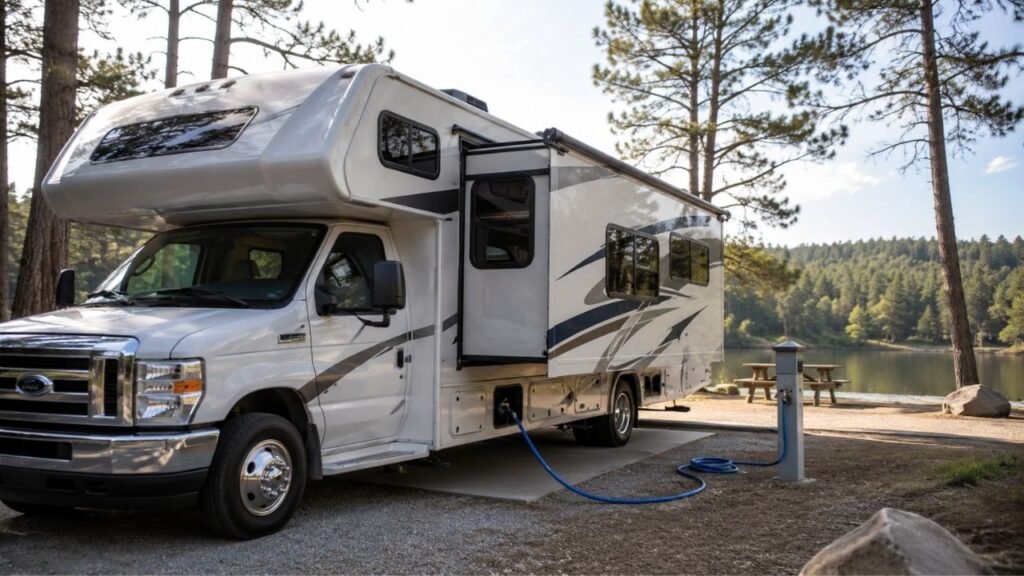
Gravity dumping is the traditional way to empty RV black and gray tanks. You connect a large sewer hose between the RV waste outlet and an approved sewer inlet, then let gravity move the wastewater.
There is no pump pushing waste through the hose. That means the sewer inlet should sit lower than the RV outlet. The hose should also maintain a generally downward path.
Most RV sewer hoses use a roughly 3-inch connection. That large opening allows a substantial amount of wastewater to leave the tank quickly.
The simplicity is one of gravity dumping’s biggest advantages. There is no motor, fuse, power cable, or pumping mechanism involved.
If your RV is parked beside a normal campground sewer connection, gravity is often all you need.
How Does an RV Macerator Pump Work?
A macerator changes the dumping process by adding an electric pump between the RV and sewer connection. Instead of depending entirely on slope, the pump processes the wastewater and pushes it toward the drain.
The Macerator Breaks Down Solid Waste
Inside the pump is a cutting or grinding mechanism. Its job is to break normal black-tank solids and toilet paper into much smaller particles.
The result becomes a more pumpable slurry.
This allows wastewater to move through a hose much smaller than the traditional 3-inch RV sewer hose.
However, a macerator is not a garbage disposal.
Wet wipes, rags, sanitary products, and other foreign objects can jam or damage the pumping mechanism.
The Pump Pushes Waste Through a Smaller Hose
Once the waste has been processed, the pump forces it through the discharge hose.
That powered flow creates the biggest advantage of a macerator. You are no longer depending entirely on gravity.
You may be able to route the discharge hose:
- Over a longer distance
- Across relatively level ground
- Around obstacles
- Toward an approved connection located above the easiest gravity path
The exact limitations depend on your particular pump.
Portable vs Built-In RV Macerator Systems
Not every RV macerator works the same way.
A portable macerator pump attaches temporarily to the RV’s standard waste outlet. You connect it when needed and remove it after dumping.
A built-in macerator system stays permanently installed in the RV. These systems are common on some motorhomes and higher-end coaches.
Built-in systems may use different pumps, discharge hose sizes, electrical circuits, and flow rates.
This is why you should never assume one macerator’s specifications apply to every system.
Which Dumps an RV Tank Faster?
A traditional 3-inch gravity hose will often empty a holding tank quickly when the sewer connection is close and properly downhill.
The reason is simple. A large hose provides a wide path for wastewater to leave the tank.
When you open a full black-tank valve, gravity can create a strong initial rush through that large opening.
A portable macerator works differently. It has to grind and pump the waste through a narrower discharge hose.
That narrower hose creates more resistance.
This doesn’t mean every macerator is slow. Some powerful built-in systems can move impressive amounts of wastewater quickly.
However, a macerator should not automatically be viewed as a speed upgrade.
Its biggest advantage is flexibility, not raw dumping speed.
Macerator performance can also change depending on:
- Discharge hose diameter
- Hose length
- Vertical rise
- Sharp bends
- Kinks
- Pump condition
- Battery voltage
- Electrical wiring
- Amount of material reaching the pump
A short discharge hose may provide noticeably better flow than an extremely long one.
If you are parked five feet from a downhill campground sewer inlet, gravity usually makes more sense.
If the sewer connection is 50 feet away behind your house, the macerator suddenly becomes much more useful.
Can a Macerator Pump Waste Uphill or Over Long Distances?
This is where a macerator provides an advantage that gravity cannot easily match. The pump creates pressure, allowing wastewater to move where a conventional sewer hose may struggle.
Horizontal Pumping Distance
Many RV macerators can move wastewater substantially farther than you would normally want to run a 3-inch gravity hose.
Some portable models are designed for very long horizontal runs when used with the correct reinforced discharge hose.
But don’t buy a pump based only on a general statement such as:
“RV macerator pumps can pump 100 feet.”
Every pump has its own limitations.
Before buying one, check the manufacturer’s specifications for:
- Maximum recommended hose length
- Required hose diameter
- Expected flow rate
- Electrical requirements
- Duty cycle
Longer hoses normally create more resistance.
That means flow may decrease as the discharge run becomes longer.
Vertical Lift Is Different From Horizontal Distance
This distinction is extremely important.
A pump capable of moving wastewater 100 feet horizontally does not automatically have the ability to pump it 100 feet vertically.
Vertical lift creates additional pressure against the pump.
Even a modest uphill run can significantly affect performance.
If your sewer inlet sits above the RV outlet, check the manufacturer’s published lift or head-pressure specification.
Don’t estimate vertical pumping capability from the horizontal-distance rating.
Hose Diameter and Length Affect Pump Performance
Think of the discharge hose as another restriction the pump must overcome.
Performance generally becomes harder as you add:
- Longer hose runs
- Smaller hose diameter
- More vertical rise
- Sharp bends
- Kinks or flattened sections
A properly sized reinforced discharge hose usually performs better than an undersized or damaged hose.
You should also avoid casually substituting another hose simply because the fittings happen to connect.
Follow the hose specifications provided for your pump.
Does Gravity Dumping Empty the Black Tank Better?
Gravity dumping may produce a stronger initial rush of wastewater because the tank empties through a large 3-inch opening.
That high-volume flow can help move loose solids toward the outlet, especially when the black tank contains plenty of water.
A macerator restricts that flow through a smaller discharge system. It processes the solids instead of allowing the entire tank contents to rush through a large hose.
However, that does not mean a macerator automatically leaves the tank dirty.
Black-tank cleanliness also depends on:
- Tank shape
- Outlet position
- Water level
- Toilet paper use
- Existing buildup
- Venting
- Flushing habits
- How completely you rinse afterward
Whichever dumping method you use, water remains one of your best tools.
Avoid allowing the black tank to become excessively dry. After dumping, follow your RV manufacturer’s recommended flushing and tank-care routine.
A macerator moves wastewater. It does not replace proper black-tank maintenance.
Setup, Cleanup, and Storage: Which Is Easier?
Neither system is particularly complicated once you become familiar with it. However, the steps and equipment you handle are different.
Gravity Dump Setup
A normal gravity setup is straightforward.
You typically:
- Connect the sewer hose to the RV outlet.
- Secure the other end into the sewer inlet.
- Position the hose with a downward path.
- Open the appropriate waste valve.
- Allow the tank to drain.
- Rinse and disconnect afterward.
Many RVers place the sewer hose on a support to maintain a consistent slope.
This becomes especially useful at full-hookup campsites where the hose remains connected for several days.
Macerator Pump Setup
A portable macerator adds several steps.
You generally need to:
- Attach the pump securely to the RV waste outlet.
- Connect the discharge hose.
- Route the discharge hose to the approved sewer connection.
- Connect the pump to its required electrical supply.
- Open the correct tank valve.
- Operate the pump according to its instructions.
- Flush the pump before storage.
Because the system operates under pressure, check your fittings before starting.
You do not want a loose wastewater connection separating while the pump is running.
Cleanup After Dumping
Gravity systems mainly require rinsing the sewer hose and fittings.
A macerator also needs the internal pump and discharge line flushed.
You want clean water moving through the pump before putting it into storage.
That helps remove wastewater that could otherwise remain around the impeller, cutters, seals, or hose.
Never use your drinking-water hose as the macerator discharge hose.
Any hose used for wastewater should remain permanently separated from your potable-water equipment.
Storage Space
A compressed 3-inch sewer hose can take considerable storage space.
For smaller Class B motorhomes, truck campers, and compact travel trailers, this can become annoying.
A macerator uses a much narrower discharge hose.
But remember that the pump itself also needs storage. You may also have:
- Electrical cables
- Hose fittings
- Adapters
- Caps
- Cleaning accessories
A macerator setup may still be easier to organize, but it isn’t equipment-free.
Power Requirements and Reliability
Gravity dumping wins easily when simplicity is the priority. Macerator systems work well, but they introduce electrical and mechanical components that a standard sewer hose does not have.
Gravity Dumping Needs No Electrical Power
You can dump through a conventional sewer hose without:
- RV battery power
- Shore power
- An inverter
- Electrical wiring
- A fuse
- A working pump motor
As long as the tank valve works and gravity has somewhere to take the wastewater, the basic system can function.
That simplicity makes gravity dumping extremely dependable.
Macerator Pumps Need a Suitable Power Supply
Most portable RV macerators use 12-volt DC power.
They can draw considerably more current than a small RV accessory.
That means proper wiring matters.
Using wiring that is too small or a poor electrical connection can cause:
- Voltage drop
- Slow pump operation
- Excess heat
- Blown fuses
- Pump shutdown
- Premature motor wear
Never replace a repeatedly blowing fuse with a higher-rated fuse simply to keep the pump running.
A fuse that repeatedly fails usually means something needs attention.
What Happens if the Macerator Fails?
A macerator can stop working for several reasons.
Common possibilities include:
- Blown fuse
- Weak electrical connection
- Low voltage
- Jammed impeller
- Foreign material around the cutter
- Blocked discharge hose
- Overheated motor
- Damaged wiring
- Worn internal components
If your macerator is your only dumping method, a failure can leave you unable to empty a full tank.
That is one reason I like having conventional gravity-dumping capability available whenever the RV plumbing allows it.
The regular sewer hose may not be exciting, but it can save your trip when the powered system refuses to cooperate.
Which System Requires More Maintenance?
Gravity dumping involves fewer components, so there is naturally less to maintain. A macerator adds moving and electrical parts that need occasional inspection.
For gravity dumping, your maintenance mainly includes:
- Inspect the sewer hose for cracks and pinholes.
- Check bayonet fittings for damage.
- Replace worn seals when necessary.
- Avoid dragging the hose across sharp gravel.
- Prevent severe kinks.
- Rinse the hose after dumping.
- Replace the hose when deterioration appears.
For a macerator system, you may also need to:
- Rinse the pump thoroughly after use.
- Inspect the discharge hose.
- Check electrical connections.
- Inspect the fuse and fuse holder.
- Watch for slower pump performance.
- Check the impeller when recommended.
- Prevent foreign objects from entering the pump.
- Follow the manufacturer’s maximum duty cycle.
- Avoid excessive dry running.
- Winterize the pump when freezing temperatures are possible.
If your macerator starts taking much longer than normal, don’t assume that is simply how the pump ages.
Reduced flow can indicate a restriction, worn impeller, weak voltage, clogged hose, or another developing problem.
What Should Never Go Through an RV Macerator Pump?
A macerator can process normal human waste and appropriate toilet paper, but that doesn’t mean it can grind everything entering your black tank.
Keep items such as these out of the system:
- Wet wipes
- Baby wipes
- Paper towels
- Feminine hygiene products
- Rags
- Cleaning cloths
- Cotton products
- Hard objects
- Plastic pieces
- Excessive foreign debris
Be especially careful with products marketed as “flushable.”
Something that can technically pass through a residential toilet may still create problems inside an RV holding tank or macerator pump.
For RV plumbing, the safest approach remains simple: waste, appropriate toilet paper, and plenty of water.
Is a Macerator Pump Cleaner and Less Messy?
A macerator can certainly feel cleaner in some situations.
The smaller discharge hose is easier to route and usually easier to control than a large flexible sewer hose.
Built-in macerator systems can be especially convenient because you may handle fewer loose components during each dump.
However, a macerator does not eliminate the possibility of a mess.
Remember that the wastewater is now being pumped under pressure.
A loose fitting, damaged hose, or failed connection can release wastewater much more aggressively than a slow gravity leak.
Before starting the pump:
- Check every connection.
- Make sure the discharge hose is secure.
- Inspect the hose for damage.
- Confirm the sewer end cannot move.
- Avoid sharp bends and kinks.
Both dumping methods can be clean when handled correctly.
Both can also become unpleasant very quickly when equipment is damaged or improperly connected.
Gravity Dumping vs Macerator Pump Cost
A traditional gravity system is normally the cheaper option.
You mainly need a quality sewer hose, fittings, an inlet adapter, and possibly a hose support.
There is no pump motor to purchase.
There are also fewer components that may eventually require servicing.
A macerator system can involve:
- The pump itself
- Discharge hose
- Electrical wiring
- Fuse protection
- Connectors
- Replacement impellers
- Replacement seals
- Professional installation for built-in systems
That doesn’t make the macerator poor value.
Think about what the extra equipment actually solves.
If you regularly need to reach a distant sewer cleanout at home, the pump may save you considerable trouble.
If every sewer connection you use sits five feet from your RV, you may rarely benefit from it.
The better value is the system that solves your real dumping problems.
When Should You Use Gravity Dumping?
Gravity dumping should usually be your first choice when the campsite gives you favorable conditions.
It works particularly well when:
- The sewer inlet sits below your RV waste outlet.
- The sewer connection is close to your RV.
- You can maintain a continuous downhill hose path.
- You primarily stay at full-hookup campsites.
- You frequently use normal RV dump stations.
- You want the simplest possible dumping system.
- You want minimal equipment maintenance.
- You want fast drainage without electrical power.
- You don’t need long-distance waste transfer.
For a normal campground connection, adding a pump simply because you can may create unnecessary work.
When gravity works properly, allow it to do the job.
When Is an RV Macerator Pump Better?
The macerator starts making sense when the dumping location makes a conventional sewer hose inconvenient or impossible.
Consider one when:
- The sewer inlet sits higher than your easiest hose route.
- You frequently need a longer discharge run.
- A large 3-inch hose cannot easily pass around obstacles.
- Your home sewer connection is far from your RV.
- You have limited sewer-hose storage space.
- Your motorhome already includes a built-in system.
- You frequently encounter unusual campsite layouts.
- You need controlled powered wastewater transfer.
- The pump’s specifications match your required distance and elevation.
The key is buying the pump for a specific capability.
Don’t assume it is automatically an upgrade over gravity dumping.
Can You Use Both a Macerator and Gravity Dumping?
Yes, and using both can give you the most flexible RV waste setup.
You might use gravity dumping during normal campground stays because it is quick and simple.
Then you can pull out the macerator when the sewer connection is farther away or difficult to reach.
Having both methods can also give you a backup.
If the macerator motor stops, a fuse blows, or the pump jams, the conventional hose may still let you empty the tanks at the next suitable dump station.
This is particularly useful for full-time RVers and long-distance travelers.
Of course, your exact options depend on your RV’s plumbing configuration.
Some built-in systems provide easy access to conventional dumping. Others may be configured differently.
Know how your system works before you need the backup.
Can You Use a Macerator to Dump an RV at Home?
A macerator can make home dumping much easier when your approved sewer connection sits farther from the RV.
Instead of running a large 3-inch sewer hose across the property, the pump may allow you to use a much smaller wastewater discharge hose.
This can also help when the approved connection isn’t perfectly downhill from your RV.
However, being physically able to reach a drain does not mean you are legally allowed to dump there.
Before emptying RV tanks at home, verify that the connection is approved for RV wastewater.
Requirements may depend on:
- Municipal sewer rules
- Local sanitation regulations
- Septic-system design
- Property restrictions
- Environmental regulations
Never dump RV black or gray wastewater into a storm drain, roadside drain, gutter, or onto the ground.
If you’re unsure whether a home connection is acceptable, check with the local sewer authority or a qualified septic professional first.
RV Macerator Pump vs Gravity Dumping: Which Should You Choose?
For most RV owners, the answer depends on where you normally dump rather than which system appears more advanced.
Choose gravity dumping if:
- Your sewer connections are normally close.
- The sewer inlet is usually downhill.
- You want a simple system.
- Fast high-volume dumping matters.
- You want minimal maintenance.
- You don’t want another electrical device to troubleshoot.
Choose a macerator pump if:
- You regularly need longer discharge runs.
- You encounter uphill sewer connections.
- Your hose route must pass around obstacles.
- An approved home cleanout is difficult to reach.
- A smaller discharge hose fits your RV lifestyle better.
- You don’t mind maintaining a powered pump.
Consider keeping both if:
- You travel frequently.
- Campsite layouts vary considerably.
- Your macerator is your preferred dumping method.
- You want a simple emergency backup.
You don’t have to treat this decision as one system replacing the other forever.
For many RVers, gravity is the everyday tool and the macerator is the problem-solving tool.
Final Verdict
For most campground and dump-station situations, gravity dumping is still the best default choice. A conventional 3-inch sewer hose is simple, inexpensive, fast under favorable conditions, and requires no electricity.
An RV macerator pump becomes the better tool when your dumping situation fights gravity. Long distances, awkward hose routing, limited storage, and an elevated sewer connection can justify the added equipment.
I would not buy a macerator expecting every dump to become faster or easier. Buy one because you actually need the flexibility it provides.
And if your RV supports both methods, keeping a basic gravity sewer hose gives you useful backup protection. When a motor, fuse, or impeller decides not to cooperate, simple gravity can suddenly become very valuable.
Related FAQs
The questions below cover a few practical details that often come up when RV owners compare powered maceration with conventional gravity dumping.
Is an RV Macerator Pump Better Than Gravity Dumping?
Not necessarily. Gravity dumping is usually better for nearby downhill sewer connections because it is simple, fast, and requires no electricity. A macerator becomes better when you need to move wastewater farther, navigate an awkward hose route, or pump against elevation.
Is a Macerator Pump Faster Than Gravity Dumping?
A macerator is not automatically faster. A large 3-inch gravity hose can empty a tank very quickly when it has a proper downhill route. Macerator speed depends on pump capacity, hose diameter, hose length, elevation, voltage, and restrictions in the discharge line.
Can an RV Macerator Pump Push Waste Uphill?
Yes, many RV macerator pumps can move wastewater uphill within their rated limits. The amount of vertical lift varies by pump, so check the manufacturer’s lift or head specifications rather than assuming the horizontal-distance rating also applies vertically.
How Far Can an RV Macerator Pump Waste?
Pumping distance varies by pump model, hose diameter, hose condition, elevation, and bends. Some pumps can handle substantial horizontal distances, but flow normally decreases as resistance increases. Always plan your setup around the specifications for your exact pump.
Can You Use a Garden Hose With an RV Macerator Pump?
Some macerator pumps are designed to discharge through a reinforced hose with garden-hose-style fittings, but you should follow the manufacturer’s required hose diameter and construction. Any hose used for wastewater must remain completely separate from hoses used for drinking water.
Does a Macerator Pump Empty the Black Tank Completely?
A macerator can evacuate the tank effectively, but using one does not guarantee the tank is completely clean. Water level, tank shape, buildup, outlet position, flushing practices, and the condition of the pump all affect how thoroughly waste leaves the tank.
Can You Gravity Dump if the Macerator Stops Working?
You may be able to gravity dump if your RV still provides access to a conventional waste outlet or bypass. Built-in macerator systems vary, so learn how your particular plumbing is arranged before relying on gravity as an emergency backup.
Does an RV Macerator Pump Need Electricity?
Most RV macerator pumps require electrical power, commonly from a 12-volt DC system. The correct fuse size, wiring, and current requirements depend on the specific pump. Gravity dumping requires no electrical power.
Should You Keep a Sewer Hose if You Have a Macerator?
Keeping a conventional sewer hose is a good idea when your RV supports gravity dumping. It gives you a simple backup if the macerator develops an electrical problem, blows a fuse, overheats, jams, or otherwise stops working during a trip.
Can You Leave a Macerator Pump Connected All the Time?
That depends on the type of system. Built-in macerators are designed to remain installed, while many portable macerator pumps are intended to be connected only during dumping. Follow the installation and storage instructions for your particular model.
Is a Macerator Pump Good for Full-Time RV Living?
It can be useful for full-time RVers because you encounter many different campsite layouts and sewer locations. However, a traditional sewer hose remains valuable for ordinary hookups and provides an important backup if the powered system develops a problem.
Can a Macerator Pump Handle Gray Water?
Most RV macerator setups can transfer gray water as part of the dumping process, although system designs vary. Some built-in units also include gray-water bypass arrangements. Follow your RV and pump manufacturer’s instructions for operating the gray tank with your specific system.

Steven Parker writes about everyday RV life, from setup tips to long-term living decisions. His content reflects a calm, experienced approach to RV ownership and travel. He focuses on comfort, reliability, and realistic expectations.