If your RV macerator is running but not pumping waste, the most likely causes are a closed or restricted waste valve, clogged inlet, kinked discharge hose, air entering the pump, or a worn or damaged impeller. The motor can still spin normally even when the pump cannot move wastewater.
Below, I’ll help you trace the problem from the holding tank to the sewer connection. You can usually find the restriction without immediately replacing the entire macerator pump.
Key Takeaways
- Stop the macerator if the motor runs without moving wastewater.
- Check the waste valve before taking the pump apart.
- Inspect the entire discharge hose for kinks and blockages.
- A running motor does not guarantee the impeller is pumping.
- One affected tank usually points toward that tank’s valve or outlet.
- Both affected tanks suggest a shared pump or discharge problem.
- Air leaks around inlet fittings can prevent proper suction.
- A worn impeller can spin without creating enough pumping force.
- Check polarity if the problem began after wiring work.
- Never keep running a dry or blocked macerator continuously.
Why Can an RV Macerator Run Without Pumping Anything?
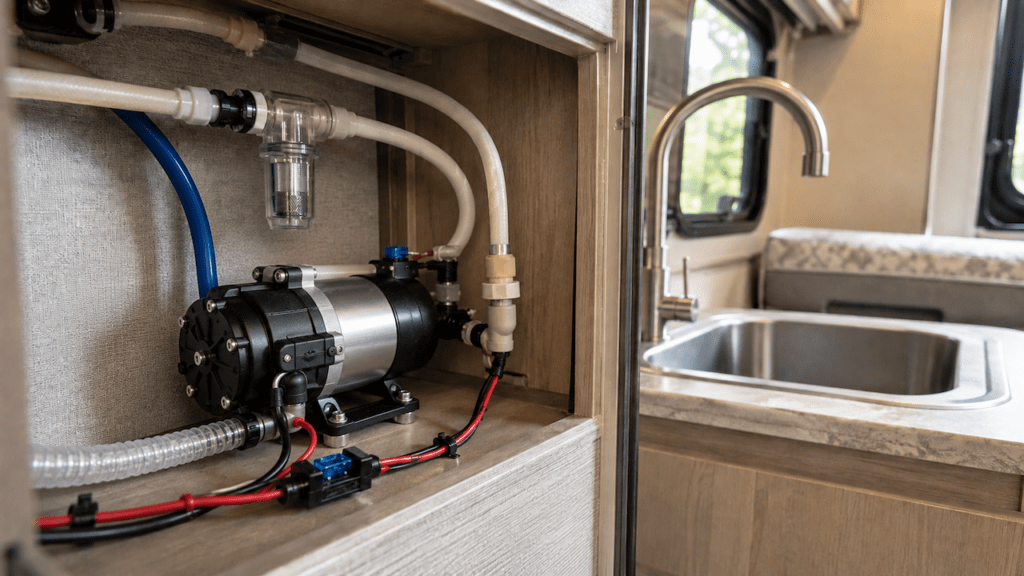
Your macerator contains more than just an electric motor. The motor turns internal components that grind waste and move liquid through the discharge hose.
That means hearing the motor run only confirms electrical operation. It does not prove wastewater is actually moving through the pump.
For successful pumping, several things must happen together.
Wastewater must leave the holding tank. It must pass through the gate valve and reach the macerator inlet. The impeller must then create enough suction and pressure to push that waste through the discharge hose.
A problem anywhere along that path can stop the flow.
For example, the motor may sound completely normal while a worn impeller spins inside the housing. Likewise, a perfectly healthy pump cannot move waste through a completely kinked hose.
The easiest approach is therefore to stop thinking only about the pump.
Instead, troubleshoot the entire waste path:
Holding tank → gate valve → pump inlet → macerator → discharge hose → sewer connection
Finding where the flow stops usually reveals the actual problem.
Quick Diagnosis: What Does Your Macerator Symptom Mean?
Before disconnecting anything, pay attention to what the macerator is doing. Small differences in sound and flow can point you toward the right area.
| What You Notice | Most Likely Problem | First Thing to Check |
| Motor runs but nothing exits | Closed valve, blocked inlet, hose restriction, bad impeller | Check the complete waste-flow path |
| Waste spurts and stops | Air leak, low liquid level, partial blockage | Check tank level and connections |
| Pump sounds unusually high-pitched | Pump may be running too dry | Switch it off |
| Motor slows or sounds strained | Heavy restriction or clogged hose | Inspect inlet and discharge hose |
| Gray tank pumps but black tank does not | Black valve or black tank outlet | Check black tank flow |
| Black tank pumps but gray tank does not | Gray valve or gray outlet | Check gray tank flow |
| Neither tank pumps | Shared pump or discharge problem | Check common plumbing |
| Problem started after changing hoses | Kink or restrictive hose | Inspect the new hose setup |
| Problem started after rewiring | Reversed polarity possible | Verify pump wiring |
| Pump works after turning shaft manually | Impeller may be sticking | Inspect and clean pump |
| Pump repeatedly overheats | Restriction or insufficient flow | Stop and locate restriction |
Most Common Reasons an RV Macerator Runs but Does Not Pump Waste
Several problems can create this frustrating situation. Start with simple flow restrictions before assuming the motor or entire pump has failed.
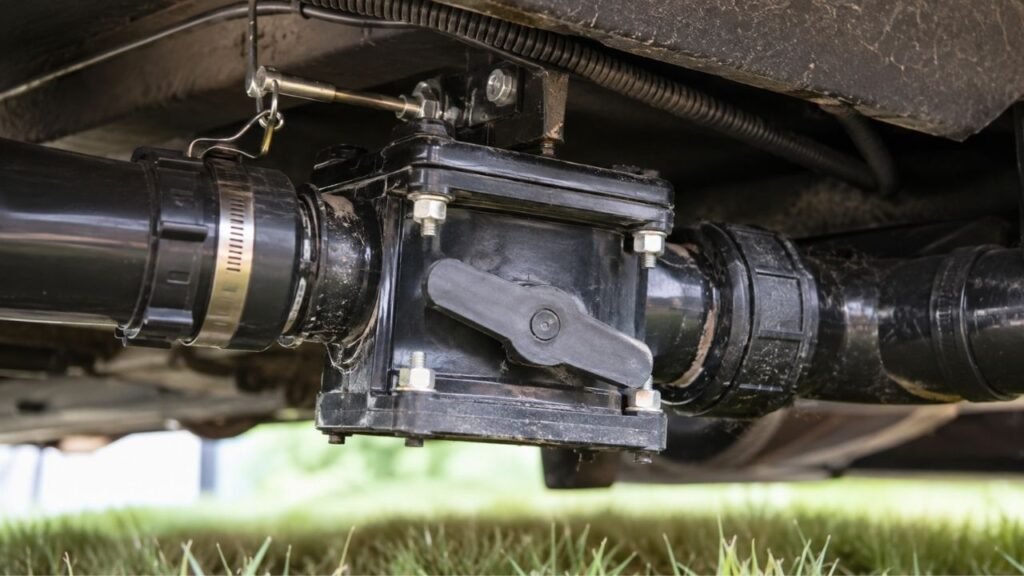
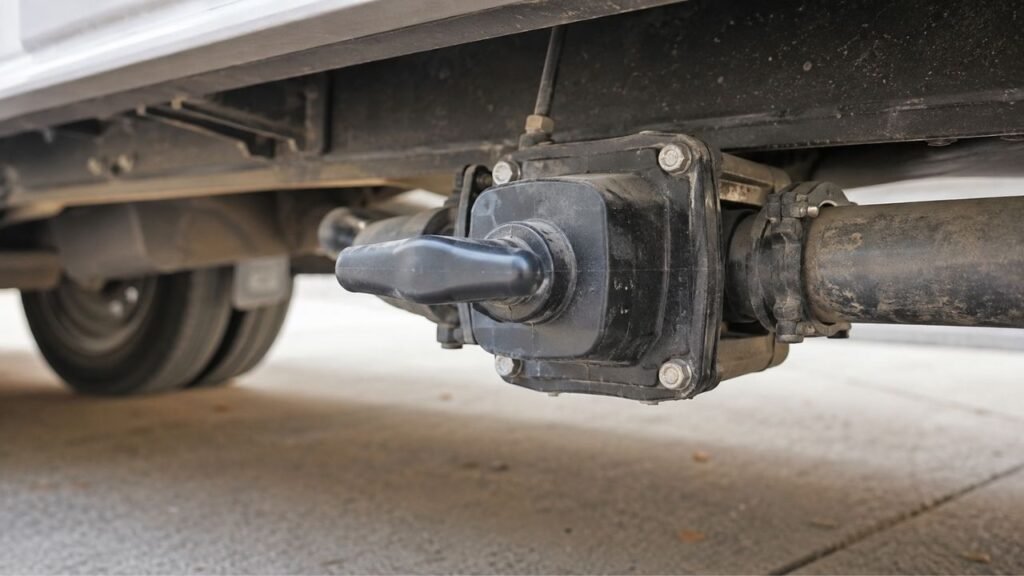
The Black or Gray Tank Gate Valve Is Not Fully Open
Start with the simplest possibility.
Your macerator cannot pump wastewater that never leaves the holding tank. A gate valve that remains closed or partially closed can therefore make the pump appear defective.
Pull the valve handle completely open.
If your RV uses cable-operated waste valves, pay extra attention. The handle can sometimes move even when the actual blade does not travel completely.
Debris may also prevent the gate blade from opening fully.
A useful diagnostic trick is comparing your tanks.
If the gray tank pumps normally but the black tank does not, the shared macerator is probably still capable of pumping.
Concentrate on the black tank valve and outlet instead.
If neither tank pumps, move farther downstream toward shared components.
The Tank Outlet or Macerator Inlet Is Blocked
Waste can sometimes reach the valve but stop before entering the macerator.
The black tank is especially vulnerable because toilet paper and solid waste can accumulate around the outlet.
Foreign materials can make the situation much worse.
Common offenders include:
- Wet wipes
- Paper towels
- Feminine hygiene products
- Cloth
- Hair
- String
- Heavy toilet paper buildup
- Hardened waste
- Small foreign objects
Even products marketed as flushable can cause RV waste-system problems.
An RV holding tank operates differently from a residential sewer system. The plumbing is smaller, storage time is longer, and the macerator contains moving parts.
If material cannot freely enter the pump, the motor may continue running while nothing comes through the hose.
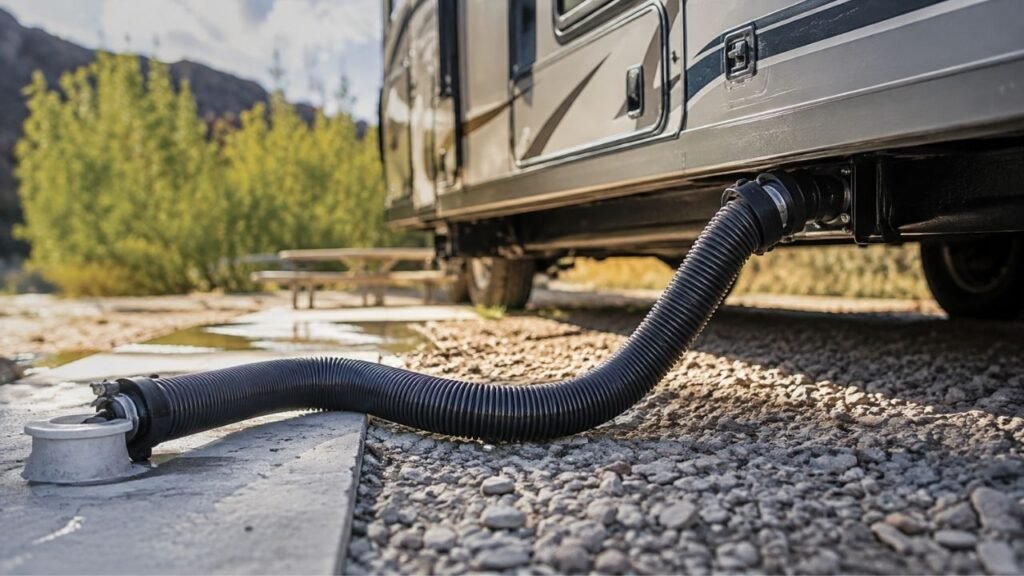
The Discharge Hose Is Kinked, Crushed, or Clogged
Your discharge hose should be one of the first things you inspect.
A surprisingly small restriction can dramatically reduce macerator flow.
Walk along the entire hose instead of checking only the section near the pump.
Look for:
- Sharp bends
- Kinks
- Flattened sections
- Closed hose nozzles
- Clogged fittings
- Pinched sections
- Frozen areas during cold weather
- Crushed hose beneath equipment
- Excessively tight turns
Also check the sewer adapter at the far end.
Waste may reach the hose normally but become trapped near the connection.
If you recently replaced or extended your discharge hose, compare the new setup with the old one.
A smaller hose, longer run, or tighter routing creates more resistance.
The Pump Is Not Getting Enough Liquid
Most RV macerators need a steady supply of liquid reaching the pumping section.
Some models are self-priming, but self-priming does not mean they can operate indefinitely without liquid.
A nearly empty tank may not provide enough wastewater.
An inlet connection that pulls air can cause similar problems.
Check around the pump connection for:
- Loose fittings
- Damaged O-rings
- Missing seals
- Poorly seated bayonet fittings
- Cracked adapters
- Loose clamps
Air entering the suction side can prevent the pump from creating consistent flow.
You may hear the motor running normally while the discharge hose remains nearly empty.
The Flexible Impeller Is Stuck After Storage
Macerator pumps sometimes become stubborn after sitting unused.
Waste residue can dry around internal moving components. Flexible impeller vanes may also remain compressed after extended storage.
Some macerator models provide an access point that allows the shaft to be turned manually.
However, do not assume every pump should be handled the same way.
First disconnect electrical power and close the tank valve.
Then check your pump’s instructions before trying to rotate the shaft.
If your manufacturer provides a manual shaft-release procedure, gently working the shaft may free a stuck impeller.
Never put your fingers inside the pump chamber.
If the pump repeatedly sticks after being freed, it probably needs further cleaning, inspection, or service.
The Impeller Is Worn or Damaged
A stuck impeller and a worn impeller are different problems.
A stuck impeller cannot rotate properly.
A worn impeller may rotate normally but fail to move enough liquid.
That difference matters when your motor sounds healthy.
Flexible impeller vanes wear over time. Heat, age, debris, storage conditions, and running without adequate liquid can accelerate that wear.
Possible signs include:
- Gradually slower tank dumping
- Weak discharge pressure
- Trouble establishing flow
- Longer pumping times
- Normal motor sound with very little output
- Repeated pumping problems despite clear hoses
If everything before and after the pump is open, internal impeller wear becomes much more likely.
The Macerator Blades or Pump Chamber Are Clogged
The grinding section can also become obstructed.
Macerator blades are designed to break down normal RV waste and toilet paper. They are not designed to process every object accidentally placed into the holding tank.
Stringy material can be particularly troublesome.
Hair, wipes, fabric, and similar materials may wrap around moving components instead of being chopped cleanly.
That creates drag and reduces flow.
Sometimes the motor continues turning while the pump chamber remains partially blocked.
Disconnect power completely before opening any serviceable pump component.
Also close your waste valve and prepare for residual wastewater.
The Motor Is Running Backward
Reversed polarity is worth checking when the problem follows electrical work.
For example, investigate polarity if you recently:
- Installed the macerator
- Replaced the wiring
- Changed a connector
- Repaired a power cable
- Modified the 12-volt circuit
- Reconnected battery wiring
A motor rotating in the wrong direction may still sound like it is operating.
However, the pump can produce little or no useful flow.
Check the positive and negative wiring against your exact macerator manufacturer’s diagram.
I would not make this your first troubleshooting step unless something electrical recently changed.
The Discharge Hose Is Too Long or Restrictive
Macerator pumps are useful because they can move waste farther than gravity dumping.
However, every pump has limits.
Long hoses create resistance. Smaller hose diameters create additional resistance. Vertical lift and multiple bends increase the workload even further.
That can reduce discharge volume significantly.
Your setup may work well through a short hose but struggle after adding another long section.
Check your specific pump’s requirements for:
- Minimum hose diameter
- Maximum recommended hose length
- Vertical pumping height
- Recommended fittings
- Duty cycle
Avoid assuming that specifications from another macerator model apply to yours.
A Blocked Holding-Tank Vent Is Restricting Flow
Your holding tank needs air to replace the wastewater leaving it.
A badly restricted vent can therefore interfere with smooth tank drainage.
This is not usually my first suspect, but it becomes worth checking when other symptoms appear.
Possible clues include:
- Gurgling sounds
- Strange pressure changes
- Flow starts normally and gradually slows
- Tank drainage behaves poorly even without the macerator
- Tank walls appear to flex
Do not blindly force tools into a roof vent.
If you suspect a serious vent blockage, inspect the system carefully or have an RV technician check it.
Internal Wear or Pump Damage Has Reduced Performance
Eventually, an older macerator can suffer mechanical wear beyond the impeller.
Possible internal problems include:
- Damaged wear plates
- Worn seals
- Failed impeller hubs
- Cracked pump housings
- Freeze damage
- Shaft damage
- Internal corrosion
- Heat damage from previous dry running
These failures become more likely when a pump has been heavily used or repeatedly overheated.
Stop the Pump First: Why You Should Not Let It Run With No Flow
If the pump runs but nothing comes out, avoid leaving it switched on while hoping the flow eventually starts.
A macerator depends on liquid for normal operation.
Running with insufficient liquid can generate heat and damage internal components. A blocked discharge path can also increase the workload on the motor.
Some pumps tolerate only brief dry operation.
The exact limit varies by model, so follow your manufacturer’s instructions rather than using one universal number.
If you notice no flow, unusual heat, a high-pitched sound, or a burning smell, turn the pump off immediately.
Troubleshoot first.
Then perform only short testing cycles until normal wastewater flow returns.
How to Troubleshoot an RV Macerator That Runs but Will Not Pump
The safest troubleshooting method starts with clean external checks. Only move toward pump disassembly after you have eliminated simple valve and hose problems.
Step 1: Turn the Pump Off
Start by shutting down the macerator.
Do not leave it operating while you inspect hoses and valves.
Wear disposable gloves and eye protection before handling wastewater components.
Make sure your discharge end remains secured to an approved sewer connection.
Step 2: Confirm There Is Enough Liquid in the Tank
Your tank monitor may not be completely accurate.
RV tank sensors commonly become coated with residue and provide misleading readings.
If the tank is nearly empty, the pump may receive more air than liquid.
When appropriate, add some clean water to the holding tank.
Do not overfill the tank.
Then perform a short pumping test.
If flow suddenly improves, inadequate liquid may have been contributing to the problem.
Step 3: Open the Correct Gate Valve Completely
Confirm that the valve for the tank you are dumping is fully open.
Do not rely only on handle position.
A cable-operated valve may not move completely even when the handle appears extended.
Compare the problem with your other tank if possible.
If one tank pumps normally, the macerator itself becomes less suspicious.
Step 4: Inspect the Entire Discharge Hose
Follow the hose from the pump all the way to the sewer.
Look specifically for:
- Kinked sections
- Crushed areas
- Tight bends
- Closed valves or nozzles
- Blocked sewer adapters
- Hose sections trapped beneath objects
- Excessive uphill routing
- Frozen wastewater
- Long extension sections
- Undersized replacement hose
Straighten the hose before continuing.
Keep the route as smooth and direct as practical.
Step 5: Determine Whether the Restriction Is Before or After the Pump
Now think about the system as three separate areas.
First, wastewater must reach the macerator.
Second, the macerator must move that wastewater.
Third, the discharge hose must allow that wastewater to leave.
This simple approach prevents unnecessary pump replacement.
If clean rinse water cannot pass through the discharge hose, concentrate downstream.
If the discharge hose is clear but wastewater never reaches the pump, concentrate upstream.
If liquid reaches the macerator and the outlet is unrestricted, investigate the pump itself.
Step 6: Check the Pump Connection for Air Leaks
Inspect every inlet connection carefully.
Look at:
- O-rings
- Gaskets
- Bayonet fittings
- Hose clamps
- Threaded adapters
- Pump mounting connections
A damaged seal can allow air into the suction side.
The motor may continue spinning while the pump struggles to establish usable flow.
Replace damaged seals before blaming the motor.
Step 7: Free a Stuck Shaft Only If Your Pump Supports It
Some macerators provide manual shaft access for freeing a stuck impeller.
If your pump includes that feature, follow its instructions exactly.
Before touching anything:
- Disconnect electrical power.
- Close the holding-tank valve.
- Relieve pressure where appropriate.
- Locate the manufacturer-approved access point.
- Rotate the shaft only as directed.
- Reinstall covers before reconnecting power.
Do not improvise by inserting tools into openings not intended for servicing.
Step 8: Inspect the Impeller and Macerator Chamber
If external checks reveal nothing, the problem may be internal.
Depending on your pump design, inspect for:
- Torn impeller vanes
- Missing impeller pieces
- Wrapped hair
- String
- Wipes
- Hardened waste
- Damaged chopper blades
- Excessive wear
- Broken internal components
Some pumps are rebuildable.
You may be able to replace an impeller, gasket, seal, or wear component without buying a complete pump.
Step 9: Check Polarity After Recent Electrical Work
If the pump recently received new wiring, verify polarity.
Compare every connection with the manufacturer’s wiring instructions.
Do not assume wire colors are always correct.
Previous owners and older repairs sometimes use nonstandard wiring colors.
Correct the problem before continuing to run the pump.
Step 10: Retest Briefly With Clean Water
Once everything is reassembled, perform a short test.
Clean water is preferable whenever your setup allows it.
Watch the discharge hose closely.
A properly operating macerator should produce a clear change in hose movement and motor load once liquid reaches the pump.
Stop immediately if:
- No flow appears
- The pump gets unusually hot
- The motor sounds strained
- You smell burning insulation
- Waste leaks around connections
Use This Shortcut to Find Which Part Is Actually Bad
You can often narrow the problem without disassembling anything. Compare which tanks work and when the problem started.
- Black tank fails but gray works: Check the black valve and outlet.
- Gray tank fails but black works: Check the gray valve and outlet.
- Neither tank works: Inspect shared plumbing, pump, and discharge hose.
- Hose passes rinse water but tank waste does not: Look upstream.
- Liquid reaches pump but nothing exits: Focus on pump or discharge side.
- Clean water pumps normally: Suspect tank waste or outlet restriction.
- New hose caused the problem: Check size, length, bends, and restrictions.
- Problem followed electrical repairs: Verify pump polarity.
- Pump only works after manual shaft movement: Inspect the impeller.
- Flow gradually became weaker: Internal wear becomes more likely.
Running but Not Pumping vs. Humming but Not Turning
These two symptoms often get described the same way, but they are different.
A pump that is genuinely running has a rotating motor and shaft.
A pump that only hums may be receiving electricity without actually rotating.
That humming usually points more strongly toward a jammed impeller, seized shaft, low voltage, or mechanical obstruction.
When the motor clearly spins but produces no discharge, focus more heavily on the flow path.
Check the tank valve, inlet, discharge hose, air leaks, impeller condition, and motor direction.
Listening carefully can save you considerable troubleshooting time.
Why Does My Macerator Pump Waste Slowly Instead of Stopping Completely?
Weak flow often develops before complete pumping failure. Treat slower discharge as an early warning instead of waiting for the pump to stop moving waste completely.
Partially Blocked Hose
A partial clog can still allow some liquid through.
Waste may move slowly while toilet paper or debris restricts part of the hose.
Inspect fittings and bends first.
Worn Flexible Impeller
A worn impeller can lose pumping efficiency gradually.
The motor may continue sounding normal while discharge volume decreases over time.
If external restrictions are absent, inspect the impeller.
Hose Is Too Long or Restrictive
Long discharge runs naturally create more resistance.
Add vertical lift, bends, and narrow fittings, and performance can fall even further.
Shortening or simplifying the hose route may improve flow considerably.
Low 12-Volt Supply Under Load
A motor can receive enough voltage to run but still perform poorly under load.
Loose electrical connections, undersized wiring, corrosion, or a weak power supply can reduce motor speed.
Check voltage under operating conditions if mechanical causes are eliminated.
Waste Is Too Thick
Black tanks need adequate water.
Extremely thick waste can be harder for a macerator to process and transport through a small discharge hose.
Using enough water during normal toilet use helps prevent this problem.
Can a Clogged Black Tank Cause the Macerator to Run Without Pumping?
Yes. A clogged black tank outlet can make a perfectly functional macerator appear defective.
This happens when waste, paper, or hardened material collects around the tank’s discharge opening.
The pump runs because it receives electrical power.
However, little or no wastewater actually reaches its inlet.
Try to identify whether the restriction is inside the tank, inside the macerator, or farther down the discharge hose.
Those are three different problems.
If your gray tank pumps normally through the same macerator, a black-tank-specific restriction becomes much more likely.
Should You Backflush a Macerator to Clear a Clog?
Backflushing can help certain systems, but only when the pump or installation provides a proper rinse or backflush connection.
Follow your macerator manufacturer’s instructions.
Do not improvise by forcing high-pressure water backward through a full holding tank.
Also keep potable drinking-water equipment separate from sewer equipment.
I recommend using a dedicated rinse hose for sanitation work.
Never use compressed air or excessive water pressure to force a stubborn blockage loose.
You could damage the tank, fittings, valves, or seals.
When Should You Rebuild or Replace the Macerator Pump?
Not every no-flow problem requires a new macerator. External restrictions are usually worth eliminating before spending money on replacement parts.
| Pump Condition | Clean or Repair | Rebuild | Replace |
| Kinked or clogged hose | Yes | No | No |
| Tank outlet blockage | Yes | No | No |
| Temporarily stuck impeller | Usually | Maybe | Usually not |
| Worn flexible impeller | No | Often | Sometimes |
| Damaged gasket or seal | No | Often | Sometimes |
| Damaged wear plate | No | Often | Sometimes |
| Cracked pump housing | Rarely | Rarely | Usually |
| Serious freeze damage | Sometimes | Maybe | Often |
| Repeated overheating | Maybe | Maybe | Often |
| Burning electrical smell | Stop using | Sometimes | Often |
| Badly damaged motor shaft | No | Rarely | Usually |
| Repeated failures after rebuilding | No | No | Usually |
Consider the pump’s age before rebuilding it.
A relatively new pump with one worn serviceable component may be worth repairing.
An older pump with repeated seal, shaft, overheating, and impeller problems may be better replaced.
When Should You Call an RV Technician?
Some macerator problems are messy but manageable. Others involve enough wastewater, electrical work, or plumbing disassembly that professional service makes more sense.
- Waste cannot be safely contained during troubleshooting.
- The pump repeatedly overheats.
- Electrical wiring is burned or damaged.
- You notice a strong electrical burning smell.
- A holding tank appears swollen or distorted.
- The waste valve cannot be opened or closed.
- Plumbing must be removed to reach the failed component.
- Freeze damage may have cracked the pump or piping.
- Waste leaks around inaccessible fittings.
- The pump immediately fails again after repairs.
How to Prevent Your RV Macerator From Losing Flow Again
A little maintenance can prevent most recurring macerator problems. Concentrate on keeping waste diluted, hoses unrestricted, and the pump clean after dumping.
- Flush the macerator with clean water after dumping.
- Keep enough water in the black tank during use.
- Avoid putting wipes into the RV toilet.
- Never flush paper towels or hygiene products.
- Straighten the discharge hose before operating the pump.
- Avoid unnecessary hose extensions.
- Use the hose size recommended for your pump.
- Keep inlet seals and O-rings in good condition.
- Stop the pump when the tank is empty.
- Do not repeatedly operate the pump without liquid.
- Winterize the pump before freezing weather.
- Exercise stored pumps when the manufacturer recommends it.
- Investigate declining flow before complete failure develops.
Final Words
When your RV macerator runs but refuses to pump waste, start with the flow path before assuming the entire pump has failed.
Work from the holding tank toward the sewer connection.
Check the gate valve, tank outlet, pump inlet, impeller, discharge hose, and final sewer fitting.
The one-tank-versus-both-tanks comparison can also save considerable time.
If one tank pumps normally, focus on the problem tank.
If neither works, concentrate on the shared macerator and discharge components.
Most importantly, avoid continuously running a pump that produces no flow.
Stopping early can turn a simple clog or worn impeller into an inexpensive repair instead of a completely damaged macerator.
Related FAQs
Why Does My RV Macerator Make Noise but Not Pump?
Your macerator may make noise without pumping because the impeller is stuck, the tank valve is closed, the inlet is blocked, or the discharge hose is restricted. A humming sound can also mean the motor is energized but not actually turning.
How Do I Know if My RV Macerator Impeller Is Bad?
A failing impeller may cause weak flow, poor self-priming, longer dumping times, repeated loss of pumping ability, or no discharge despite clear plumbing. Inspect the impeller if external valves and hoses are functioning normally.
Can a Kinked Hose Stop an RV Macerator From Pumping?
Yes. A severe kink can create enough resistance to stop wastewater from moving through the discharge hose. Turn the pump off, straighten the hose completely, and check for crushed or blocked sections before restarting it.
Can I Run My RV Macerator With No Waste Coming Out?
You should not continuously run a macerator when nothing is coming out. Insufficient liquid can overheat and damage internal components. Stop the pump, find the restriction, and follow your model’s dry-running limits.
Why Does My RV Macerator Pump Gray Water but Not Black Water?
If gray water pumps normally but black water does not, the macerator and shared discharge hose probably still work. Inspect the black tank gate valve, tank outlet, and nearby plumbing for accumulated waste or restrictions.
Why Does My Macerator Pump Black Water but Not Gray Water?
If black water moves normally but gray water does not, concentrate on the gray tank valve and outlet. A stuck valve, debris, or tank-specific plumbing problem is more likely than complete macerator failure.
Can Reversed Polarity Make a Macerator Run Without Pumping?
Yes. Incorrect polarity can make certain pump motors rotate in the wrong direction, resulting in weak or nonexistent flow. Check polarity especially when the problem started immediately after installation, rewiring, or connector replacement.
Can a Clogged RV Tank Vent Stop a Macerator From Pumping?
A severely restricted tank vent can interfere with wastewater leaving the holding tank because replacement air cannot enter normally. However, check simpler causes such as valves, hose restrictions, and pump connections before investigating the vent.
Does an RV Macerator Pump Need to Be Primed?
Many RV macerator pumps are designed to self-prime, but they still need adequate liquid and a properly sealed inlet. Air leaks, very low tank levels, or worn impellers can prevent normal suction from developing.
How Long Can an RV Macerator Pump Run Continuously?
There is no universal continuous-run time for every RV macerator. Pump designs and duty cycles vary, so check your model’s manual and stop immediately whenever the pump runs without wastewater flow.

Steven Parker writes about everyday RV life, from setup tips to long-term living decisions. His content reflects a calm, experienced approach to RV ownership and travel. He focuses on comfort, reliability, and realistic expectations.