
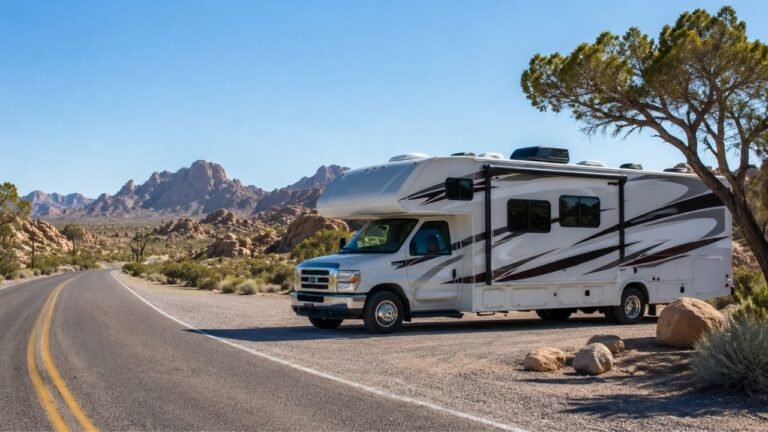
Your RV water heater usually makes popping sounds because mineral deposits have collected inside the tank. Water can become trapped beneath this sediment, heat rapidly, form steam bubbles, and push...

You can usually remove a stuck RV water heater anode rod with a 1-1/16-inch 6-point socket, a breaker bar, controlled pressure, and careful thread treatment. First, shut off the heater, let the water...

An RV water heater anode rod wears out quickly because it is designed to corrode before the steel tank does. Water chemistry, high iron or sulfate levels, softened water, frequent use, rod material...
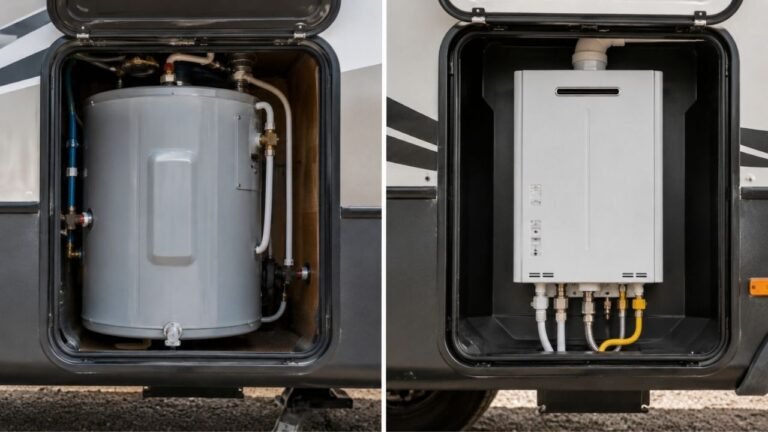
A traditional tank RV water heater usually makes it easier to use less freshwater than a tankless model, especially while boondocking. Tank heaters work well with low-flow faucets and short navy...
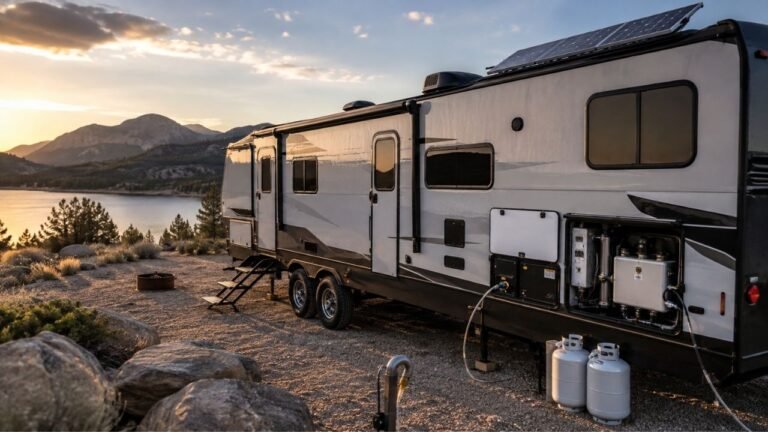
Yes, most propane RV tankless water heaters can run without shore power. Propane provides the heat, while your RV’s 12-volt house battery powers the control board, ignition, sensors, gas valve, and...
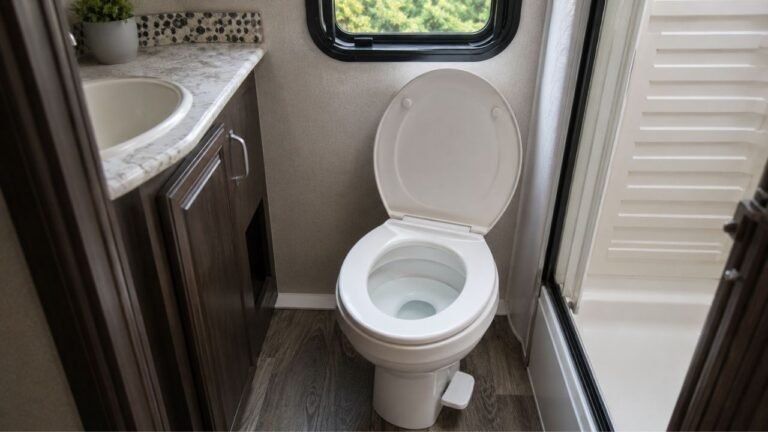
Your RV toilet usually won’t hold water because the flush-ball or blade seal is dirty, dry, displaced, worn, or damaged. A flush ball or blade that does not close completely can cause the same...
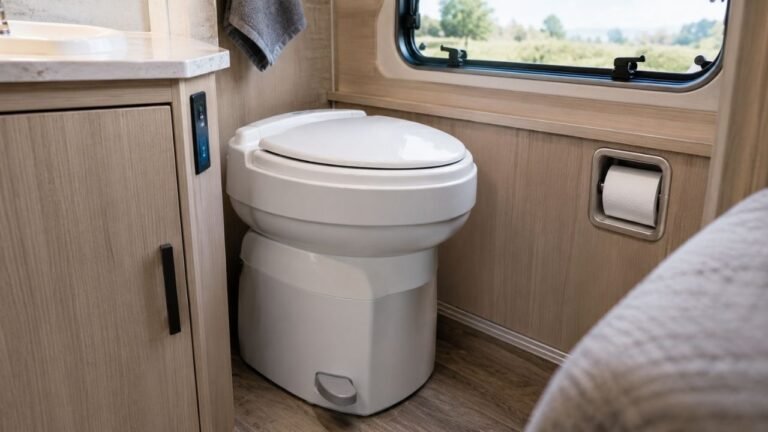
An RV toilet pedal usually sticks after flushing because dirt, mineral buildup, a dry flush seal, binding linkage, or a worn return mechanism creates too much resistance. A sticking water valve or...
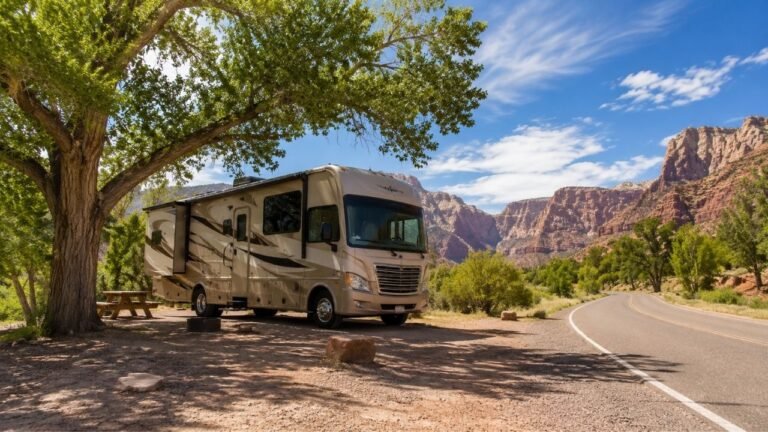
Your RV toilet may smell after dumping because waste residue, trapped gases, or plumbing problems still remain after the tank empties. A dry bowl seal, blocked roof vent, poor tank rinsing, or exhaust...
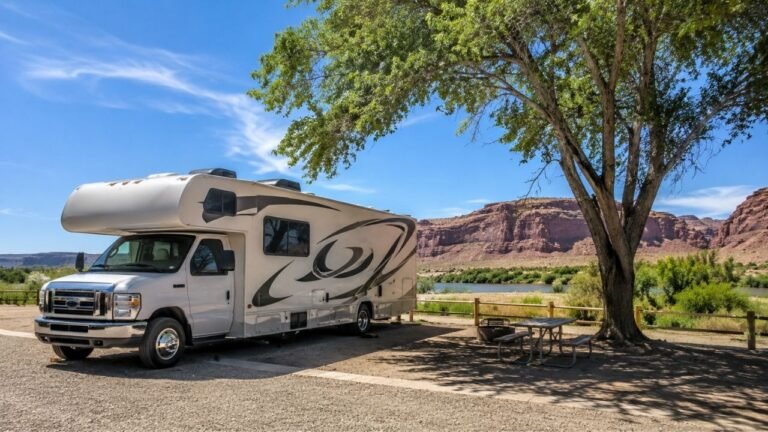
You can usually fix an RV toilet that rocks at the floor by tightening the mounting nuts evenly. If that does not stop the movement, the floor flange, mounting bolts, toilet seal, flooring, or...