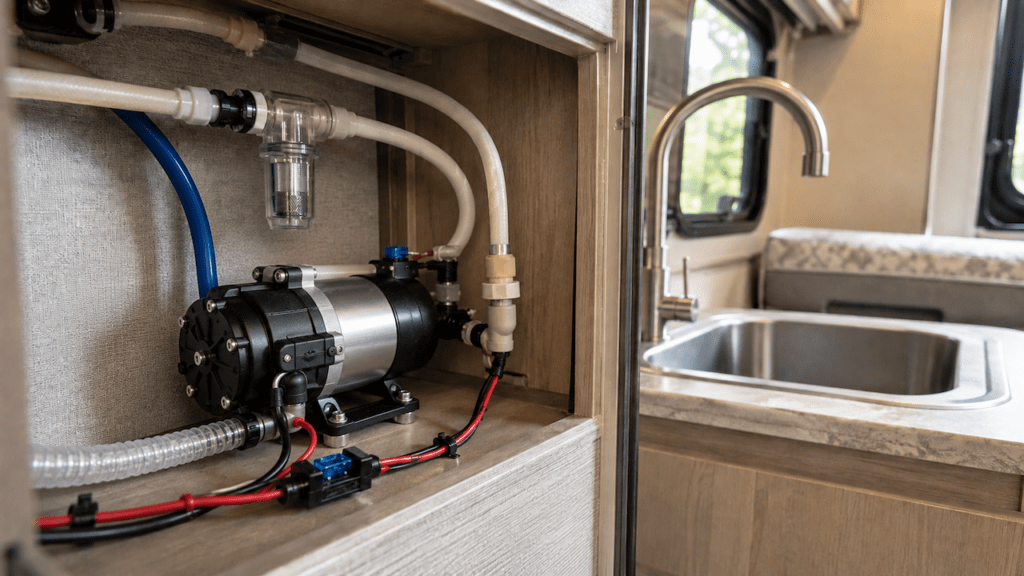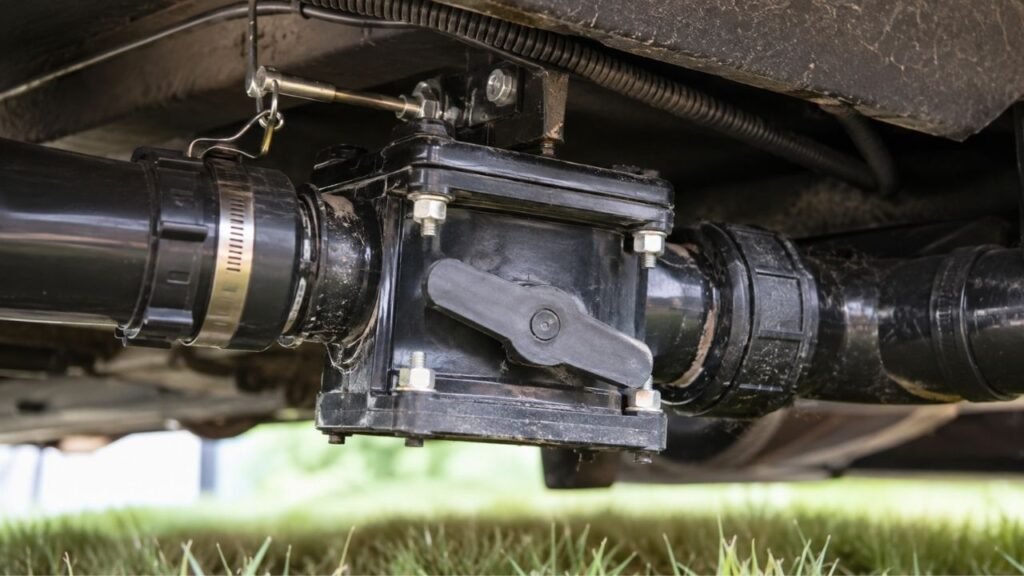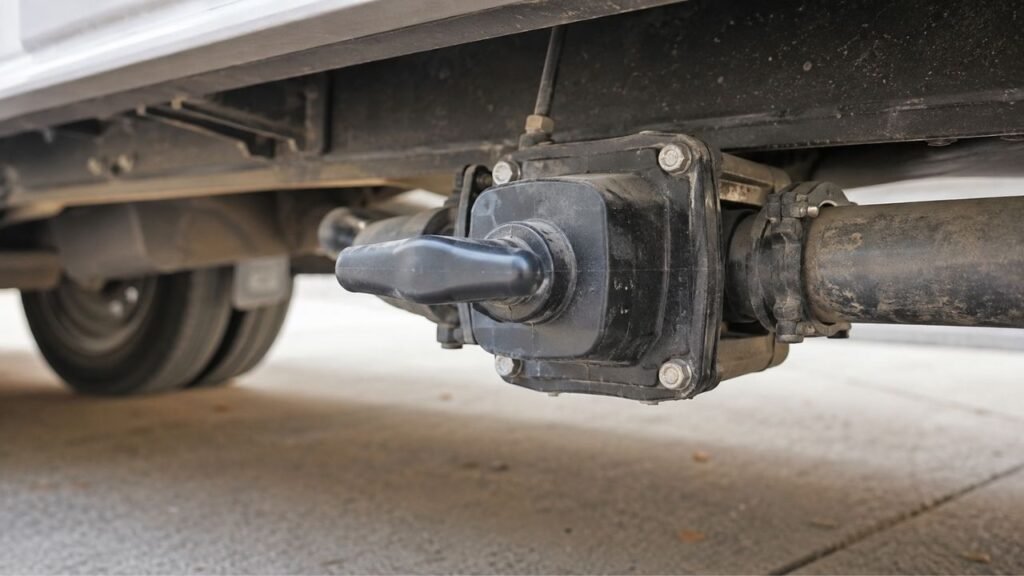
An RV macerator pump usually overheats and shuts off because the motor is working too hard. Common causes include a clogged cutter, stuck impeller, restricted discharge hose, excessive pumping distance, low voltage, poor wiring, dry running, or operating beyond the pump’s duty cycle. Many pumps use thermal protection that shuts the motor down before serious damage occurs.
If your pump keeps stopping, you do not need to guess blindly. I’ll help you work through the symptoms, check the easiest causes first, safely reset the pump, and determine whether you have a clog, electrical issue, hose problem, or failing pump.
Key Takeaways
- Repeated shutdown followed by restart often indicates thermal protection.
- A clogged cutter or impeller makes the motor work harder.
- Long, narrow, kinked hoses can increase discharge resistance.
- Pumping wastewater uphill adds extra load to the macerator.
- Voltage should be checked at the pump while operating.
- Dry running can quickly increase pump temperature.
- Continuous runtime limits vary between macerator pump models.
- Disconnect electrical power before clearing any internal obstruction.
Why Does My RV Macerator Pump Overheat and Shut Off?
Your RV macerator shuts off when the motor reaches an unsafe temperature. Many macerator pumps contain an internal thermal protector designed for this exact situation.
Think of the shutdown as a warning rather than the actual problem.
Something is usually forcing the motor to work harder than normal. As the electrical load increases, the motor creates additional heat. Eventually, the thermal protection interrupts power.
After the motor cools, some pumps automatically operate again.
That explains the frustrating cycle you might be experiencing:
Pump runs → pump gets hot → pump stops → pump cools → pump works again.
However, repeatedly allowing that cycle to continue is not a solution.
The underlying cause still needs attention. Otherwise, you could eventually damage the impeller, wiring, pump head, switch, or motor.
How Can I Tell If the Macerator Is Overheating?
The exact behavior of your pump can provide useful clues. Pay attention to what happens immediately before and after the shutdown.
| What You Notice | Possible Cause | What to Check First |
| Pump stops after several minutes | Thermal overload | Hose restriction and runtime |
| Pump restarts after cooling | Thermal protector activating | Excessive motor load |
| Flow becomes weak before shutdown | Restriction or impeller problem | Hose and cutter |
| Pump hums without moving waste | Stuck or jammed impeller | Pump shaft and cutter |
| Fuse blows immediately | Jam or electrical fault | Impeller and wiring |
| Runs well with gray water only | Heavy solids or debris | Black tank contents |
| Gets hot with a long hose | Excessive discharge resistance | Hose length and diameter |
| Overheats while pumping uphill | Excessive head pressure | Elevation and hose routing |
| Gets hot when tank becomes empty | Dry running or air intake | Tank level |
| Never restarts after cooling | Electrical or motor failure | Fuse, power, and motor |
One symptom alone does not prove the cause. However, these patterns can narrow your troubleshooting considerably.
What Causes an RV Macerator Pump to Overheat?
Several problems can increase the workload placed on your macerator motor. Some are simple hose problems, while others require opening or servicing the pump.
Debris Is Wrapped Around the Cutter or Impeller
A partially clogged macerator is one of the first things I would check.
Hair, wipes, cloth, string, sanitary products, and other debris can wrap around the cutter or impeller shaft. The motor must then overcome additional resistance every time it turns.
Your pump does not necessarily stop immediately.
A partially jammed cutter may continue moving wastewater while drawing considerably more power. That extra workload creates heat.
You may notice slower pumping, unusual sounds, vibration, or repeated thermal shutdowns.
Do not assume the cutter is clear simply because wastewater still moves.
The Impeller Is Stuck After Storage
Flexible macerator impellers can sometimes become difficult to turn after sitting unused.
This commonly becomes noticeable after seasonal storage.
The motor may hum, start slowly, or draw excessive current while trying to rotate the stiff impeller.
Some macerator designs provide access to the motor shaft. The shaft can sometimes be rotated manually to release a stuck impeller.
However, this procedure is model-specific.
Do not start removing covers or forcing the shaft without checking how your particular pump is designed.
Always disconnect electrical power before touching the pump mechanism.
The Discharge Hose Is Kinked or Partially Blocked
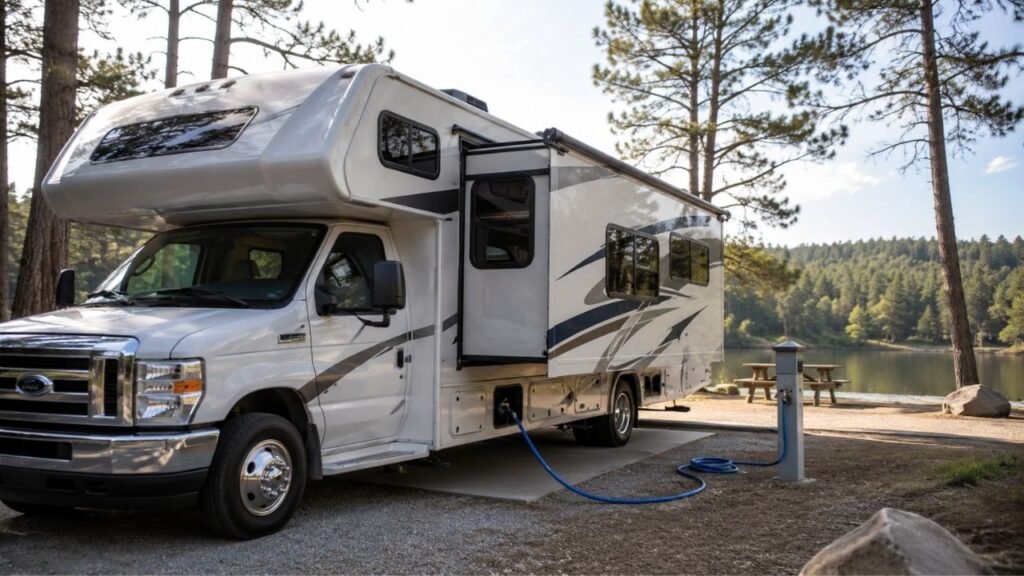
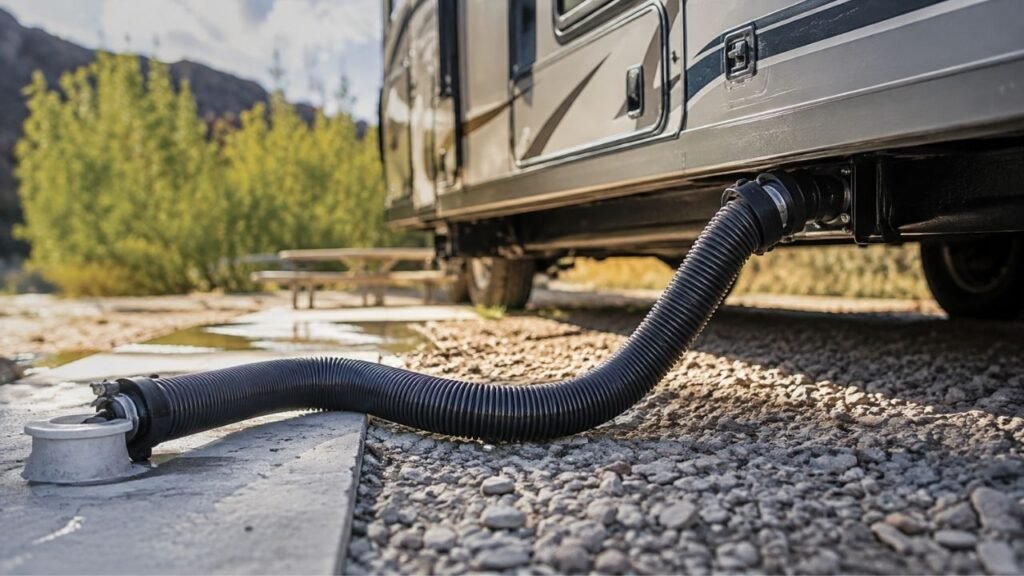
Your macerator must push wastewater through the discharge hose.
If that hose becomes restricted, the motor works against additional pressure.
Look for:
- Sharp hose bends
- Crushed hose sections
- Kinked sections
- Partially closed valves
- Clogged connectors
- Restricted adapters
- Debris inside the hose
A hose can appear fine from several feet away while hiding a severe bend underneath your RV.
Walk along the entire discharge route before assuming the pump is faulty.
Your Discharge Hose Is Too Small or Too Long
Longer discharge hoses create greater resistance.
A smaller hose diameter can increase that resistance even further.
That does not mean every long hose automatically causes overheating. Macerator pumps are specifically designed to move waste farther than traditional gravity sewer hoses.
However, every pump has operating limits.
A hose setup that works perfectly over 25 feet might create significantly more resistance at 100 feet.
Use the hose size recommended for your particular macerator.
Avoid reducing the discharge diameter simply because a smaller hose feels easier to store.
You Are Pumping Too Far Uphill
Horizontal pumping distance and vertical pumping height are not the same thing.
This difference is easy to overlook.
When wastewater must travel uphill, the macerator must overcome additional pressure caused by elevation.
A pump capable of moving waste a long horizontal distance may not handle significant vertical lift equally well.
Watch the route from your RV toward the sewer inlet.
If the discharge hose climbs sharply before reaching the connection, elevation could be contributing to your overheating problem.
Reducing unnecessary height can make a noticeable difference.
The Pump Is Running With Too Little Wastewater
Macerator pumps work best when wastewater is moving through them.
As the tank empties, the pump can begin pulling a mixture of liquid and air.
Eventually, it may start running mostly dry.
Extended dry operation can increase heat and damage certain impeller designs.
You may hear the pump sound change when the tank becomes nearly empty.
That sound change is your cue to pay attention.
Do not leave the pump running while you walk away from the RV.
Dry-run limits vary between pump models, so follow your manufacturer’s instructions.
The Pump Has Been Running Longer Than Its Duty Cycle
Not every RV macerator is designed for unlimited continuous operation.
Many use an intermittent-duty motor.
However, there is no single runtime limit that applies to every pump.
One model may tolerate a relatively long continuous pumping session. Another may require shorter operating periods.
This is why generic advice such as “never run a macerator longer than five minutes” can be misleading.
Check the duty-cycle rating for your exact pump.
If the pump consistently reaches thermal shutdown during an unusually long dumping session, runtime may be contributing.
Low Voltage Is Reaching the Pump
Your macerator depends on a strong 12-volt electrical supply.
A battery can appear healthy while the pump still receives insufficient voltage.
The problem often occurs somewhere between the battery and motor.
Possible causes include:
- Weak battery
- Long electrical cable
- Small wire gauge
- Loose terminals
- Corroded connectors
- Poor ground connection
- Worn switch
- Damaged fuse holder
Low voltage at the motor can reduce available torque.
That becomes especially noticeable when the pump encounters heavy waste or high discharge resistance.
Instead of checking only battery voltage, measure voltage directly at the pump while it is running.
That tells you what the motor actually receives.
The Power Wire Is Too Small
Wire size becomes increasingly important as electrical distance increases.
A long run of undersized wire creates voltage drop.
Your battery might show normal voltage while considerably less reaches the pump motor.
Permanent installations deserve particular attention.
If someone installed the macerator using wire that was convenient rather than manufacturer-recommended, overheating problems may appear under heavy loads.
Compare your wiring against the specifications for your exact macerator.
Do not assume one wire gauge works for every installation.
A Loose or Corroded Connection Is Creating Resistance
Poor electrical connections can cause more trouble than people expect.
A slightly loose connection adds resistance.
That resistance can reduce voltage reaching your pump and create localized heating around the connector.
Check the entire circuit, including:
- Battery connections
- Positive terminals
- Ground terminals
- Fuse holder
- Switch connections
- Crimp connectors
- Extension wiring
- Quick-connect plugs
Discolored plastic, melted insulation, or burned connectors need immediate attention.
The Impeller or Pump Head Is Worn
Macerator components eventually wear.
A flexible impeller can become stiff, cracked, swollen, deformed, or damaged. Cutter components can also become worn or restricted.
Internal wear may increase drag on the motor.
Other damage might reduce pumping efficiency, forcing the motor to run longer.
If your macerator is several years old and troubleshooting reveals no hose or electrical problems, internal wear becomes more likely.
Some pumps support replacement impeller or pump-head kits.
Others may be more practical to replace completely.
Hot Weather Is Making the Problem Worse
Summer heat can contribute to overheating.
A macerator operating underneath an RV during hot weather already starts with a higher surrounding temperature.
The motor may therefore reach its thermal limit sooner.
However, I would not blame hot weather first.
A healthy pump should still operate within its intended conditions.
High outdoor temperatures often expose an existing restriction, electrical weakness, worn impeller, or excessive workload rather than creating the entire problem alone.
How Do I Fix an RV Macerator Pump That Keeps Overheating?
Start with the simple checks before taking the pump apart. This sequence helps you eliminate common problems without creating unnecessary work.
Step 1: Turn Off and Disconnect the Pump
Turn off the macerator immediately after an overheating shutdown.
Then disconnect its electrical supply before inspecting moving components.
This step matters because some thermal protectors reset automatically.
A pump that appears completely dead could suddenly become operational after cooling.
Wear disposable gloves and eye protection whenever handling wastewater equipment.
Step 2: Let the Motor Cool
Give the motor enough time to return toward normal temperature.
Cooling time varies depending on:
- Motor temperature
- Pump design
- Outdoor temperature
- Ventilation
- Previous runtime
Do not repeatedly switch the pump on every few minutes.
Use the cooling period to inspect the rest of your system.
Step 3: Make Sure the Tank Valve Is Fully Open
Confirm that wastewater can actually reach the macerator.
A partially opened black or gray tank valve can restrict inlet flow.
Restricted inlet flow may cause poor pumping performance and eventually lead to air entering the pump.
Open the appropriate valve fully during normal dumping.
Also inspect the connection between your RV outlet and macerator.
Step 4: Straighten the Discharge Hose
Follow the hose from the pump to the sewer connection.
Remove sharp bends, loops, and crushed sections.
Pay particular attention where the hose passes:
- Under tires
- Around leveling blocks
- Beneath storage bins
- Through compartment doors
- Around campsite obstacles
Sometimes correcting one severe kink solves the entire problem.
Step 5: Reduce Pumping Distance or Elevation
If possible, temporarily test your macerator using a shorter discharge setup.
You are looking for a comparison.
If the pump operates normally through a shorter hose but overheats through your usual long run, discharge resistance becomes a strong suspect.
Do the same with excessive elevation.
Avoid unnecessary climbs and drops when routing the hose.
Step 6: Inspect the Cutter and Impeller
Disconnect power completely before doing this.
Then follow your pump manufacturer’s access procedure.
Look for materials wrapped around rotating components.
Common offenders include:
- Hair
- Wipes
- Thread
- Floss
- Cloth
- String
- Fibrous debris
- Sanitary products
Remove debris carefully.
Do not reach into a cutter area while electrical power remains connected.
Step 7: Check Whether the Shaft Turns Properly
Some macerator pumps include a shaft-access feature for freeing a stuck impeller.
If your pump supports this method, follow its instructions carefully.
The shaft should not require excessive force.
A shaft that remains extremely difficult to move may indicate damaged internal components.
Never force an unfamiliar pump mechanism with tools.
Step 8: Test Voltage While the Pump Runs
A resting voltage measurement provides only part of the picture.
You need to know what happens under load.
Measure battery voltage while the macerator operates.
Then measure voltage near the pump.
If voltage is noticeably lower at the pump, resistance exists somewhere along the circuit.
Inspect wiring, connectors, switches, and grounds.
Step 9: Inspect the Fuse and Wiring
Make sure the installed fuse matches your pump manufacturer’s specification.
Never install a larger fuse simply because the existing fuse keeps blowing.
A fuse protects the wiring and equipment from excessive current.
Repeated fuse failure means you need to find the cause.
Also verify that wire size matches the required current and cable length.
Step 10: Test the Pump With Good Flow
After correcting obvious problems, test the macerator briefly.
Make sure wastewater can reach the inlet freely.
Listen to the motor.
Watch the discharge flow.
Pay attention to whether performance gradually weakens.
A healthy system should provide reasonably steady discharge without repeatedly reaching thermal shutdown.
Step 11: Service or Replace the Pump
If everything outside the pump checks out, internal problems become more likely.
Consider servicing the pump when replacement parts are available.
A damaged impeller, pump head, cutter, or seal may be replaceable.
If the motor itself repeatedly overheats despite proper voltage and unrestricted flow, replacement may be the better option.
How Do I Reset a Macerator Pump After It Overheats?
Most overheating resets are straightforward, but fixing the cause matters more than simply restarting the motor.
- Turn the macerator off.
- Disconnect electrical power.
- Allow the motor to cool completely.
- Inspect the discharge hose for restrictions.
- Make sure wastewater can reach the pump.
- Check the cutter or impeller for obvious jams.
- Reconnect power after completing the inspection.
- Run the pump briefly while watching discharge flow.
- Stop immediately if overheating returns quickly.
Many RV macerators do not have a separate reset button.
Their internal thermal protection may reset automatically after the motor cools.
That automatic reset is another reason to disconnect power before working near the cutter or impeller.
How Do I Know Whether It Is Thermal Shutdown or a Blown Fuse?
Thermal shutdown usually happens after the pump operates for some time. The pump suddenly stops, but the fuse remains good. After enough cooling, the macerator may begin working again.
A blown fuse behaves differently.
Once the fuse opens, the pump remains dead until the electrical problem is corrected and the proper fuse is replaced.
A jammed motor can sometimes cause either symptom.
The pump might hum, stall, overheat, or draw enough current to open the fuse.
Use the sequence of events to guide your diagnosis.
If it always returns after cooling, thermal protection becomes more likely.
If it stays completely dead, inspect power and protection devices.
Can Low Battery Voltage Make an RV Macerator Overheat?
Yes, inadequate voltage at the pump can contribute to overheating and poor performance.
However, checking the battery alone is not enough.
Your battery may have acceptable voltage while electrical resistance causes a significant drop before power reaches the motor.
This often happens through long wires, small conductors, worn connectors, loose grounds, or damaged switches.
Check voltage while the pump operates under load.
Then compare voltage at the battery against voltage at the pump.
A noticeable difference tells you to investigate the wiring circuit.
Avoid relying on one universal minimum-voltage number. Pump manufacturers can have different operating requirements.
Does Hose Size Affect Macerator Pump Overheating?
Yes. Hose diameter, length, condition, and routing can all affect the resistance your macerator must overcome.
A restricted discharge path makes the pump work harder.
Keep these points in mind:
- Follow your pump manufacturer’s recommended hose diameter.
- Avoid unnecessary reductions in hose size.
- Eliminate sharp bends whenever possible.
- Prevent the hose from becoming crushed.
- Keep discharge runs reasonably short.
- Use reinforced hose when required.
- Avoid restrictive fittings and adapters.
- Minimize unnecessary vertical lift.
Do not assume a hose is suitable simply because wastewater eventually reaches the sewer.
The question is how hard the pump must work to move it there.
Can You Run an RV Macerator Pump Dry?
Avoid running your RV macerator dry unless the manufacturer specifically allows brief dry operation.
Once the tank becomes empty, the sound of the pump often changes.
That change usually means less liquid is passing through the pump.
Turn the system off promptly rather than allowing it to continue spinning without wastewater.
Some pumps tolerate short periods of dry running. Others can damage their impeller much sooner.
Always follow the dry-run limit listed for your exact model.
What Should Never Go Through an RV Macerator Pump?
A macerator can chop normal RV waste, but it is not a garbage disposal.
Try to keep these items out of your black tank:
- Wet wipes
- Feminine hygiene products
- Rags
- Cloth
- Dental floss
- String
- Excessive hair
- Hard plastic objects
- Cleaning cloths
- Paper towels
- Tank construction debris
- Other non-approved solid materials
Even products advertised as flushable can create problems inside RV waste systems.
The safest approach is simple.
If it did not come from your body or dissolve like RV toilet paper, keep it out of the black tank.
When Should I Rebuild the Macerator Pump Instead of Replacing It?
Some macerator problems can be repaired economically. Others indicate that replacing the unit makes more sense.
Rebuild It When the Pump Head Is Serviceable
Consider rebuilding when your model offers replacement components.
Possible service parts include:
- Flexible impeller
- Pump head
- Cutter
- Seal
- Wear components
- Gaskets
A rebuild makes sense when the motor still operates normally and the damaged part is easily replaceable.
Replace It When the Motor Is Failing
Replacement becomes more reasonable when the motor overheats despite proper operating conditions.
Before blaming the motor, verify:
- Correct voltage
- Proper wire size
- Clean electrical connections
- Clear cutter
- Free-moving impeller
- Unrestricted discharge hose
- Reasonable pumping distance
- Adequate wastewater flow
If all these conditions are good and the motor still overheats quickly, internal motor damage becomes much more likely.
Check Warranty Coverage Before Opening the Pump
Before disassembling a relatively new macerator, check its warranty.
Opening certain assemblies may affect warranty coverage.
Record the model number and serial information first.
Then review what the manufacturer considers owner-serviceable.
Sometimes contacting the manufacturer before opening the pump can save money.
How Can I Prevent My RV Macerator From Overheating Again?
Preventing overheating usually comes down to reducing unnecessary load on the pump.
- Keep wipes and foreign materials out of the tank.
- Prevent excessive hair from entering your waste system.
- Flush the macerator after dumping when recommended.
- Avoid unnecessary dry running.
- Follow the correct duty cycle.
- Use the recommended discharge hose diameter.
- Avoid excessive hose length.
- Keep discharge hoses free of kinks.
- Reduce unnecessary uphill pumping.
- Use correctly sized electrical wiring.
- Keep battery connections clean.
- Maintain a solid electrical ground.
- Inspect connectors for corrosion.
- Replace damaged impellers when necessary.
- Never leave the macerator running unattended.
A few minutes of inspection before dumping can prevent a much messier repair later.
When Should You Stop Using an Overheating Macerator Pump?
Some symptoms mean you should stop troubleshooting through repeated test runs.
Turn the pump off if:
- It repeatedly reaches thermal shutdown.
- The proper fuse repeatedly blows.
- You smell burned wiring.
- Electrical connectors become unusually hot.
- Wiring insulation starts melting.
- The pump barely turns.
- The cutter repeatedly jams.
- Waste leaks around the pump housing.
- The motor becomes extremely hot very quickly.
- The pump will not restart after cooling.
- You hear grinding or severe mechanical noise.
Continuing to operate a badly overloaded pump can turn a small repair into complete motor failure.
Electrical overheating also creates a fire risk.
If the wiring itself becomes hot or damaged, correct that problem before using the macerator again.
Final Words
An RV macerator pump that overheats and shuts off is usually protecting itself from excessive load. The most common problems involve restricted wastewater flow, cutter debris, a stiff impeller, difficult hose routing, electrical voltage loss, dry operation, or excessive runtime.
Start with the easy checks before replacing anything. Inspect the hose, confirm tank flow, clear obvious debris, and test the electrical supply under load. If the pump still overheats with proper voltage and unrestricted flow, internal wear or motor damage becomes much more likely.
Related FAQs
These quick answers cover several related macerator overheating problems RV owners commonly experience.
Why Does My RV Macerator Pump Shut Off After Five Minutes?
If your macerator consistently shuts off after several minutes and later restarts, its thermal protector may be activating. Check for a clogged cutter, restricted hose, excessive pumping resistance, voltage drop, and operation beyond the duty cycle specified for your particular pump.
Why Does My Macerator Pump Start Working Again After It Cools?
Many macerator motors contain automatic thermal protection. When excessive heat develops, the protector interrupts electrical power. After the motor cools sufficiently, the protector may reset automatically, allowing the pump to operate again.
Is an RV Macerator Pump Supposed to Get Hot?
Some warmth during operation is normal because the electric motor naturally creates heat. However, the pump should not repeatedly become extremely hot, shut itself down, smell burned, or heat the surrounding wiring. Those symptoms indicate a problem requiring inspection.
How Long Can an RV Macerator Pump Run Continuously?
Continuous runtime depends entirely on the pump model. Some macerators allow relatively long operating periods, while others are designed for shorter intermittent use. Check your pump’s manual rather than following a universal five-minute or ten-minute recommendation.
How Long Should I Let an Overheated Macerator Pump Cool?
There is no universal cooling time because motor temperature, ambient conditions, ventilation, and pump design differ. Leave the pump off until it has cooled substantially, then correct the cause of overheating before running another test.
Why Does My RV Macerator Pump Keep Blowing Fuses?
Repeated fuse failure can indicate a jammed impeller, overloaded motor, damaged wiring, short circuit, or failing motor. Never solve the problem by installing a larger fuse. Find the excessive-current problem and continue using the manufacturer-specified fuse size.
Can a Clogged Macerator Pump Still Run?
Yes. A partial blockage may allow the macerator to continue pumping while dramatically increasing motor resistance. Hair, wipes, cloth, or string wrapped around the cutter can cause weak flow, higher temperatures, and repeated thermal shutdowns without completely stopping the pump.
Why Does My Macerator Work With Gray Water but Overheat With Black Water?
Black water contains more solids and toilet paper than gray water. A partially clogged cutter, weak motor, worn impeller, or restricted discharge system may handle thin gray water but struggle when thicker black-tank waste reaches the pump.
Can a Long Garden Hose Overheat an RV Macerator Pump?
It can if the hose creates more discharge resistance than the pump is designed to handle. Hose diameter, total length, bends, fittings, elevation, and internal restrictions all affect pump workload. Follow the hose requirements specified for your macerator.
Does Pumping Uphill Make a Macerator Overheat?
Pumping uphill increases the pressure the macerator must overcome. Excessive vertical lift can therefore increase motor workload and contribute to overheating. Keep unnecessary elevation to a minimum and stay within your pump manufacturer’s operating limits.
Can Low Battery Voltage Damage a Macerator Pump?
Inadequate voltage can reduce motor performance and contribute to overheating under heavy load. Measure voltage at the macerator while it is operating. Also inspect wire size, cable length, connectors, grounds, switches, and battery condition.
What Size Wire Should I Use for an RV Macerator Pump?
Wire size depends on the macerator’s current draw and electrical cable length. Use the wire gauge specified by your pump manufacturer. Longer electrical runs often require heavier wire because voltage loss increases as distance increases.
Can Wet Wipes Jam an RV Macerator Pump?
Yes. Wet wipes can wrap around cutters and rotating components instead of breaking apart like suitable RV toilet paper. Even wipes marketed as flushable can cause RV waste-system problems, so keeping them out of the black tank is safer.
How Do I Know if My Macerator Impeller Is Bad?
A failing impeller may cause weak flow, unusual noise, difficulty starting, repeated overheating, reduced pumping speed, or inconsistent discharge. Inspect the impeller if external hose, flow, and electrical problems have already been eliminated.
Will an RV Macerator Pump Reset Itself After Overheating?
Many macerator pumps with thermal overload protection reset automatically after cooling. However, designs vary. Do not assume a stopped pump is safe to handle. Disconnect electrical power before inspecting the impeller, cutter, or other moving components.

Steven Parker writes about everyday RV life, from setup tips to long-term living decisions. His content reflects a calm, experienced approach to RV ownership and travel. He focuses on comfort, reliability, and realistic expectations.