Your RV water heater usually makes popping sounds because mineral deposits have collected inside the tank. Water can become trapped beneath this sediment, heat rapidly, form steam bubbles, and push through the deposits. Hard water and infrequent flushing make this problem much more common.
In this guide, I’ll help you figure out what the noise means, how to tell whether sediment is responsible, how to flush the heater safely, and when the sound may point to a more serious problem.
Key Takeaways
- Sediment buildup is the most common cause of RV water heater popping.
- Hard water can make mineral deposits accumulate much faster.
- Electric heating elements may develop scale and create crackling sounds.
- Light ticking during heating and cooling can be completely normal.
- Flushing the tank often removes loose sediment and reduces popping.
- Tank-style and tankless RV water heaters need different maintenance.
- Never turn on a tank-style heater until you know it is full.
- Loud boiling, leaking, overheating, or repeated relief valve discharge needs attention.
What Is Actually Making the Popping Sound?
The popping usually comes from small pockets of water heating beneath or around mineral deposits inside the water heater.
Every time fresh water enters your RV water heater, it can bring dissolved calcium, magnesium, and other minerals with it. Those minerals are especially common when you fill your RV from hard campground or well water.
As the water heats repeatedly, some of those minerals separate from the water and settle onto hot surfaces or the bottom of the tank.
Over time, that material can form a layer of sediment or scale.
Water can become trapped beneath those deposits. When the burner or electric element heats the tank, the trapped water becomes very hot and forms tiny steam bubbles.
Those bubbles eventually force their way through the mineral layer.
That is when you hear the familiar popping, crackling, or popcorn-like sound.
A few quiet clicks as the heater warms are different. Metal naturally expands and contracts as temperatures change. Repeated popping from inside the tank deserves a closer look.
What Causes an RV Water Heater to Make Popping Sounds?
Several conditions can create similar noises inside an RV water heater. Sediment is the most common cause, but the timing and heating mode can help you narrow things down.
Sediment and Mineral Buildup Inside the Tank
Sediment buildup is the first thing I would suspect when an RV water heater repeatedly pops while heating.
Water naturally contains minerals and small particles. As the heater goes through hundreds of heating cycles, some of that material settles inside the tank.
The buildup can include:
- Calcium deposits
- Magnesium deposits
- Fine sand
- Rust particles
- Scale flakes
- Other suspended debris
Eventually, a layer begins forming near the tank bottom and other heated surfaces.
The burner underneath the tank or the electric heating system continues adding heat. Water trapped around that buildup can briefly boil before escaping.
That produces the popping sound.
You may also notice white flakes or gritty material when draining the heater. That is a strong clue that mineral buildup is part of the problem.
Hard Water Accelerating Scale Formation
Hard water contains higher amounts of dissolved calcium and magnesium.
Those minerals are not usually harmful to drink, but they can create trouble inside equipment that repeatedly heats water.
RV owners can have an especially difficult time with hardness because the water source constantly changes.
One campground might have relatively soft water. Your next stop could have extremely mineral-rich well water.
That means mineral buildup inside your heater may increase quickly without you realizing it.
If your RV water heater becomes noisy shortly after spending several weeks or months in hard-water areas, scale buildup should move higher on your list of suspects.
Scale Around the Electric Heating Element
If your RV water heater can run on both propane and electricity, pay attention to which mode produces the noise.
Minerals can build around electric heating components because these areas become extremely hot during operation.
A layer of scale can interfere with normal heat transfer. Water around the scaled surface may become hotter than surrounding water and create crackling or popping sounds.
Here is a useful clue:
If the heater is noticeably quieter on propane but starts popping when you switch to electric, the electrical heating side deserves closer inspection.
That does not automatically mean the heating element has failed. However, heavy scale around the element may require additional cleaning or professional service.
Normal Metal Expansion and Contraction
Not every sound coming from the water heater means something is wrong.
The metal tank, burner assembly, plumbing connections, and nearby components all expand slightly when they become hot.
They contract again as they cool.
This can produce:
- Light ticking
- Occasional clicking
- Small creaking sounds
These noises usually happen near the beginning or end of a heating cycle.
They are different from repeated bubbling, rumbling, or popcorn-like popping inside the tank.
If the heater works normally and you only hear a few light ticks, you may simply be hearing normal thermal expansion.
Overheating or a Thermostat Problem
Overheating is less common than sediment buildup, but I would take it more seriously.
The heater should regulate water temperature automatically. If a thermostat, control system, or high-limit component is not working properly, temperatures may climb higher than intended.
Possible warning signs include:
- Water suddenly becoming unusually hot
- Steam near a faucet
- Aggressive boiling sounds
- Frequent relief valve discharge
- Repeated high-limit shutdowns
- Popping that becomes much louder than normal
If you see these symptoms, I would turn the water heater off until the cause is identified.
This is no longer just a routine sediment issue.
Air After Draining, Winterizing, or Refilling
Air inside the plumbing can create strange noises after you refill your RV water system.
You may notice:
- Sputtering faucets
- Bursts of air
- Irregular water flow
- Short bubbling sounds
This is especially common after winterization, draining, or water system repairs.
However, trapped plumbing air generally causes more sputtering at the faucets than continuous popping deep inside the water heater.
Before turning the heater on, open a hot faucet and let the system run until you get a steady stream of water without large air bursts.
That also helps confirm the heater tank is full.
Scale Inside a Tankless RV Water Heater
Tankless RV water heaters need a slightly different explanation.
A traditional storage water heater has a tank where mineral deposits can settle toward the bottom.
A tankless heater does not work the same way.
However, minerals can still accumulate inside:
- Heat exchangers
- Small water passages
- Internal filters
- Mixing chambers
- Heated surfaces
That scale can reduce heat transfer and contribute to unusual noises or inconsistent performance.
Do not use conventional tank-flushing instructions on a tankless model unless the manufacturer specifically tells you to do so.
Tankless heaters normally have their own descaling or decalcification procedure.
Is a Popping RV Water Heater Dangerous?
Most mild popping caused by sediment is not an immediate emergency. However, the noise is telling you that the heater deserves maintenance, especially when it becomes louder or happens during every heating cycle.
I would not ignore popping indefinitely. Heavy sediment can interfere with heat transfer, reduce hot-water performance, and put additional stress on heating components.
Turn the water heater off and investigate further if you notice:
- A propane smell
- A burning electrical smell
- Steam coming from faucets
- Water becoming dangerously hot
- Heavy soot near the burner
- A significant water leak
- Repeated pressure relief valve discharge
- Violent boiling or banging sounds
Those symptoms go beyond normal sediment noise.
What Does the Sound and Timing Tell You?
The type of noise and when you hear it can tell you a lot. Use this table as a quick starting point before taking anything apart.
| What You Hear | When It Happens | Most Likely Cause | What to Check First |
| Popping or crackling | While heating | Mineral sediment | Tank maintenance and flushing history |
| Low rumbling | Throughout heating | Heavy sediment buildup | Tank sediment and heating performance |
| Popping mostly on electric | Electric mode | Scale near electric heating system | Electric element condition |
| Light ticking | Heating or cooling | Metal expansion | Usually monitor only |
| Sputtering | After draining or refill | Trapped air | Purge hot water lines |
| Violent boiling sound | During heating | Possible overheating | Shut heater down and inspect controls |
| Banging when faucet closes | When water flow stops | Water hammer | Pressure regulator and plumbing |
| Hissing near valve | During heating | Valve discharge or leak | Pressure relief valve area |
The table is not a substitute for inspecting your heater, but it can help you avoid chasing the wrong problem.
How Can I Tell If Sediment Is Causing the Popping?
Sediment usually creates a fairly recognizable pattern. If several of the signs below match your situation, flushing the tank is a reasonable next step.
- The noise begins shortly after the burner or element starts heating.
- Your water heater has not been flushed recently.
- You frequently camp in hard-water areas.
- White mineral deposits appear around faucets.
- You see chalky flakes when draining the tank.
- Hot-water recovery seems slower than before.
- The usable amount of hot water seems reduced.
- The popping has gradually become louder.
- Grit or flakes come out during flushing.
- The heater pops in both propane and electric modes.
If you have never flushed the heater and you travel frequently, mineral buildup becomes even more likely.
How Do You Stop an RV Water Heater From Popping?
If sediment is causing the noise, removing that buildup is usually the most effective fix. The exact procedure depends on your heater, so identify the model before removing anything.
Identify Your Water Heater First
Before grabbing a socket or flushing wand, find the manufacturer and model number.
You want to know:
- Whether the heater has a tank
- Whether it is tankless
- Whether it uses propane
- Whether it uses electricity
- Whether it has an anode rod
- What type of drain plug it uses
This matters because RV water heaters are not all built the same way.
Some Suburban tank-style heaters use an anode rod that also functions as the drain plug.
Many Dometic or older Atwood-style heaters use a different drain setup and may not use the same type of replaceable anode rod.
Never assume every RV water heater requires an anode rod.
Your owner’s manual should always take priority over generic instructions.
Shut Off the Heater and Let the Water Cool
Do not open a hot, pressurized water heater.
Start by turning off every heating source.
Turn off:
- Propane heating.
- Electric water heating.
- The RV water pump.
- City water connected to the RV.
Let the heater cool before draining it.
Then open a hot water faucet inside the RV. This helps relieve pressure from the plumbing system.
Hot water can cause severe burns, so do not rush this part.
Remove the Correct Drain Plug or Anode Rod
Once the heater is cool and pressure has been relieved, locate the drain point.
Depending on the heater, you may remove:
- An anode rod
- A nylon drain plug
- Another manufacturer-specific drain fitting
Water will begin draining once the opening is removed.
Stand to the side rather than directly in front of the drain opening.
Even after cooling, there may still be water pressure inside the tank.
Drain and Flush the Tank
Let the tank drain completely.
You may see:
- White flakes
- Chalky particles
- Grit
- Rust-colored debris
- Small chunks of mineral scale
Do not be surprised if more sediment remains inside after the first drain.
That is why I like using an RV water heater flushing wand when the heater design allows it.
Insert the flushing wand through the drain opening and move the water stream around different areas inside the tank.
You will often see another round of debris coming out.
Keep flushing until the water becomes noticeably cleaner and large amounts of sediment stop appearing.
The goal is not to make the inside of an older tank perfectly spotless. You are mainly trying to remove accumulated loose material that can trap water and interfere with heating.
Inspect the Anode Rod If Your Heater Uses One
If you removed an anode rod, take a moment to inspect it.
The anode is supposed to deteriorate.
Its job is to sacrifice itself so the steel tank is less likely to corrode.
Some surface damage is therefore completely normal.
However, an anode that is heavily consumed may need replacement.
Use the replacement guidance for your particular heater rather than guessing based only on appearance.
And again, never add an anode rod to a heater that was not designed to use one.
Reinstall the Drain Component Correctly
Once flushing is complete, clean the drain opening and inspect the removed component.
Look for:
- Damaged threads
- Cracked plastic
- Excessive corrosion
- Worn sealing surfaces
Reinstall the drain plug or anode according to the manufacturer’s procedure.
Avoid overtightening plastic drain plugs. They can deform, crack, or become extremely difficult to remove during your next service.
Once everything is installed, you can begin refilling the heater.
Refill the Tank and Purge the Air
This is one of the most important steps.
Do not turn the heater back on immediately after installing the drain plug.
First, restore the water supply.
Then open a hot water faucet inside your RV.
At first, you may hear plenty of air escaping.
Let the faucet run.
Eventually, the sputtering should decrease and you should get a steady stream of water.
That steady flow tells you the plumbing and water heater are filling properly.
Once you know the tank is full, close the faucet and check the outside drain area for leaks.
Only then should you restore propane or electric heating.
Never intentionally run a tank-style RV water heater dry.
Test Propane and Electric Modes Separately
If your heater supports both modes, testing them separately can help diagnose remaining noise.
Start with one heating mode.
Let the heater operate and listen carefully.
Then shut that mode down and test the other one.
If the popping happens equally on propane and electric, remaining tank sediment may still be responsible.
If the heater becomes noisy mainly on electric, scale around the electric heating system becomes more suspicious.
This simple comparison can save you from replacing unrelated parts.
What If My RV Water Heater Still Pops After Flushing?
Flushing solves many sediment problems, but it cannot fix every possible cause. Persistent noise may mean hardened scale remains or another component needs attention.
Hardened Scale May Remain Inside the Tank
A rinsing wand does a good job removing loose sediment.
It is less effective against mineral scale that has bonded tightly to metal surfaces.
That hardened material may continue creating noise even after the water coming from the drain looks clean.
Do not automatically pour strong cleaners or acids into the tank.
Some manufacturers allow specific descaling procedures. Others have different restrictions.
Always check the maintenance instructions for your exact heater before introducing chemicals.
The Electric Element May Be Heavily Scaled
If popping happens primarily on electric mode, mineral scale around the electric heating system may be involved.
You may also notice slower electric recovery or inconsistent heating.
Working directly on electrical heating components usually involves more disassembly than a normal tank flush.
If you are not comfortable diagnosing electrical parts, this is a good place to involve an RV technician.
The Heater May Be Overheating
Popping combined with excessively hot water deserves more attention.
Do not simply keep flushing the tank if you are also seeing:
- Steam
- Extremely hot faucet water
- Repeated high-limit shutdowns
- Frequent pressure relief valve discharge
The temperature controls may need inspection.
Shut the heater down until the cause is found.
The Noise May Actually Come From the RV Plumbing
Sometimes the water heater gets blamed for a noise coming from somewhere nearby.
RV plumbing can transmit sound surprisingly well through cabinets, floors, and wall cavities.
Water hammer can create a noticeable bang when a faucet or valve closes quickly.
Other possible sources include:
- Check valves
- Loose water lines
- Pressure regulators
- Water pump cycling
- Expansion in plumbing fittings
Listen carefully to determine whether the sound truly comes from inside the heater.
The Heater May Need Professional Inspection
Persistent popping is worth investigating when normal maintenance does not help.
I would consider professional inspection if you notice:
- Tank corrosion
- Water leaking around the heater
- Repeated overheating
- Heavy electrical scaling
- Burner problems
- A damaged drain fitting
- Recurring relief valve problems
A technician can determine whether cleaning, component replacement, or heater replacement makes the most sense.
Should I Flush an RV Water Heater That Has Never Been Flushed?
Usually, yes, but I would be more careful with an older heater that has an unknown maintenance history.
Drain plugs, anode fittings, and valves can become heavily corroded after years without service.
If the anode rod or plug refuses to move, avoid using unlimited force. Damaging the fitting or tank threads can turn a simple maintenance job into an expensive repair.
You should also be cautious if the heater already shows major corrosion or leaking.
In those situations, inspecting the condition of the tank before aggressively servicing it may be the safer approach.
How Often Should You Flush an RV Water Heater?
For many tank-style RV water heaters, flushing about once a year is a practical starting point. Your own schedule should still follow the maintenance recommendations for your particular heater.
You may want to inspect or flush more frequently if you:
- Live in your RV full-time.
- Camp regularly in hard-water regions.
- Use untreated well water.
- Notice mineral deposits around faucets.
- Previously removed heavy sediment.
- Change water sources frequently.
- Leave water sitting inside the heater for long periods.
The condition of the drained water will also tell you a lot.
If every yearly flush releases large amounts of scale, shortening the interval may help.
How Do You Prevent the Popping Sound From Coming Back?
You cannot completely control the water at every campground, but a few habits can dramatically reduce how quickly mineral deposits become a problem.
- Flush the water heater according to its maintenance schedule.
- Inspect the anode rod on heaters designed to use one.
- Pay attention when campground water leaves heavy white scale.
- Consider a portable RV water softener in very hard-water areas.
- Do not assume a standard carbon filter removes dissolved hardness.
- Drain and winterize the heater properly before freezing weather.
- Refill and purge the tank completely before turning heating on.
- Follow manufacturer-specific descaling procedures for tankless heaters.
- Investigate unusual noises before they become severe.
Consistent maintenance is much easier than dealing with a tank full of hardened scale later.
Does a Water Filter Prevent RV Water Heater Sediment?
A water filter can certainly help, but it depends on what you are trying to remove.
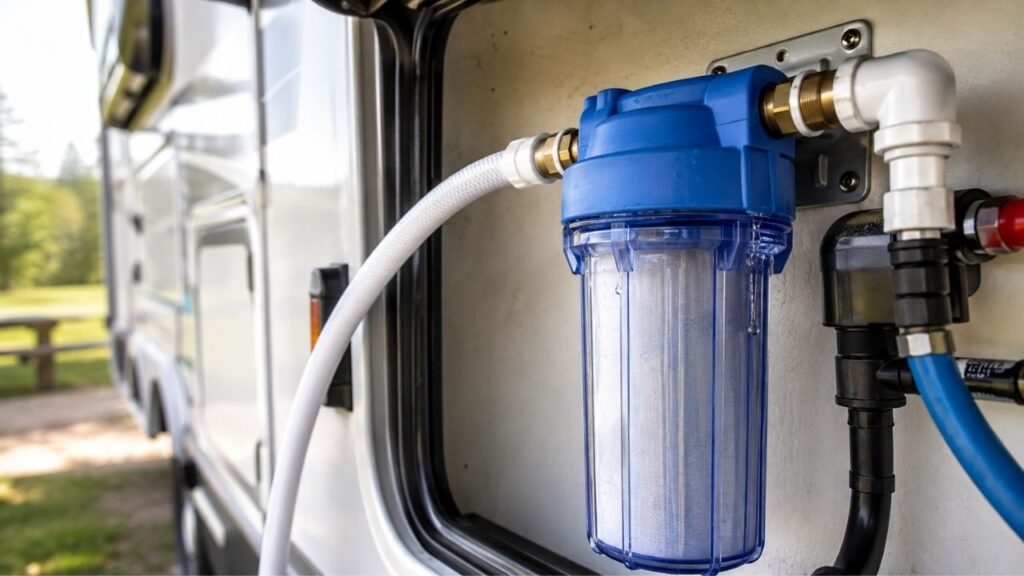
A sediment filter is good at catching larger suspended material such as sand, rust, dirt, and other particles before they enter your RV plumbing.
A carbon filter may also improve taste and odor.
However, ordinary RV filters generally do not remove the dissolved calcium and magnesium responsible for water hardness.
Those minerals pass through the filter with the water.
If hard water is causing your heater to scale rapidly, a suitable RV water softener can be much more useful than relying only on a standard filter.
I still like using filtration because it protects the entire plumbing system from debris. Just remember that filtration and softening solve different problems.
What About a Tankless RV Water Heater Making Popping or Crackling Sounds?
If you have a tankless RV water heater, do not automatically follow the flushing instructions for a six-gallon or ten-gallon storage heater.
Tankless units have small internal water passages and heat-transfer surfaces instead of a traditional storage tank.
Hard-water minerals can still accumulate inside them.
The difference is where that scale forms and how you remove it.
Many tankless systems require a manufacturer-specific decalcification or descaling procedure.
Some models may also have inlet filters that need periodic inspection.
If your tankless heater becomes noisy while hot-water flow is also becoming inconsistent, scale buildup is worth investigating.
Check the maintenance section of your exact model before attempting to clean it.
When Should You Stop Using the Water Heater and Call an RV Technician?
Most sediment-related popping can be handled through routine maintenance. Certain symptoms, however, are telling you that this is no longer a simple flushing job.
Stop using the heater and get professional help if you notice:
- A strong propane smell
- Heavy soot near the burner
- A burning electrical smell
- Steam from hot faucets
- Water becoming abnormally hot
- Repeated pressure relief valve discharge
- A significant tank leak
- Violent boiling or banging sounds
- Repeated high-limit shutdowns
- Popping that continues after proper servicing
- Severe corrosion around the drain
- Damaged tank threads
- Suspected gas or electrical component failure
I would rather have you stop and investigate one of these warning signs than continue heating water and hope the problem disappears.
Final Words
Most of the time, an RV water heater that sounds like popcorn is telling you it has accumulated sediment or mineral scale.
If the tank has not been flushed recently, that is the first place I would start.
Drain it safely, rinse out the loose mineral deposits, inspect the anode if your heater uses one, and completely refill the tank before turning the heat back on.
Pay attention to how the heater behaves afterward.
If the popping disappears, you have probably found the problem.
If it continues, especially in only one heating mode, the remaining clue can help you narrow the problem further.
Routine flushing and paying attention to your water quality can prevent most of these problems before they become expensive repairs.
Related FAQs
Is It Normal for an RV Water Heater to Make Popping Sounds?
A few light ticks while your RV water heater warms or cools can be normal, but repeated popping or crackling from inside the tank commonly points to sediment or mineral scale that should be checked.
Why Does My RV Water Heater Pop Only on Electric?
Popping that happens mainly in electric mode may indicate mineral scale around the electric heating element or another electric heating component. Compare propane and electric operation separately to help narrow down the cause.
Why Does My RV Water Heater Pop More on Propane?
The propane burner can heat the bottom of the tank quickly, making existing sediment more noticeable. The propane itself does not normally create the sediment, but stronger heating can make trapped steam bubbles sound louder.
Can I Keep Using My RV Water Heater If It Is Popping?
Mild sediment-related popping is not usually an emergency, but I would not ignore it for long. Turn the heater off if the noise comes with overheating, leaking, steam, propane odor, or repeated relief valve discharge.
Will Flushing Stop an RV Water Heater From Popping?
Flushing often reduces or eliminates popping when loose sediment is causing the noise. Hardened scale, electric element buildup, overheating, or plumbing noises may require additional troubleshooting.
Can Hard Water Damage an RV Water Heater?
Hard water can leave calcium and magnesium scale inside the heater. Over time, that buildup can reduce heat transfer, create popping noises, increase maintenance needs, and place additional stress on heating components.
Does an RV Water Filter Stop Hard-Water Buildup?
Most standard RV sediment and carbon filters do not remove dissolved hardness minerals. They can remove dirt and improve water quality, but a suitable water softener is normally needed to reduce calcium and magnesium hardness.
Can I Use Vinegar to Descale My RV Water Heater?
Only use vinegar or another descaling solution if the manufacturer of your specific water heater allows that procedure. Tank materials and internal components differ, so there is no universal chemical-cleaning method that is safe for every RV heater.
Why Does My RV Water Heater Pop After I Refilled It?
Temporary noises after refilling may come from trapped air moving through the heater and plumbing. Open a hot faucet until the water flows steadily, confirm the tank is completely full, and then turn the heater on.
Do Tankless RV Water Heaters Need Flushing?
Tankless RV water heaters may require periodic descaling or decalcification, especially when used with hard water. Follow the procedure for your exact model because tankless maintenance differs from flushing a conventional storage tank.

Steven Parker writes about everyday RV life, from setup tips to long-term living decisions. His content reflects a calm, experienced approach to RV ownership and travel. He focuses on comfort, reliability, and realistic expectations.