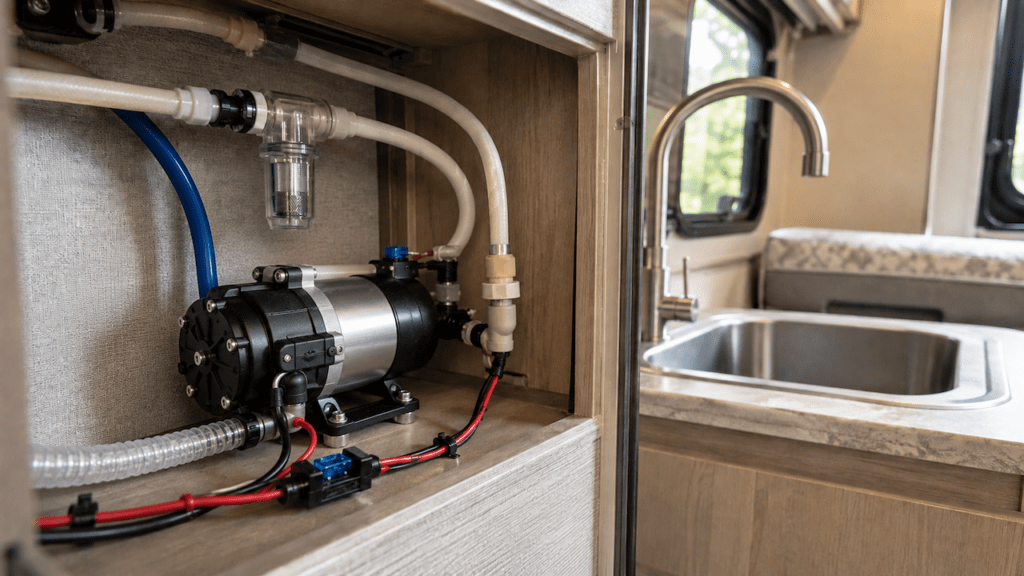
Your RV toilet may smell after dumping because waste residue, trapped gases, or plumbing problems still remain after the tank empties. A dry bowl seal, blocked roof vent, poor tank rinsing, or exhaust fan suction can also pull black tank odors into your bathroom.
Below, I’ll help you narrow down the exact cause. We’ll start with simple checks before moving into seals, vents, buildup, and other plumbing issues.
Key Takeaways
- An empty black tank can still contain smelly waste residue.
- Your toilet bowl water helps block odors from entering the RV.
- A dirty or worn toilet seal can release sewer smells.
- Poor tank rinsing can leave waste stuck inside the tank.
- Leaving the black valve open encourages solid waste buildup.
- A blocked roof vent can push odors toward the toilet.
- Running the exhaust fan can pull tank gases indoors.
- Not every rotten-egg smell comes from the black tank.
Why Can an RV Toilet Smell Worse Right After Dumping?
Dumping removes most liquid and waste from your black tank. However, it does not automatically make the tank completely clean.
Small amounts of waste, paper, and sludge can remain behind. This residue may stick along the tank floor and walls.
The odor can become especially noticeable immediately after dumping. Air movement inside the tank changes when the waste level drops.
If your toilet seal or ventilation system has a problem, those gases may find their way inside.
That is why I recommend looking at two things separately. First, determine whether odor remains inside the tank. Then check how that odor enters your RV.
Match the Smell to the Most Likely Cause
The timing and location of the smell provide useful clues. Use this table before replacing parts or buying tank chemicals.
| What You Notice | Most Likely Cause | Quick Check | First Thing to Try |
| Smell returns shortly after dumping | Waste residue remains | Check rinse water | Rinse the black tank thoroughly |
| Toilet bowl loses water | Bowl seal problem | Fill bowl and watch water level | Clean and inspect the seal |
| Odor increases while flushing | Vent or airflow problem | Flush with exhaust fan off | Check fan use and roof vent |
| Toilet burps or gurgles | Restricted vent or tank blockage | Listen during flushing | Inspect ventilation and tank flow |
| Smell is strongest near toilet base | Floor flange seal problem | Check around toilet base | Inspect toilet mounting and gasket |
| Tank sensors still show full | Residue around sensors | Rinse and recheck monitor | Deep-clean the tank |
| Smell comes from sink cabinet | Gray tank or AAV problem | Smell near sink plumbing | Inspect drain and AAV |
| Strong rotten-egg odor throughout RV | Possible propane issue | Leave RV and investigate safely | Rule out propane immediately |
First, Make Sure You Are Not Smelling Propane
Before working on the toilet, make sure the odor really comes from wastewater.
Black tank odor can sometimes smell like sulfur or rotten eggs. Unfortunately, propane leaks can produce a similar warning smell.
If the odor seems unusually strong or spreads throughout your RV, treat it seriously.
Do not automatically assume the toilet caused it.
Avoid flames, cigarettes, and electrical switches if propane is suspected. Get outside and follow your RV’s propane safety instructions.
Once propane has been safely ruled out, continue with the toilet checks below.
Common Reasons Your RV Toilet Smells After Dumping
Several problems can cause the same unpleasant odor. Start with the most common causes before taking anything apart.
Waste Residue Stayed Behind in the Black Tank
Dumping the black tank removes waste through the drain outlet. However, some material can remain stuck inside afterward.
Toilet paper, solids, and sludge often collect around low spots. Residue may also coat the tank walls and level sensors.
This becomes more likely when the tank receives too little water.
You might notice incorrect tank readings after dumping. The smell may also return soon after the tank empties.
A thorough black tank rinse is usually the first solution.
Use your factory tank flush if the RV has one. Continue rinsing until the wastewater becomes much clearer.
If your RV lacks a flush system, use an approved alternative. Avoid forcing inappropriate tools into the plumbing.
You Are Not Using Enough Water
Water is one of the most important parts of black tank maintenance.
Solid waste needs enough liquid to remain suspended. Without sufficient water, solids can settle and accumulate.
This buildup becomes harder to remove during normal dumping.
You can reduce the problem by using enough water when flushing. Avoid trying to conserve every drop inside the toilet.
After dumping, many RV owners also add some starting water. Follow your RV and tank-treatment instructions for the correct amount.
There is no single gallon amount suitable for every RV.
Tank size, plumbing design, and toilet type can differ significantly.
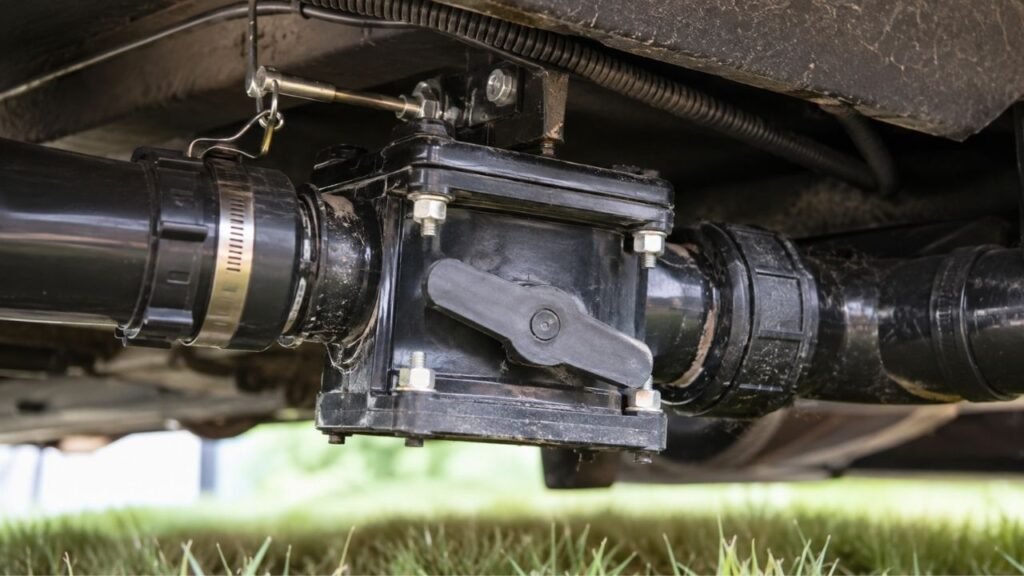
The Black Tank Valve Has Been Left Open at Full Hookups
Leaving the black tank valve open sounds convenient. Unfortunately, it can create a much larger problem.
When the valve remains open, liquids continually drain away.
Solid waste may stay behind inside the tank.
Over time, those solids can build into a hard mound. RV owners often call this a waste pyramid.
Eventually, even dumping may not remove the buildup properly.
Keep the black tank valve closed during normal camping use. Open it when the tank is ready for dumping.
This keeps enough liquid available to move solids outward.
The Toilet Bowl Is Not Holding Its Water Barrier
Look inside your RV toilet after normal use.
You should generally see some water remaining in the bowl.
That water does more than make the toilet look clean. It helps create a barrier against odors below.
If the water slowly disappears, sewer gas can reach the bathroom.
Add water to the bowl and observe it carefully.
If the level drops without flushing, inspect the bowl seal.
Different toilet models require different normal water levels. Always follow the instructions for your particular toilet.
The Flush Ball or Blade Seal Is Dirty, Dry, or Worn
Most RV toilets use a movable valve beneath the bowl.
Depending on the design, it may use a ball or blade.
A rubber seal surrounds that mechanism and holds bowl water.
Waste, toilet paper, or mineral deposits can interfere with the seal. The rubber may also become dry, stiff, cracked, or worn.
When this happens, the bowl slowly loses its water barrier.
Start by gently cleaning around the sealing surface.
If your toilet manufacturer allows seal conditioning, use an approved product.
Avoid random household oils or chemicals. Some substances can damage rubber components.
If cleaning does not restore the seal, replacement may be necessary.
The Black Tank Roof Vent Is Restricted
Your black tank needs a safe path for gases.
A vent pipe normally carries those gases through the RV roof.
If the vent becomes restricted, pressure and odors may escape elsewhere. The toilet becomes an obvious pathway whenever its valve opens.
Leaves, insects, nests, or damaged vent caps can create problems.
The vent pipe can also shift or become partially obstructed.
A blocked vent often causes odor while flushing. You may also hear bubbling or burping from the toilet.
Inspect the vent if easier troubleshooting does not solve the problem.
Only climb onto the RV roof when it supports safe access. Otherwise, let an RV technician perform the inspection.
Your Bathroom Exhaust Fan Is Pulling Tank Odor Inside
This problem surprises many RV owners.
Your bathroom fan removes air from the RV interior.
When the fan runs, replacement air must enter from somewhere.
If you open the toilet valve while flushing, the tank can provide that air.
Unfortunately, black tank gases may come with it.
Try an easy test.
Turn the bathroom exhaust fan completely off. Then flush the toilet again.
If the smell becomes noticeably weaker, airflow is contributing.
Open a window before running a powerful exhaust fan if needed. This gives outside air an easier entry path.
The Toilet-to-Floor Flange Seal Is Leaking Odor
Your RV toilet has more than one important seal.
The bowl seal keeps water inside the toilet.
The floor seal sits between the toilet and mounting flange.
If this lower seal fails, odor can escape around the toilet base.
The bowl may still hold water normally.
Look for smell concentrated around the floor connection.
Also check whether the toilet rocks when gently pushed.
A loose toilet can damage or compromise the floor gasket.
You may need to remove the toilet and replace the gasket. Check the flange for cracks or mounting damage during removal.
The Smell Is Actually Coming From the Gray Tank
Not every bathroom odor comes from the black tank.
Your gray tank holds wastewater from sinks and showers.
Food residue, soap, hair, and organic material can create strong odors.
These smells sometimes resemble sewage.
Check whether the odor seems stronger around the sink cabinet. A failed air-admittance valve can release gray tank gases there.
A dry P-trap can also allow odors through a drain.
Run some water into nearby sinks and shower drains.
If the toilet area improves afterward, investigate gray plumbing too.
How to Fix an RV Toilet Smell After Dumping
Work through these steps in order. Starting simple can save you unnecessary repairs and replacement parts.
Step 1: Turn Off the Bathroom Exhaust Fan
Start with the easiest possible test.
Turn the bathroom fan completely off.
Wait briefly, then flush the toilet normally.
If the smell decreases dramatically, airflow is part of your problem.
Open a window when using the fan during bathroom use.
Step 2: Check Whether the Toilet Bowl Holds Water
Add water to the bowl.
Leave it untouched for several minutes.
Return and compare the water level.
A noticeable drop usually points toward the bowl seal.
Clean the seal carefully and inspect its condition.
Replace it if cleaning does not stop the water loss.
Step 3: Rinse the Black Tank Thoroughly
Next, address anything remaining inside the tank.
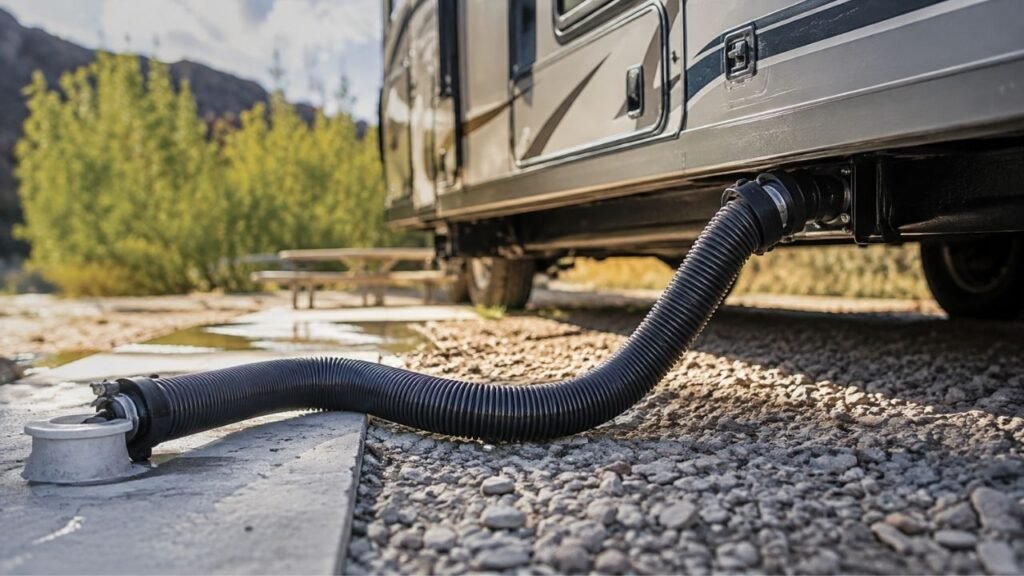
Connect your sewer hose securely.
Dump the black tank according to your RV instructions.
Then use the built-in black tank flush if equipped.
Keep the appropriate drain valve open while using systems requiring it.
Continue until the discharge water looks considerably cleaner.
Never walk away while a black tank flush is running.
An unattended flush can overfill the tank and cause serious damage.
Step 4: Reset the Tank for the Next Use
Do not simply finish dumping and forget the tank.
Close the black tank valve when rinsing is complete.
Add the starting water recommended for your setup.
Add your preferred holding tank treatment if you use one.
Then make sure the toilet bowl contains its normal water barrier.
This prepares the system for the next camping day.
Step 5: Inspect the Roof Vent if the Smell Continues
If tank cleaning and the bowl seal look good, inspect ventilation.
Start with the roof vent cap.
Look for obvious leaves, dirt, nests, or damage.
Do not blindly push long tools down the vent pipe.
You could damage plumbing connections or push debris deeper.
If you suspect an internal vent problem, professional inspection is safer.
Step 6: Check the Toilet Base and Nearby Plumbing
Persistent odor requires a broader inspection.
Check whether the toilet moves when gently pushed.
Inspect around the base for moisture or damaged flooring.
Then check nearby sink drains and air-admittance valves.
Sometimes the toilet gets blamed simply because it sits nearby.
Following the smell carefully can help identify the actual source.
Use This Post-Dump Routine to Keep the Smell From Returning
A consistent dumping routine prevents many odor problems. The process does not need to be complicated.
- Keep the black valve closed during normal camping use.
- Allow enough liquid to collect before dumping.
- Connect the sewer hose securely.
- Dump the black tank before the gray tank.
- Use the factory black tank flush when equipped.
- Follow your RV manufacturer’s flushing procedure.
- Continue rinsing until discharge becomes much clearer.
- Shut off the flushing water completely.
- Close the black tank valve.
- Add appropriate starting water for future use.
- Add tank treatment if you normally use one.
- Leave normal water in the toilet bowl.
Doing this consistently helps prevent residue from becoming stubborn buildup.
What Not to Do When Your Black Tank Smells
Some common shortcuts can make an odor problem worse.
- Do not leave the black tank valve continuously open.
- Do not assume an empty tank is completely clean.
- Do not keep adding chemicals to fix a bad seal.
- Do not mix different holding tank chemicals together.
- Do not use harsh drain openers inside the toilet.
- Do not leave the tank flush running unattended.
- Do not use your drinking-water hose for tank flushing.
- Do not force objects down a roof vent.
- Do not climb onto an unsafe RV roof.
- Do not ignore moisture around the toilet base.
Will Black Tank Treatment Get Rid of the Smell?
Black tank treatment can help control odor and manage waste. However, it cannot repair a mechanical plumbing problem.
If your tank is simply developing odor during normal use, treatment may help.
It will not repair a cracked floor seal.
It will not unblock a roof vent.
It will not make a worn toilet seal hold water again.
Think of tank treatment as part of normal maintenance.
Do not use it as a substitute for diagnosis.
If the same smell returns immediately after every dump, look for the underlying cause.
Is Some Smell During Black Tank Dumping Normal?
Catching some unpleasant odor outside while dumping can happen.
You are opening a system containing sewage and waste gases.
That is different from having strong odor inside your RV afterward.
Once the valves close, persistent bathroom odor deserves attention.
A smell that appears every time you flush suggests another issue.
The bowl seal, roof vent, airflow, or flange may need inspection.
Odor concentrated around the sewer connection outside is different.
The location of the smell matters just as much as timing.
When Should You Call an RV Technician?
Most toilet odor problems are manageable at home. However, some situations justify professional help.
- The toilet bowl still loses water after seal maintenance.
- Strong odor continues after proper tank cleaning.
- The toilet rocks or leaks around its base.
- The floor around the toilet feels soft.
- The roof vent appears damaged or disconnected.
- A severe tank blockage will not clear safely.
- Plumbing appears cracked beneath the toilet.
- You cannot safely inspect the roof.
- You suspect internal vent pipe damage.
- Wastewater is leaking into the RV structure.
A technician can also determine whether heavy tank buildup needs professional cleaning.
Final Words
An RV toilet that smells after dumping usually needs more than deodorizer.
Start by turning off the bathroom fan and checking bowl water. Then rinse the black tank thoroughly and inspect the seal.
If the odor remains, move to the roof vent, floor flange, and nearby plumbing.
The main goal is finding how the smell enters your RV. Once you find that pathway, the fix becomes much easier.
Related FAQs
Why Does My RV Toilet Smell Worse Right After I Dump the Black Tank?
Dumping can disturb tank gases while leaving residue behind. If the bowl seal, vent, or airflow system has a weakness, those odors may enter the bathroom more easily immediately afterward.
Should I Put Water in My Black Tank After Dumping?
Adding some starting water after dumping can help keep future waste from drying and sticking. Follow your RV or tank-treatment instructions because the recommended amount can vary between systems.
How Much Water Should Stay in an RV Toilet Bowl?
Keep the normal water level recommended for your toilet model. Many RV toilets retain a shallow layer that helps create an odor barrier, but the exact amount varies by manufacturer.
Can a Clogged Roof Vent Make My RV Toilet Smell?
Yes. A restricted black tank vent prevents gases from escaping normally through the roof. Those gases may instead travel toward the toilet when you flush.
Why Does My RV Toilet Smell When the Exhaust Fan Is Running?
The exhaust fan creates negative pressure inside the RV. When the toilet valve opens, that pressure can pull black tank gases upward through the toilet.
Why Does My Black Tank Still Smell When It Is Empty?
An empty tank can still contain waste film, toilet paper, sludge, and solids. Dumping removes most contents, but proper rinsing may be needed to remove odor-producing residue.
Can a Bad RV Toilet Seal Cause Black Tank Odor?
Yes. A damaged or dirty bowl seal may allow water to drain away. Once the water barrier disappears, black tank gases can enter through the toilet.
Should I Leave My RV Black Tank Valve Open at Full Hookups?
No. Keeping the valve open lets liquid drain continuously while solids remain behind. This can create stubborn waste buildup and eventually make odor and dumping problems worse.
Can Black Tank Chemicals Fix a Sewer Smell?
Tank chemicals may reduce normal waste odor, but they cannot fix damaged seals, clogged vents, loose toilet flanges, or serious buildup. Persistent odor needs proper diagnosis.
Why Does My RV Bathroom Still Smell After the Black Tank Is Clean?
Check the toilet seal, floor flange, roof vent, gray tank plumbing, and sink air-admittance valve. A clean black tank does not eliminate every possible bathroom odor source.
Can an RV Gray Tank Smell Like the Black Tank?
Yes. Gray tanks can develop strong odors from food residue, soap, hair, and organic buildup. A failed air-admittance valve or dry drain trap can release those odors indoors.
Is a Rotten-Egg Smell Always Coming From the RV Black Tank?
No. Propane can also produce a strong rotten-egg-like warning smell. If you are unsure about the source, treat it as a possible propane problem and follow proper safety procedures.

Steven Parker writes about everyday RV life, from setup tips to long-term living decisions. His content reflects a calm, experienced approach to RV ownership and travel. He focuses on comfort, reliability, and realistic expectations.