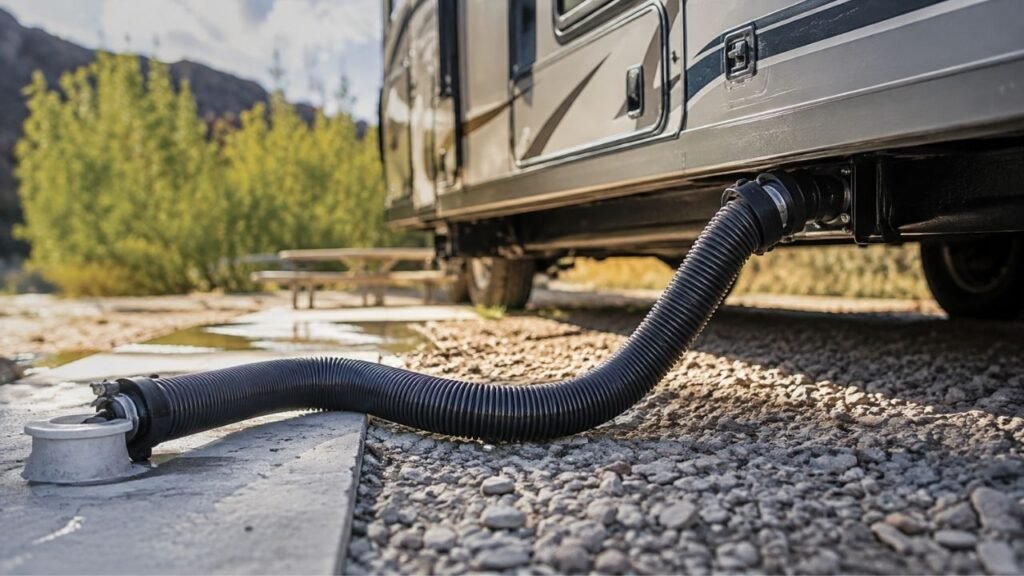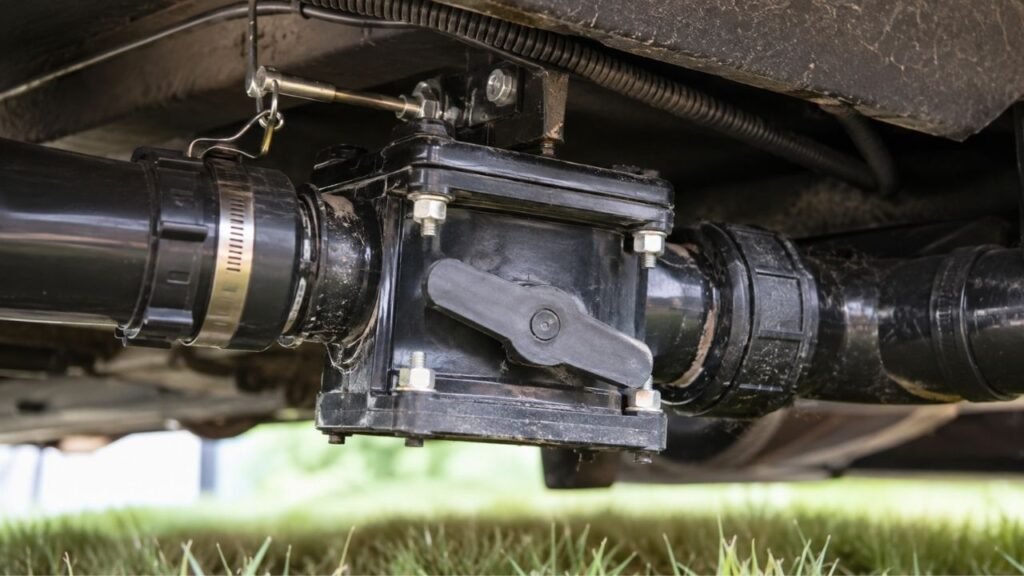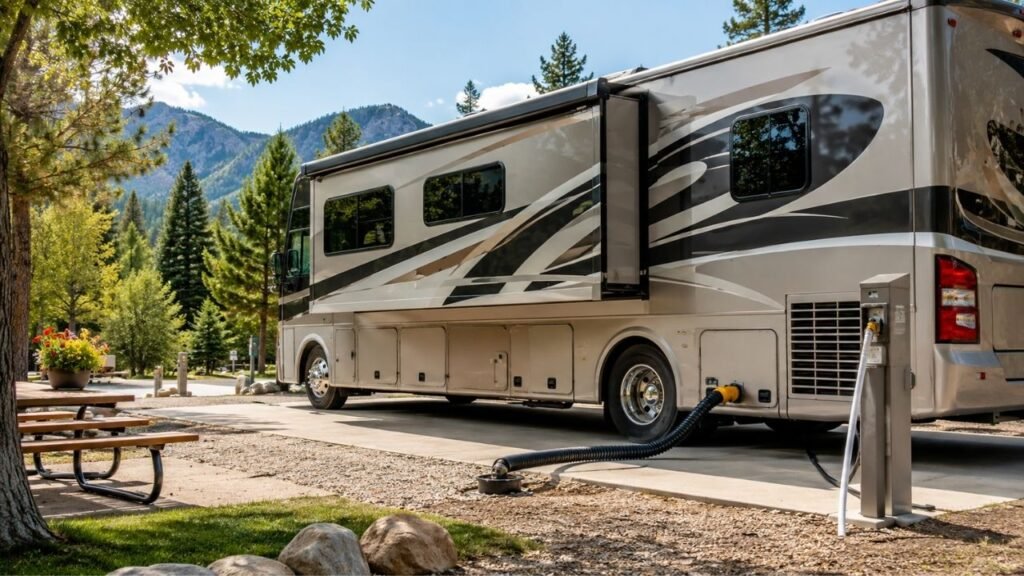
Black tank treatment and tank rinsing do different jobs, so neither completely replaces the other. Tank rinsing physically removes loose waste and residue, while black tank treatment helps manage odors and waste between dumps. For the best black tank care, use both as part of the same routine.
If you’re wondering where your effort matters most, I’ll break it down simply. We’ll compare treatment and rinsing, see where each works best, and build a practical routine that keeps your RV black tank easier to dump and maintain.
Key Takeaways
- Tank rinsing physically removes loose waste, paper, and residue.
- Black tank treatment works mainly between dumping cycles.
- Many treatments help control odors and break down organic waste.
- Treatment cannot physically wash heavy debris from the tank.
- A tank rinser cannot provide ongoing odor control after dumping.
- Neither method guarantees removal of hardened black tank buildup.
- Plenty of water is essential regardless of the treatment you use.
- Dumping, rinsing, adding water, and treating work best together.
- Keep your black tank valve closed between normal dumping cycles.
- Follow your RV manufacturer’s instructions when using a built-in rinser.
Black Tank Treatment vs. Tank Rinsing: Quick Comparison
Black tank treatment and rinsing are sometimes compared like competing cleaning methods. In reality, they handle different stages of black tank maintenance.
| Feature | Black Tank Treatment | Tank Rinsing |
| Main purpose | Waste and odor management | Physical residue removal |
| Works when | Between dumping cycles | During or after dumping |
| Controls odors | Usually, depending on formula | Only indirectly |
| Helps break down toilet paper | Many treatments do | No |
| Physically removes loose waste | No | Yes |
| Washes tank walls | No | Yes, within spray coverage |
| Helps dirty sensors | Sometimes | Often helps with loose residue |
| Removes hardened buildup | Usually not alone | Usually not alone |
| Requires a treatment product | Yes | Usually only water |
| Best use | Routine tank management | Post-dump cleaning |
| Best overall approach | Use with rinsing | Use with treatment |
If I had to simplify the difference, I would say treatment manages what stays inside, while rinsing removes what needs to leave.
What Does Black Tank Treatment Actually Do?
Black tank treatments are designed to work while waste remains inside your holding tank. However, formulas vary, so you should not assume every treatment works through the same process.
Controls Black Tank Odors
Odor control is one of the main reasons RV owners use treatment.
Waste sitting inside a warm holding tank can create unpleasant smells. That becomes especially noticeable during summer camping or extended stays.
A good treatment helps reduce those odors before they become noticeable inside your RV.
Some products use enzymes or bacteria. Others use different odor-control ingredients. Always check what the product actually claims to do.
Treatment can help with tank odors, but don’t use it to hide a larger problem.
Persistent odors may come from a clogged roof vent, poor toilet seal, dried waste, or another plumbing issue.
Helps Waste and Toilet Paper Break Down
Many black tank treatments are designed to help soften or break down organic waste and toilet paper.
That can make the contents easier to move when you eventually dump.
Think of treatment as something that helps maintain the waste while it sits inside the tank. It isn’t a powerful drain cleaner that instantly dissolves everything.
It also needs adequate moisture to work properly.
A nearly dry black tank filled with toilet paper and solids can still develop serious buildup even when treatment has been added.
Helps Prevent Waste From Becoming Difficult to Dump
Your black tank works best when waste remains surrounded by plenty of liquid.
That liquid helps suspend solids and carries them toward the outlet during dumping.
Treatment may help keep waste more manageable, but water remains extremely important.
I would never rely on treatment as an excuse to conserve every drop of toilet-flushing water.
Using a little extra water with each flush can prevent far more trouble later.
What Black Tank Treatment Cannot Do
Treatment has limitations, even when you’re using a good product.
It generally cannot:
- Physically spray waste from tank walls
- Push heavy debris toward the drain valve
- Guarantee completely clean tank sensors
- Instantly remove a hardened poop pyramid
- Repair a clogged black tank vent
- Fix a damaged termination valve
- Replace proper toilet-flushing water
- Replace periodic tank rinsing
- Correct poor dumping habits
This is why adding another treatment packet isn’t always the answer.
Sometimes your tank simply needs more water and a thorough rinse.
How Does Black Tank Rinsing Work?
Tank rinsing takes a much more physical approach. Instead of chemically or biologically managing waste, water is sprayed or directed through the tank to carry remaining material toward the drain.
Built-In Black Tank Flush
Many newer RVs have an exterior connection labeled something like Black Tank Flush.
That inlet feeds water to a spray nozzle located inside the tank.
With the sewer hose connected and the system operated according to your RV manual, the nozzle sprays water across part of the tank.
The moving water helps loosen paper, waste, and residue left after dumping.
Built-in flush systems are convenient, but don’t imagine a pressure washer perfectly reaching every square inch.
Tank shape, nozzle placement, water pressure, and accumulated buildup all affect performance.
RV Tank Rinse Wand
A tank rinse wand is another option, especially on older RVs without built-in flushing systems.
You normally insert the wand through the toilet opening and direct water into the black tank.
Some wands use straight spray patterns. Others use rotating or multi-directional jets.
A wand can provide more direct rinsing in certain tank layouts.
However, accessibility depends on the toilet and plumbing configuration.
Reverse Flush or Backflush Attachment
A backflush device attaches around the RV’s sewer outlet and sends water backward toward the holding tank.
This can help loosen material around the outlet and lower section of the tank.
It isn’t identical to an internal spray system, but it gives RV owners another rinsing option.
Whatever system you choose, only dump wastewater at an approved sewer connection or dump station.
What Tank Rinsing Does Best
Tank rinsing is particularly useful for:
- Washing loose waste out after dumping
- Moving remaining toilet paper toward the outlet
- Diluting dirty water left inside the tank
- Removing loose residue around tank sensors
- Reducing material that could dry inside
- Cleaning around the lower tank area
- Showing whether additional debris is still draining
Rinsing becomes even more valuable when you do it regularly instead of waiting for a serious buildup problem.
Which Works Better: Treatment or Rinsing?
There isn’t one universal winner here. The better method depends entirely on what you’re trying to accomplish.
For Removing Waste: Tank Rinsing Wins
If your tank has already been dumped and you want remaining debris out, rinsing is more useful.
Treatment cannot physically carry loose waste through the termination valve.
Flowing rinse water can.
That’s why you may see additional toilet paper or dark water coming out after the initial dump has finished.
For Odor Control Between Dumps: Treatment Wins
Rinsing happens mainly around dumping time.
Your black tank treatment stays inside while you’re camping.
That makes treatment much more useful for ongoing odor control.
A clean rinse certainly helps reduce leftover smelly residue, but it doesn’t continue working several days later.
For Breaking Down Toilet Paper: Treatment Usually Wins
Water alone can soften toilet paper, especially when you’re using septic-safe RV-friendly paper.
However, treatments specifically designed to break down waste and paper can provide additional help.
Just remember that formulas differ.
Read the product directions rather than assuming every deodorizer also digests waste.
For Removing Loose Sensor Residue: Rinsing Often Wins
Traditional tank sensors can give false readings when waste sticks around their probes.
A strong rinse may remove some of that loose material.
If your tank reads full immediately after dumping, rinsing is certainly worth trying.
However, stubborn sensor contamination may remain after several rinse cycles.
That doesn’t automatically mean your tank is still full.
For Hardened Sludge: Neither May Be Enough
This is where expectations need to stay realistic.
A regular treatment probably won’t instantly dissolve months of hardened waste.
Likewise, normal rinse water may flow around compacted material instead of removing it.
Heavy buildup may require soaking, repeated cleaning cycles, targeted flushing, or professional tank cleaning.
For Everyday Prevention: Using Both Wins
For regular RV use, I wouldn’t choose treatment instead of rinsing or rinsing instead of treatment.
Use treatment to manage the tank between dumps.
Then use rinsing to remove what remains afterward.
That combination addresses both sides of black tank maintenance.
Why Treatment and Rinsing Work Better Together
You get better results when you treat black tank maintenance as a cycle rather than a single cleaning event.
While you’re camping, water and treatment help keep the tank contents manageable. When the tank becomes ready for dumping, gravity carries most of that waste through the outlet.
Rinsing then gives you a second cleaning stage.
Fresh water moves through the tank and carries additional loose paper, sludge, and dirty water toward the sewer connection.
Once you’re finished dumping and rinsing, you reset the tank.
Add some clean water back into the tank, then add your chosen treatment according to its directions.
Now the treatment has a moist environment where it can work during the next camping cycle.
The routine becomes simple:
Use → dump → rinse → add water → treat → use again.
That approach makes much more sense than expecting one bottle or one rinse cycle to solve every black tank problem.
The Best Black Tank Routine: Treatment + Rinsing
A consistent routine prevents far more problems than occasional aggressive cleaning. Here’s the general approach I recommend, while still following the instructions for your specific RV.
- Let the black tank become reasonably full before dumping.
- Securely connect your sewer hose to an approved sewer inlet.
- Open the black tank termination valve.
- Allow the tank to drain thoroughly.
- Keep the sewer hose connected.
- Connect a dedicated rinse hose to your black tank flush inlet.
- Operate the flush exactly as your RV manufacturer recommends.
- Watch the discharge if you’re using a clear sewer fitting.
- Continue rinsing until you’re satisfied loose debris has cleared.
- Shut off the rinse water.
- Allow remaining water to drain from the system.
- Finish the flushing procedure according to your RV manual.
- Dump your gray tank afterward when appropriate.
- Close the black tank valve before normal camping use.
- Add clean water back into the black tank.
- Add treatment according to the product’s dosing instructions.
Notice that I didn’t give you one exact amount of water to add afterward.
You may hear recommendations ranging from a couple of gallons to several gallons. RV layouts, tank sizes, treatment instructions, and manufacturer recommendations vary.
The important goal is to avoid starting your next tank cycle completely dry.
You want enough water across the bottom to help incoming waste stay wet.
Should You Close the Black Tank Valve While Rinsing?
Don’t close the black tank valve during a built-in flush unless the instructions for your specific RV clearly allow that procedure.
You may see RV owners recommending a technique where they close the valve, let rinse water accumulate, and then release everything at once.
I understand why the technique is attractive.
A larger volume of water can create a stronger rush toward the drain.
The problem is the risk.
Several RV manufacturers specifically instruct owners to keep the black tank termination valve open while operating the built-in flush.
If you close the valve and forget the running water, the tank can overfill.
Wastewater could eventually come through the toilet or cause another messy problem.
So I would not treat closed-valve flushing as a universal black tank cleaning technique.
Follow your RV owner’s manual.
Never leave your RV unattended while water is entering the black tank.
Also, use a dedicated non-potable hose for black tank flushing rather than the hose you use for drinking water.
How Often Should You Treat and Rinse an RV Black Tank?
How often you need treatment and rinsing depends on how you use your RV. A weekend camper and a full-time RVer put very different demands on the same plumbing system.
A practical schedule looks like this:
- Black tank treatment: Follow the product directions, typically after dumping or resetting the tank.
- Built-in rinsing: Rinse regularly when you have an appropriate sewer connection.
- Weekend camping: A thorough rinse near the end of the trip usually makes sense.
- Full-time RVing: More frequent rinsing may help because dumping cycles happen often.
- Hot-weather camping: Pay closer attention to water and odor control.
- Before storage: Dump and rinse thoroughly before waste has time to dry.
- Persistent buildup: Move to deeper cleaning instead of endlessly increasing treatment dosage.
You certainly can rinse after every dump if your setup makes that convenient.
The bigger goal is consistency.
Don’t wait until your tank smells terrible, drains slowly, and reads full while empty.
Can You Skip Black Tank Treatment If You Rinse Regularly?
You can maintain an RV black tank primarily through good water use, proper dumping, and regular rinsing, but rinsing doesn’t duplicate everything a treatment does.
A rinse cleans mainly during the dumping process.
It cannot continue managing odors or helping waste break down several days into your camping trip.
Treatment provides that between-dump function.
I would focus first on good black tank habits: keep the valve closed between dumps, use enough water, avoid inappropriate materials, and dump properly.
Treatment can then provide an extra layer of waste and odor management.
If your RV manufacturer or chosen treatment has specific requirements, follow those instructions.
Can You Use Treatment Without Rinsing the Tank?
Yes, you can use black tank treatment even if your RV doesn’t have a rinse system.
Plenty of older RVs operated for years without built-in flush ports.
The treatment can still work while waste sits inside the tank.
However, treatment doesn’t mean physical residue disappears automatically.
Over time, paper or waste can remain around tank walls, sensors, and the outlet.
That’s why some form of occasional rinsing remains useful.
If your RV doesn’t have a built-in flush system, a rinse wand or compatible backflush device may help.
Does Clear Rinse Water Mean the Black Tank Is Completely Clean?
Not necessarily.
When the discharge changes from dirty water to relatively clear water, that’s a good sign that you’re no longer removing much loose material.
But clear water does not prove every surface inside the tank is spotless.
A built-in sprayer may not hit every corner equally.
Waste can remain behind baffles, around sensors, along tank edges, or in areas with limited spray coverage.
Hardened deposits are even more difficult.
So use clear discharge as a useful indication that routine rinsing is finished, not proof that the tank looks brand new inside.
For normal maintenance, you don’t need a surgically clean tank anyway.
Your goal is to prevent excessive waste accumulation.
When Neither Treatment Nor Routine Rinsing Is Enough
Treatment and rinsing handle everyday maintenance well. When the same symptoms keep returning, however, you may need to diagnose the underlying problem instead of repeating another normal cleaning cycle.
Persistent Black Tank Odor
If your tank smells shortly after treatment and rinsing, look beyond the treatment product.
Check whether the toilet bowl holds water.
Inspect the toilet seal, tank venting, and dumping habits.
Dry or compacted waste may also remain inside the tank.
A stronger deodorizer won’t repair a damaged seal or clear a blocked vent.
Tank Sensor Still Reads Full
A false full reading is extremely common with traditional holding tank probes.
Waste, toilet paper, mineral deposits, or sludge can create electrical continuity between sensors.
Rinsing may clean loose contamination.
Persistent deposits might need a dedicated tank or sensor cleaning process.
If the tank clearly empties but the panel still reads full, don’t automatically assume you have several gallons of waste trapped inside.
Tank Drains Slowly
Slow draining can point toward accumulated solids or a partial blockage near the tank outlet.
You may also have heavy toilet paper buildup.
A normal treatment dose is unlikely to immediately correct a serious restriction.
Adding plenty of water and performing an appropriate cleaning process may be necessary.
Waste Will Not Drain
If you open the valve and virtually nothing comes out of a known-full black tank, you may have a more significant clog.
Don’t keep blindly adding treatment packets.
You may need soaking, controlled flushing, blockage removal, or professional help.
Be particularly careful when disconnecting plumbing from a tank you suspect is still full.
What About a Poop Pyramid or Hardened Black Tank Buildup?
A poop pyramid is one problem where prevention is much easier than cleanup.
It usually develops when liquids escape or aren’t present in sufficient amounts while solid waste remains behind.
Leaving the black tank valve open at a full-hookup campsite is one common way this happens.
Liquid continuously runs toward the sewer, while toilet paper and waste can remain directly below the toilet.
Eventually, that material can become compacted.
Routine treatment and ordinary rinsing might help soften or remove smaller deposits.
However, neither one guarantees removal of a large hardened pyramid.
A more serious buildup may require:
- Extended soaking with plenty of water
- Repeated controlled cleaning cycles
- Targeted rinsing
- Dedicated holding tank cleaning products
- Mechanical or professional tank cleaning
Don’t attack a severe clog by randomly mixing household chemicals.
Some chemical combinations can damage components or create dangerous fumes.
Common Mistakes That Make Both Methods Less Effective
Even a good treatment and a powerful rinse system struggle when basic tank habits are working against them.
Avoid these common mistakes:
- Leaving the black tank valve open while camping
- Using too little water when flushing the toilet
- Dumping tiny amounts of waste repeatedly
- Starting every tank cycle completely dry
- Expecting treatment to replace water
- Expecting rinsing to provide long-term odor control
- Adding extra chemicals without finding the actual odor source
- Mixing different cleaners without checking compatibility
- Using harsh chemicals not intended for RV holding tanks
- Putting inappropriate wipes or hygiene products into the toilet
- Using your drinking-water hose for black tank flushing
- Walking away while the rinse water is running
- Closing the tank valve against manufacturer flushing instructions
- Assuming clear rinse water means every surface is perfectly clean
Most serious black tank problems aren’t caused by one bad dumping session.
They’re usually the result of small habits repeated over time.
What If Your RV Does Not Have a Built-In Black Tank Flush?
You can still maintain the tank effectively without a factory-installed rinse system.
Older travel trailers and motorhomes often rely on other methods.
Possible options include:
- A toilet-mounted tank rinse wand
- A flexible rinse wand
- A compatible reverse-flush attachment
- Manufacturer-approved fill-and-dump cleaning cycles
- An aftermarket internal rinse system
- Professional black tank cleaning for major buildup
Treatment doesn’t depend on having a built-in flush.
You can still add water and treatment after dumping and use the tank normally.
The difference is simply how you physically rinse remaining residue afterward.
Black Tank Treatment vs. Rinsing for Different RVers
Your ideal routine can change depending on how often you camp, where you stay, and how much water you have available.
Weekend Campers
If you camp for a few weekends each season, focus on proper water use during your trip.
Dump and rinse thoroughly before extended storage.
Then reset the tank with water and treatment according to your preferred product.
Full-Time RVers
Full-time RV owners put much more waste through their systems.
Consistent dumping, rinsing, and treatment become more important because there isn’t a long storage period between trips.
You also get more opportunities for residue to accumulate around tank sensors.
A repeatable routine is usually better than occasional deep cleaning.
Full-Hookup Campers
Having a sewer connection at your campsite doesn’t mean your black valve should remain open.
Keep it closed during normal use.
Allow liquids and solids to accumulate together.
Dump when the tank has enough volume to produce a strong flow.
That alone can prevent many buildup problems.
Boondockers
Boondockers need to conserve fresh water, which can make long rinsing sessions impractical.
That makes good water use during normal toilet flushing even more important.
Use enough water to keep waste wet without wasting your limited freshwater supply.
Perform a more thorough rinse later when you reach a suitable dump station.
Hot-Weather Campers
Heat can make black tank odors much more noticeable.
Pay close attention to water levels, toilet seals, tank ventilation, and treatment directions.
Don’t automatically double the treatment dose because the weather gets hotter.
Use the amount recommended for your tank size and conditions.
Final Verdict: Is Black Tank Treatment or Tank Rinsing More Important?
Tank rinsing works better when you need to physically remove loose waste and residue. Black tank treatment works better when you need odor control and waste management between dumps. For long-term black tank care, using both is better than relying entirely on either one.
If I had to prioritize the whole system, I would put good water habits first.
No treatment can completely compensate for a black tank that stays too dry.
No rinser can guarantee removal of a large mass of waste you’ve allowed to harden for months.
A simple routine gives you the best chance of avoiding both problems:
Use enough water → keep the valve closed → dump properly → rinse → add fresh water → add treatment.
Stick with that pattern and your black tank should be easier to dump, less likely to smell, and much less likely to develop stubborn buildup.
Related FAQs
Should I Use Black Tank Treatment After Every Dump?
Follow the directions on your treatment because dosing schedules vary. Many RVers add treatment when resetting the tank after dumping, along with enough clean water to prevent the tank floor from remaining dry.
Should I Rinse My RV Black Tank Every Time I Dump It?
You can rinse after every dump, especially when a flush connection is convenient, but it isn’t always necessary. Regular rinsing and a thorough rinse before storage are more important than following one rigid schedule.
Do I Add Black Tank Treatment Before or After Rinsing?
Add your normal treatment after you finish dumping and rinsing. Put some clean water back into the tank first or as directed, then add the treatment according to the product instructions.
How Much Water Should I Put in My Black Tank After Dumping?
There isn’t one correct number for every RV. Add enough water to keep the bottom wet and support proper waste movement, while following your RV and treatment manufacturer’s recommendations.
Can I Put Treatment in a Completely Empty Black Tank?
You can add treatment after dumping, but most treatments work better with water present. Starting with some clean water also helps prevent incoming toilet paper and waste from drying against the tank floor.
Can Black Tank Treatment Unclog a Tank?
Treatment may help soften manageable waste over time, but it isn’t a guaranteed cure for a severe clog. A badly blocked tank may need soaking, targeted flushing, mechanical cleaning, or professional service.
Will a Black Tank Flush Clean the Sensors?
A black tank flush can remove loose residue from traditional sensor probes and improve their readings. However, hardened waste or mineral buildup may remain and require additional cleaning.
How Long Should I Run My RV Black Tank Flush?
There isn’t a universal number of minutes. Follow your RV manufacturer’s flushing procedure and watch the discharge if possible, stopping after loose debris has cleared and the required flushing process is complete.
Can I Run the Black Tank Flush With the Valve Closed?
Don’t do this unless the instructions for your specific RV explicitly permit it. Many manufacturers require the black tank gate valve to remain open during flushing to prevent overfilling and possible damage.
Can I Leave My Black Tank Flush Hose Connected?
It’s better to disconnect the rinse hose when flushing is finished, especially when your manufacturer’s instructions require it. Leaving it connected can also create confusion between your potable and wastewater equipment.
Do I Need a Separate Hose for Black Tank Rinsing?
Yes, using a dedicated non-potable hose is the safer approach. Keep that hose separate from the one you use for filling your RV’s fresh water system.
Does an RV Black Tank Need Treatment If It Does Not Smell?
Not every odor-free tank immediately needs more treatment. Good water use and dumping habits matter most, but treatment can still help manage waste and odors according to the product’s recommended schedule.
Can Too Much Black Tank Treatment Damage the Tank?
Using more treatment than recommended doesn’t necessarily provide better results and may waste product. Follow the label dosage and never mix treatments or household chemicals unless their instructions confirm compatibility.
Why Does My Black Tank Still Smell After Rinsing?
Odor may remain because of waste buildup, a dirty tank, poor ventilation, a leaking toilet seal, insufficient bowl water, or another plumbing issue. Rinsing alone doesn’t correct every source of sewer odor.
Is Rinsing Enough to Remove a Poop Pyramid?
Routine rinsing may remove loose material but often isn’t enough for a large hardened poop pyramid. Severe buildup can require prolonged soaking, repeated targeted cleaning, or professional tank service.

Steven Parker writes about everyday RV life, from setup tips to long-term living decisions. His content reflects a calm, experienced approach to RV ownership and travel. He focuses on comfort, reliability, and realistic expectations.