Your RV tank monitor usually reads full after dumping because waste, toilet paper, soap film, grease, or other conductive residue is still touching the tank sensors. The tank may actually be empty, but dirty sensor probes can continue sending a false FULL signal. Less commonly, the tank did not drain completely or the monitoring system has an electrical problem.
In this guide, I’ll help you determine whether the tank is truly empty. We’ll also clean the sensors, troubleshoot stubborn readings, and decide when repair or replacement makes sense.
Key Takeaways
- Dirty sensor probes commonly cause false FULL readings after dumping.
- Black tanks usually collect waste, sludge, and toilet paper.
- Gray tanks often develop soap, grease, and food residue.
- Confirm the tank drained completely before blaming the sensors.
- Cleaning should come before replacing probes or monitor components.
- Wiring problems can cause inaccurate readings on some monitoring systems.
- External sensor systems require different troubleshooting than internal probes.
Is the Tank Really Full or Is the Monitor Giving a False Reading?
Before cleaning anything, make sure the tank actually emptied. A monitor problem and a drainage problem can look very similar.
| What You Notice | Most Likely Cause | Tank Most Affected | What to Check First |
| Strong dump flow, but monitor still says FULL | Dirty sensor probe | Black or gray | Rinse and clean sensors |
| Dump flow is unusually slow | Partial clog or retained waste | Mostly black | Outlet and tank blockage |
| Black tank stays at 2/3 or FULL | Waste or toilet paper buildup | Black | Black tank rinse |
| Gray tank stays at 1/3 or 2/3 | Soap or grease buildup | Gray | Gray tank cleaning |
| Reading improves after rinsing | Sensor contamination | Either tank | Continue cleaning |
| Readings jump randomly | Wiring or sensor problem | Either tank | Inspect monitoring system |
| Several tank readings fail together | Shared electrical issue possible | Multiple tanks | Check panel and wiring |
| External sensor stays inaccurate | Sender or installation problem | Any tank | Follow system diagnostics |
If the tank produced a strong, normal dump flow, then stopped completely, the tank probably emptied normally.
A stubborn FULL reading after that usually points toward sensor contamination.
However, weak drainage deserves more attention before you trust that assumption.
Why Does My RV Tank Monitor Read Full After Dumping?
Several problems can leave your monitor showing FULL after dumping. Most involve contamination around traditional internal sensor probes.
Conductive Residue Is Coating the Sensor Probes
Many factory RV tank monitors use metal probes mounted through the tank wall.
Each probe represents a particular tank level.
When liquid reaches a probe, it completes an electrical path. Your monitor then displays the corresponding level.
Unfortunately, liquid is not the only thing that conducts electricity.
Damp waste residue can produce the same electrical connection. Sludge, soap film, grease, and wet organic material can also do it.
That means your tank can drain while residue remains behind.
The monitor sees the residue and still thinks liquid is present.
This is why dumping alone does not always restore an EMPTY reading.
Wet Toilet Paper or Waste Is Stuck to the Black Tank Sensors
Black tank sensors deal with one of the harshest environments onboard.
Waste and wet toilet paper constantly move across the tank walls. Small pieces can stick directly against the level probes.
Once that material becomes wet, it may conduct enough electricity to trigger the monitor.
You may dump nearly everything from the tank successfully. However, that small piece of material can keep the panel showing 2/3 or FULL.
This becomes more common when the black tank has insufficient water.
Leaving the black valve open at a full-hookup campsite can also contribute. Liquid escapes while solid waste stays behind and dries.
Over time, accumulated waste can repeatedly foul the sensors.
Soap Scum and Grease Are Coating the Gray Tank Sensors
Gray tanks do not contain toilet waste, but they still get dirty.
Think about everything entering your sinks and shower.
Soap residue, shampoo, toothpaste, cooking grease, food particles, and body oils all collect inside the gray tank.
Those materials can form a sticky layer along the tank walls.
If that layer reaches the sensors, your monitor can show an incorrect level after dumping.
Kitchen gray tanks can be especially troublesome because grease sticks easily.
This is why a gray tank may repeatedly show 1/3, 2/3, or FULL despite draining normally.
The Tank Did Not Completely Empty
Sometimes the monitor is correct.
Your tank may genuinely contain more liquid or waste than expected.
A partial clog can restrict flow from the black tank. Hardened waste may also accumulate near the outlet.
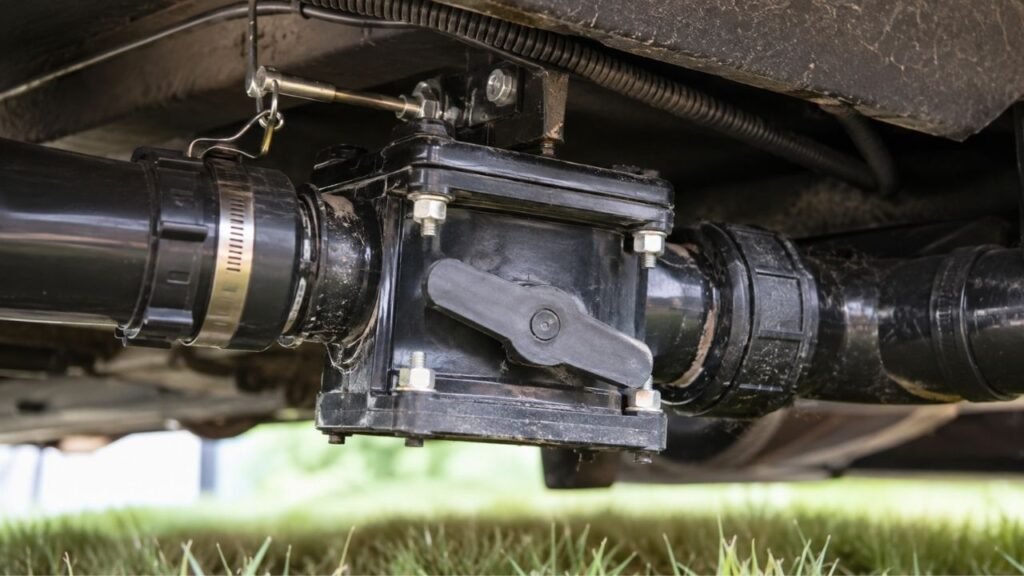
A valve that does not fully open can create similar symptoms.
Watch the discharge whenever you dump.
A healthy tank should usually produce strong initial flow. Flow gradually reduces as the tank empties.
If you only get a weak stream from the beginning, investigate further.
You may have a blockage rather than a sensor problem.
Mineral Deposits or Heavy Tank Buildup Are Affecting the Reading
Mineral deposits can also interfere with sensor accuracy.
Hard water leaves minerals behind as water repeatedly enters and evaporates.
These deposits can combine with soap, grease, and waste residue.
Eventually, you get a stubborn coating that ordinary rinsing cannot remove.
This buildup may explain sensors that improve briefly after cleaning, then quickly become inaccurate again.
A deeper tank cleaning may be needed in that situation.
There Is a Wiring, Connection, or Monitor Panel Problem
Dirty sensors are common, but they are not the only possibility.
Loose wiring, damaged connections, corrosion, or electrical faults can produce incorrect readings.
The exact symptom depends on your monitoring system.
That is important because electrical faults do not always behave identically.
For example, one wiring problem may cause a false FULL indication. Another may prevent the monitor from registering any level.
Avoid replacing random wires or sensors based only on the display.
Use the wiring diagram for your specific monitor whenever possible.
Your RV Uses an External Sensor System
Not every RV uses internal metal probes.
Some aftermarket monitoring systems use sensor strips mounted outside the tank.
These sensors measure tank level through the tank wall.
Because they do not sit directly inside wastewater, ordinary toilet paper cannot physically stick to them.
However, external systems can still develop problems.
Incorrect installation, sender issues, wiring faults, calibration problems, or severe internal buildup can affect performance.
If you have an external system, skip internal probe-cleaning advice.
Follow the troubleshooting instructions for that specific monitor instead.
How Does an RV Tank Monitor Know When the Tank Is Full?
Traditional RV tank monitors usually use several conductive probes positioned at different heights inside the tank. When liquid reaches each probe, the electrical circuit recognizes that level. The monitor panel may then show EMPTY, 1/3, 2/3, or FULL.
The weakness of this design is that probes cannot easily distinguish clean liquid from damp contamination. Waste residue or soap film can behave electrically like standing water. This is why inaccurate readings are common even when the probes themselves still work.
Newer monitoring systems may use external senders instead. These systems mount outside the tank and estimate liquid levels without direct waste contact. They are often less affected by ordinary internal residue, although installation and tank conditions still matter.
How Do I Fix an RV Tank Monitor That Still Reads Full?
Start with the simplest possibility before replacing anything. This troubleshooting order helps you avoid unnecessary parts and repairs.
1. Confirm the Tank Actually Drained
First, verify that wastewater left the tank normally.
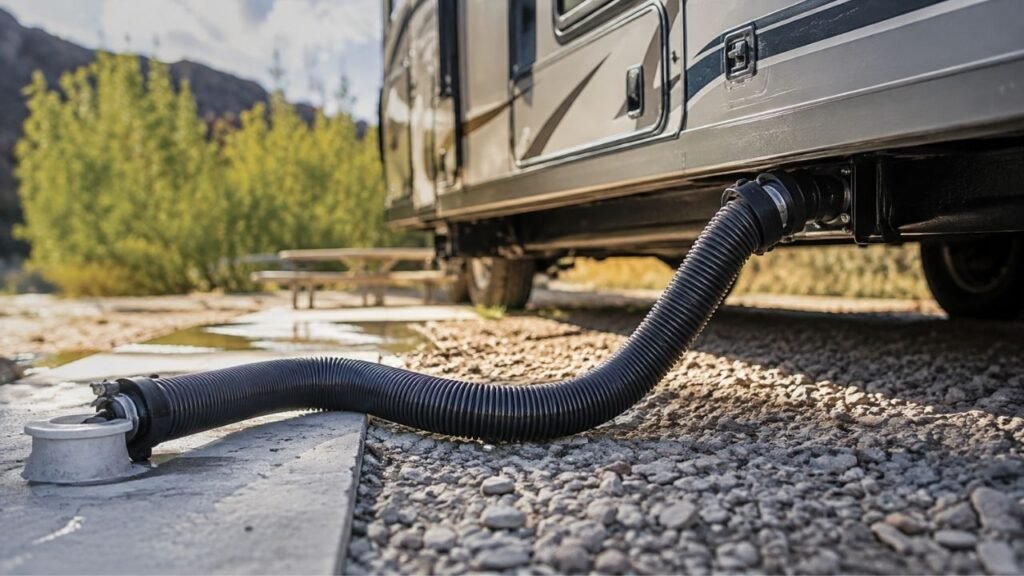
Connect your sewer hose securely and open the appropriate valve.
Pay attention to the discharge.
A strong initial surge usually suggests the valve and outlet are open.
If you use a clear sewer elbow, watch the flow carefully.
Once dumping finishes, the flow should slow dramatically and eventually stop.
A weak stream from the beginning may indicate a restriction.
If the black tank drains very slowly, investigate a clog before cleaning sensors.
Also watch for other warning signs.
A toilet that burps, rises unusually high, or drains slowly may indicate actual tank buildup.
2. Dump and Rinse the Tank Again
Sometimes another thorough rinse is enough.
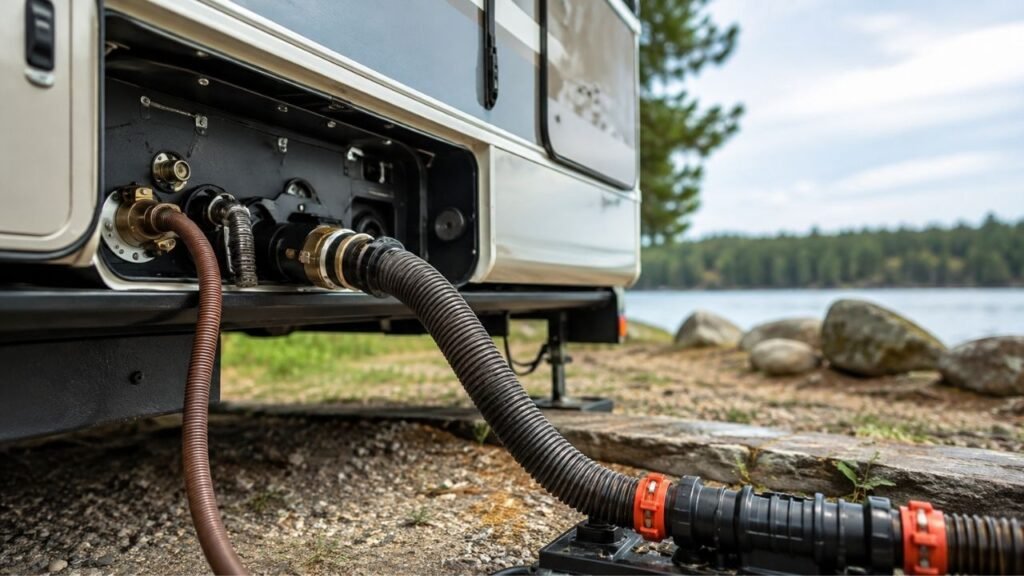
For a black tank, use the factory tank-flush connection if your RV has one.
Leave the dump valve open while initially flushing according to your system instructions.
Let clean water rinse loose waste from the tank walls.
Then shut off the rinse before disconnecting anything.
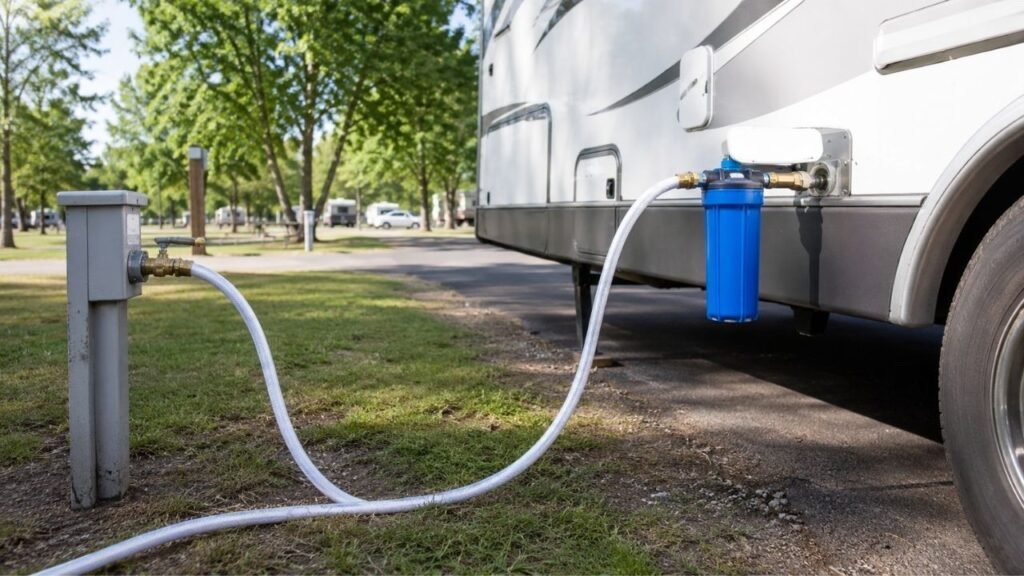
Keep tank-rinse equipment separate from your potable-water hose.
For gray tanks, adding clean water before another dump can help loosen loose residue.
One quick rinse may not fix heavily contaminated probes.
However, improvement after rinsing strongly suggests dirt is causing the false reading.
3. Deep-Clean the Tank and Sensor Area
When ordinary rinsing fails, deeper cleaning is the next step.
Choose a cleaner designed for RV holding tanks.
Follow the manufacturer’s directions carefully.
The purpose is not simply making the tank smell better.
You want to loosen material attached to the walls and sensor area.
For black tanks, this may include waste residue and toilet paper.
For gray tanks, the target is usually grease and soap film.
Use enough water for the cleaning solution to reach tank surfaces.
Cleaning an almost-dry tank rarely helps upper-level probes.
Give the product adequate soaking time before dumping.
Avoid combining cleaning chemicals unless their instructions specifically allow it.
4. Add Water and Agitate the Tank
Movement can help loosen softened buildup.
After adding the recommended cleaner and water, some RV owners drive normally before dumping.
The moving water washes across different parts of the tank.
This may remove material that stationary soaking leaves behind.
You do not need aggressive driving.
Normal road movement usually provides plenty of agitation.
Make sure all valves and caps are properly secured first.
5. Dump, Rinse, and Test the Monitor Again
After soaking or driving, dump the tank completely.
Rinse again with clean water.
Then check your monitoring panel.
Do not only look for an EMPTY reading.
A change from FULL to 2/3 is also useful information.
It suggests some contamination was removed.
Likewise, moving from 2/3 to 1/3 strongly points toward dirty probes.
If nothing changes after several proper cleaning attempts, move into electrical diagnosis.
6. Inspect the Sensor Connections and Wiring
Turn off appropriate power before handling exposed electrical connections.
Inspect accessible sensor wires for obvious damage.
Look for:
- Loose connectors
- Broken wires
- Corrosion
- Damaged terminals
- Pinched wiring
- Moisture around connections
Do not assume every inaccurate monitor has a grounding problem.
Different monitoring systems react differently to wiring failures.
Use your manufacturer’s wiring diagram when testing individual circuits.
If you are uncomfortable troubleshooting RV electrical equipment, an RV technician can test the system safely.
7. Replace or Upgrade the Sensor System if Necessary
Replacement should usually come after cleaning and electrical checks.
A physically damaged sensor may need replacement.
A failed monitor panel may also require repair.
If conventional probes repeatedly become unreliable, you can consider upgrading.
External tank-level monitoring systems avoid direct contact with wastewater.
That can reduce the repeated fouling common with internal probes.
Does the Fix Change for the Black Tank and Gray Tank?
Yes. Both tanks can produce false readings, but the contamination inside them is different. Cleaning should target the material causing the problem.
Cleaning a Black Tank Sensor That Reads Full
Black tank problems usually involve toilet waste, paper, and sludge.
Start with a complete dump whenever possible.
Then rinse the tank thoroughly.
If your RV has a built-in black tank flush, use it according to the manufacturer’s instructions.
For stubborn buildup, add an RV-safe black tank cleaner with plenty of water.
Allow sufficient soaking time.
Driving afterward may help agitate softened material around the probes.
Then dump and rinse again.
If the tank also drains poorly, investigate hardened waste or a partial clog.
A dirty monitor sensor does not normally reduce actual drainage.
Cleaning a Gray Tank Sensor That Reads Full
Gray tank cleaning focuses more on grease and soap.
Fill the tank partially with warm water and an RV-compatible cleaner.
Warm water can help loosen greasy residue more effectively.
Allow the solution time to contact the tank walls.
Then dump and rinse thoroughly.
Try to reduce future grease entering the system.
Wipe oily cookware with a paper towel before washing it.
Scrape food scraps into the trash instead of the sink.
Those small habits can significantly reduce gray-tank sensor problems.
What If the Tank Still Reads Full After Cleaning?
If several proper cleaning attempts make no difference, stop repeatedly adding treatments. At that point, you need to confirm which part of the system is actually failing.
- Make sure the tank physically drains at a normal rate.
- Confirm whether your system uses internal or external sensors.
- Inspect accessible wiring for corrosion or broken connections.
- Check monitor power and connections using the correct diagram.
- Look for diagnostic codes on digital monitoring systems.
- Consider professional tank cleaning when buildup is severe.
- Replace damaged sensors only after contamination is ruled out.
- Consider an external monitoring system for recurring probe problems.
- Have an RV technician diagnose inaccessible wiring or panel faults.
Can I Use My RV If the Tank Monitor Says Full After Dumping?
Usually, yes, provided you have independently confirmed the tank actually emptied.
A false sensor reading does not stop the tank from working. Your toilet, sinks, and shower can still operate normally.
The important part is knowing that the reading is genuinely false.
Never ignore a FULL display when other symptoms suggest a real problem.
Watch for a toilet that burps repeatedly or drains unusually slowly. Pay attention to wastewater rising in the shower.
Weak dump flow also deserves investigation.
Those signs may indicate a tank that is genuinely full or obstructed.
Until the monitor is fixed, track your tank usage carefully.
Dump more conservatively instead of relying entirely on the panel.
Do You Need to Reset an RV Tank Monitor After Dumping?
Most traditional RV tank monitors do not require a routine reset after dumping.
The probes simply detect whether liquid is touching them.
When the tank empties and the probes become clean, the monitor should normally return toward EMPTY automatically.
If it stays at FULL, the problem is usually contamination, retained liquid, or an electrical fault.
Some digital or external monitoring systems may include calibration or diagnostic procedures.
Follow your particular monitor’s manual before attempting any reset sequence.
Do not assume a reset will fix dirty internal probes.
RV Tank Sensor Fixes That May Not Solve the Real Problem
Several popular RV tank tricks can sometimes help, but none should automatically be treated as a guaranteed repair.
- Dumping repeatedly: Reopening the valve will not necessarily remove residue stuck to a sensor.
- Using ice cubes: Movement may provide some agitation, but ice does not guarantee probe cleaning.
- Adding dish soap: It may help greasy residue but may not remove hardened black-tank buildup.
- Changing tank treatments: A deodorizer may control odor without removing existing sensor contamination.
- Letting the tank dry completely: Drying can harden some waste deposits instead of removing them.
- Replacing probes immediately: New probes will not solve heavy contamination throughout the tank.
- Using harsh household chemicals: Strong chemicals may damage seals or other plumbing components.
- Mixing cleaning products: Chemical combinations can create dangerous reactions or damage your system.
Focus on diagnosis instead of repeatedly trying random remedies.
How Can I Stop My RV Tank Sensors From Reading Full Again?
Keeping tank walls cleaner reduces the chances of another false reading. A few regular habits make a noticeable difference over time.
- Use plenty of water with every RV toilet flush.
- Keep the black tank valve closed between normal dumps.
- Let enough liquid collect before dumping the black tank.
- Rinse the black tank after dumping whenever practical.
- Avoid pouring cooking grease into the gray tank.
- Wipe greasy plates and cookware before washing.
- Keep food scraps away from the kitchen drain.
- Perform periodic tank cleaning before buildup becomes severe.
- Avoid allowing black-tank solids to dry into hardened deposits.
- Follow maintenance instructions for your specific monitoring system.
The goal is not keeping an RV tank perfectly spotless.
You simply want to prevent thick conductive residue from collecting around sensors.
When Should I Repair or Upgrade My RV Tank Monitor?
Cleaning solves many false readings, but not every monitoring problem. Persistent issues may eventually justify hardware repair or an upgraded monitoring system.
Replace Fouled or Damaged Internal Probes
Some internal sensor probes eventually become damaged or unreliable.
Before replacing them, confirm the tank is clean.
Also check the wiring and monitor panel.
Replacing a working probe inside a dirty tank may accomplish very little.
If testing confirms a probe has failed, replacement becomes reasonable.
Some replacement probe designs are shaped to reduce contact with tank-wall buildup.
Consider an External Tank Monitoring System
An external system can be worthwhile for frequent RV travelers.
Its sensors mount outside the tank rather than sitting in wastewater.
That eliminates direct contact with toilet paper, grease, and sludge.
Many external monitors also provide more detailed percentage readings.
Instead of seeing only 1/3, 2/3, and FULL, you may get finer level information.
Installation quality still matters.
The tank surface must usually be accessible and properly prepared.
Follow the manufacturer’s requirements carefully.
Call an RV Technician When the Problem Is More Than a Dirty Sensor
Some problems are better handled professionally.
Consider an RV technician when several tanks suddenly behave incorrectly.
You should also get help when wiring is inaccessible or heavily corroded.
Persistent slow dumping may require professional clog removal.
A technician can also test monitor circuits without replacing unnecessary components.
That becomes especially valuable when cleaning has made no difference.
Final Words
An RV tank monitor that reads full after dumping usually does not mean the tank instantly filled again. In most conventional systems, waste, toilet paper, soap film, grease, or other conductive buildup is still fooling the sensors.
Start by confirming the tank drained properly. Then rinse and clean the correct tank before touching electrical components. If cleaning changes nothing, inspect the monitoring system and wiring. Sensor replacement or an external monitor upgrade should usually be your final step, not your first.
Related FAQs
Why Does My RV Black Tank Still Say Full After I Dump It?
Your black tank may still show FULL because wet toilet paper, waste, sludge, or residue is touching one or more internal sensor probes. If the tank drained normally, thoroughly rinsing and deep-cleaning the tank will often improve the reading.
Why Does My RV Gray Tank Read Full After Dumping?
A gray tank commonly reads full after dumping because soap, grease, food residue, body oils, or mineral deposits coat the internal sensors. Cleaning the tank with plenty of water and an RV-safe cleaner can help remove that conductive buildup.
Why Does My Black Tank Show 1/3 Full When It Is Empty?
A 1/3 reading usually means contamination is touching one of the lower probes. A small amount of remaining water near the bottom may also trigger the lowest level sensor on some tanks.
Can Toilet Paper Make an RV Tank Sensor Read Full?
Yes. Wet toilet paper can stick against a traditional sensor probe and complete the electrical circuit used to measure tank level. The monitor may then show FULL even after most wastewater has drained.
Can a Clogged RV Tank Cause a Full Sensor Reading?
Yes. A partial clog can prevent wastewater from leaving completely, which means the FULL reading may actually be accurate. Weak dump flow, toilet burping, or unusually slow drainage can point toward a blockage.
Does an RV Tank Sensor Need to Reset After Dumping?
Most traditional RV tank sensors do not require a manual reset. They should respond automatically when the liquid level drops. Persistent readings usually indicate contamination, remaining liquid, or another monitoring-system problem.
Can Bad Wiring Make an RV Tank Monitor Read Full?
Yes, damaged wiring, corrosion, shorts, loose connections, or monitor problems can cause inaccurate readings. The exact symptom depends on the system, so troubleshoot using the wiring diagram for your specific RV monitor.
Are External RV Tank Sensors More Accurate?
External sensors are often less affected by waste buildup because they do not sit directly inside the tank. However, accurate readings still depend on correct installation, wiring, tank condition, and proper system configuration.
Should I Replace My RV Tank Sensors If Cleaning Does Not Work?
Not immediately. First confirm the tank drains normally, clean it thoroughly, and inspect the monitoring system. If the reading remains incorrect after those checks, replacing a failed sensor or upgrading the system may make sense.

Steven Parker writes about everyday RV life, from setup tips to long-term living decisions. His content reflects a calm, experienced approach to RV ownership and travel. He focuses on comfort, reliability, and realistic expectations.