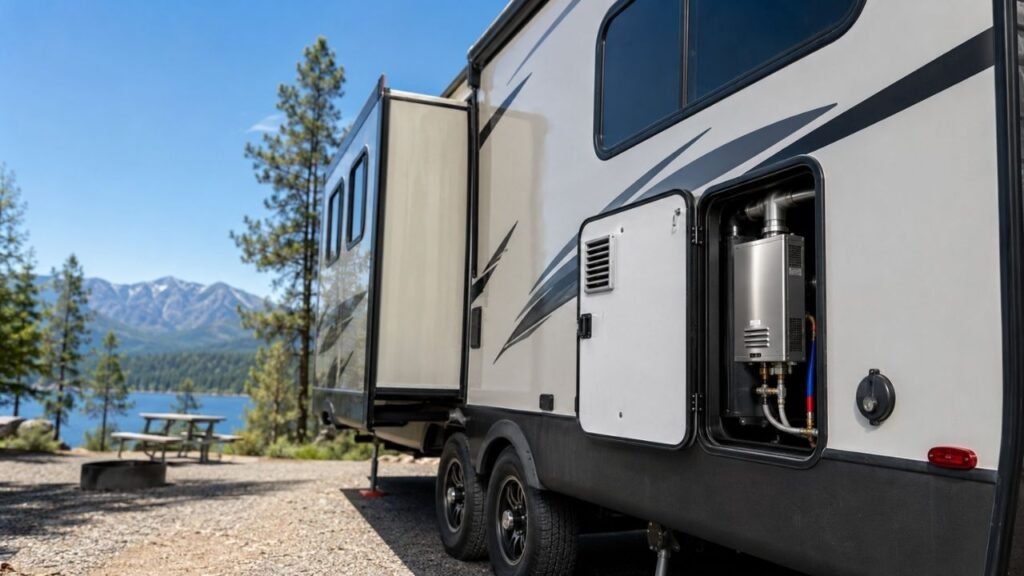
Your RV tankless water heater usually turns hot and cold because water flow through the heater keeps changing or falling below its required operating range. Excessive cold-water mixing, low campground flow, clogged filters, pump cycling, scale buildup, or an unstable propane supply can make the burner shut off and restart.
I’ll help you narrow the problem down step by step. We’ll check water flow first, then the shower, pump, filters, propane supply, and the heater itself.
Key Takeaways
- Low or unstable water flow causes many hot-cold cycling problems.
- Mixing too much cold water can reduce hot-side flow significantly.
- Every RV tankless heater has its own minimum flow requirement.
- A brief cold burst after pausing a shower can be normal.
- Clogged filters, screens, and showerheads can restrict heater flow.
- Water pump cycling can create noticeable temperature changes.
- Mineral buildup can restrict internal passages over time.
- Repeated error codes may indicate a heater or sensor problem.
- Troubleshooting should start outside the heater before opening components.
Why Does My RV Tankless Water Heater Keep Going From Hot to Cold?
A tankless heater only heats water while enough water flows through it. When that flow becomes unstable, burner operation can become unstable too.
When you open a hot-water faucet, a flow sensor detects water movement. The heater then starts its burner and adjusts the flame.
If water flow falls too low, the heater may shut the burner off.
Cold water then moves through the plumbing toward your faucet. When flow increases again, the burner can restart.
That creates the frustrating pattern you feel at the shower:
Hot water, cold water, hot water again, then another cold burst.
The heater itself may still be capable of producing hot water. The real problem is often maintaining steady operating conditions.
The Most Common Reasons an RV Tankless Water Heater Turns Hot and Cold
Several different problems can create almost identical temperature changes. I recommend checking the simple flow-related causes before suspecting an expensive heater failure.
1. Hot-Side Water Flow Is Falling Too Low
Every RV tankless water heater requires a minimum amount of water flow.
That minimum varies significantly between brands and models.
Some heaters can activate at relatively low flow rates. Others need considerably more water before their burner stays running.
If your hot-water demand falls close to that minimum threshold, minor pressure changes can shut the burner down.
You may notice this most often during showers.
Opening the faucet farther may suddenly make the temperature stable again. That is a strong clue that low flow is involved.
Do not assume every RV tankless heater has the same minimum GPM requirement. Check the manual for your exact heater model.
2. You Are Mixing Too Much Cold Water at the Faucet
This is one of the most common RV shower problems.
Imagine your heater is producing very hot water. Naturally, you turn the cold side on to make the shower comfortable.
However, opening more cold water means you need less water from the hot line.
The total shower flow may look perfectly normal to you. The heater only cares about the water actually flowing through its hot-water circuit.
If that hot-side flow drops below its operating threshold, the burner can shut off.
You suddenly get cold water.
Then you open the hot side farther, flow increases, and the heater fires again.
The cycle repeats.
A useful test is lowering the heater’s temperature setting closer to your desired shower temperature. You may then need less cold water.
However, do not assume every RV tankless heater should be operated using hot water only. Some systems are designed differently and allow normal hot-cold mixing.
Follow the operating instructions for your exact model.
3. Your Showerhead or Faucet Is Restricting Water Flow
A showerhead can look perfectly clean while restricting flow internally.
Common restrictions include:
- Mineral deposits inside the showerhead.
- Small low-flow showerhead passages.
- A partially blocked shower hose.
- Debris behind the showerhead screen.
- A clogged faucet aerator.
- A damaged faucet cartridge.
- A pause valve that does not reopen fully.
Try removing the showerhead temporarily and running water through the hose.
If the heater suddenly stays hot, the showerhead or fixture likely needs attention.
This also explains why the kitchen faucet may work perfectly while the shower keeps cycling.
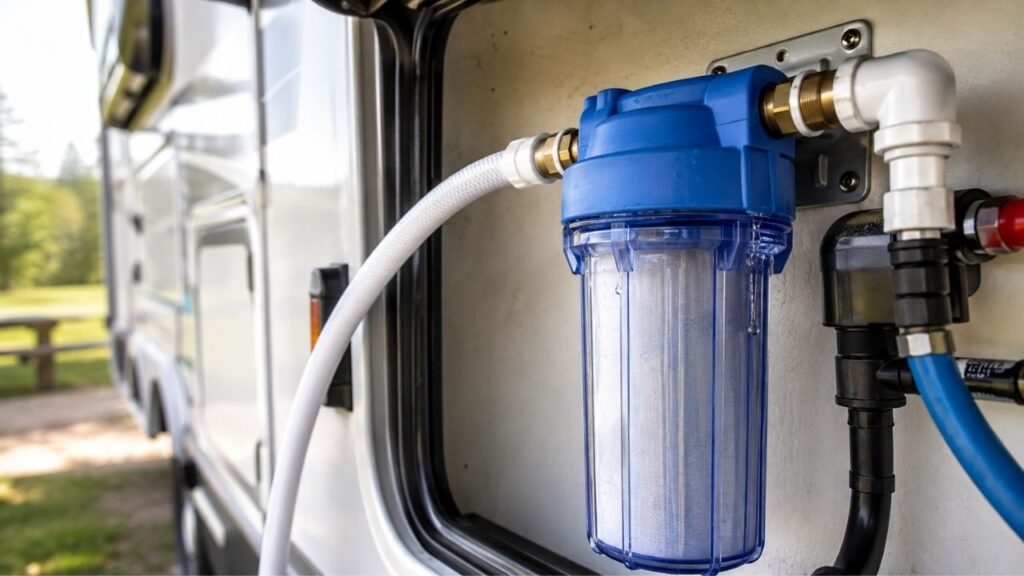
4. The RV Water Filter or Heater Inlet Screen Is Clogged
Your RV water filter protects your plumbing, but it also creates resistance.
A dirty filter creates even more resistance.
The cold faucets may still seem reasonably strong while the heater receives too little consistent flow.
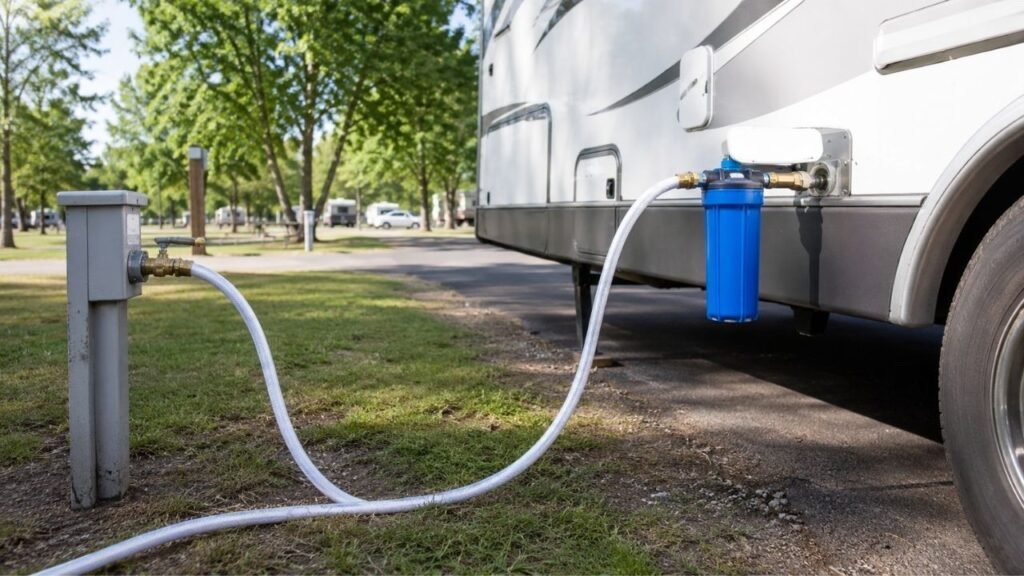
Check any external inline filter or whole-RV filtration system.
You should also inspect the tankless heater’s inlet screen if your manufacturer provides an owner-accessible cleaning procedure.
Sediment commonly collects there.
Never remove internal heater parts simply because you suspect a blockage. Use the procedure listed for your exact model.
5. Campground Water Pressure Is Fluctuating
Campground water supplies are not always consistent.
Pressure can change during busy periods when many RVs use water simultaneously.
Your regulator, hose, filter, and plumbing also influence available flow.
Possible problems include:
- Weak campground water pressure.
- A restrictive pressure regulator.
- A partially opened campground spigot.
- A long drinking-water hose.
- A kinked water hose.
- A clogged inline filter.
- Multiple fixtures being used together.
Remember that pressure and flow are related but different.
Your tankless heater ultimately needs enough steady water moving through it.
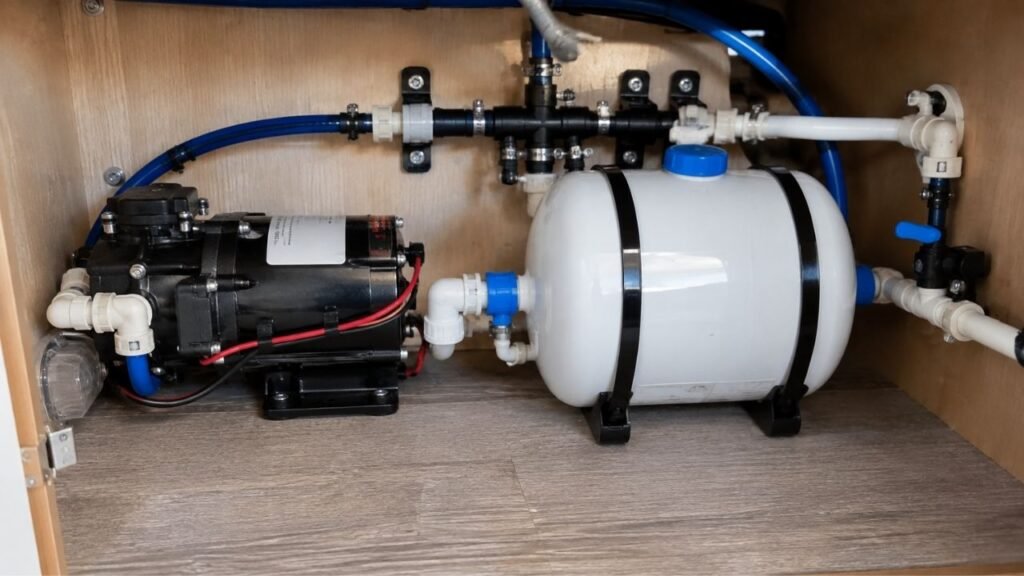
6. Your RV Water Pump Is Cycling
Does the problem happen when using the freshwater tank?
Watch how your water pump behaves.
A pump that repeatedly starts and stops can produce noticeable flow changes.
Those flow changes can affect your tankless heater.
Possible pump-side causes include:
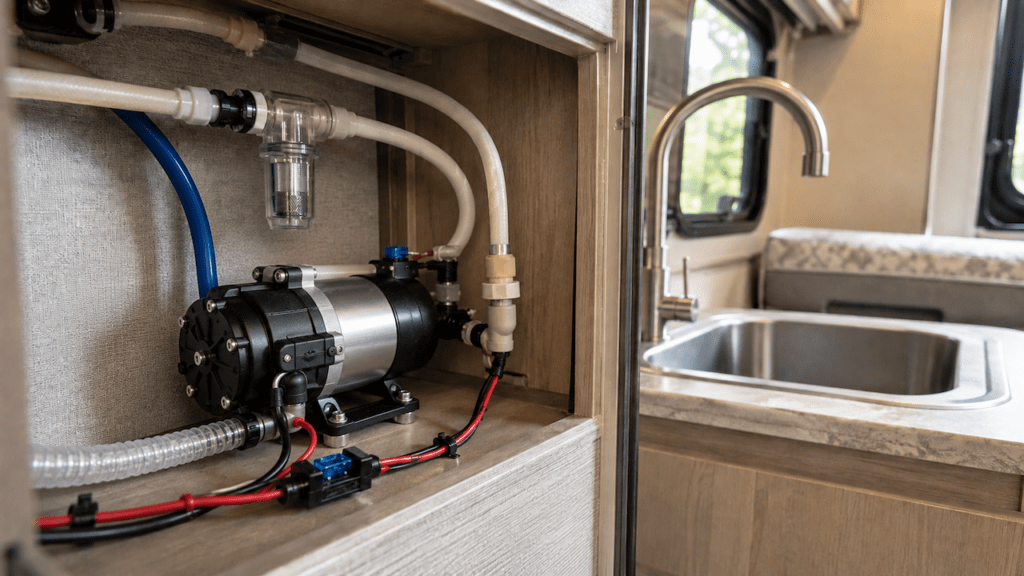
- Clogged pump strainer.
- Low freshwater level.
- Air entering the pump suction line.
- Weak or aging water pump.
- Pressure-switch cycling.
- Plumbing restrictions.
- Accumulator tank problems.
Listen while someone uses the shower.
If the water temperature changes exactly when the pump cycles, you have an important clue.
7. Another Fixture Is Using Water
Tankless heaters perform best when water demand remains predictable.
Someone flushing the toilet or opening another faucet can suddenly change pressure and flow.
Your shower may briefly become colder or hotter.
This is especially noticeable in smaller RV plumbing systems.
Try running only one hot-water fixture.
If temperature becomes stable, simultaneous water use is likely contributing.
Very cold incoming water can make the situation worse.
The heater must add more heat during cold weather. That reduces how much hot water it can deliver at a given temperature.
8. Mineral Scale Is Restricting the Heater
Hard water leaves minerals behind as water moves through heated surfaces.
Those deposits accumulate gradually.
Inside a tankless heater, scale can restrict narrow water passages and reduce heat-transfer efficiency.
That can produce:
- Reduced hot-water flow.
- Longer heating times.
- Temperature fluctuations.
- Overheating faults.
- Burner shutdowns.
- Poor heating performance.
If the problem slowly became worse over several months, mineral buildup deserves attention.
Follow your heater manufacturer’s flushing or descaling procedure.
Do not automatically use vinegar or another chemical without checking the manual. Different manufacturers may specify different methods.
9. Cold Water Is Crossing Into the Hot-Water Line
Sometimes the heater is working correctly, but your RV plumbing is mixing water somewhere else.
This is called a plumbing crossover.
Possible causes include:
- Exterior shower valves left open.
- A faulty faucet cartridge.
- Shower mixing valve problems.
- Incorrect winterization valve positions.
- Water-heater bypass valves.
- Recent plumbing modifications.
One easy clue is where the problem happens.
If one faucet has temperature problems, inspect that fixture first.
If every hot-water outlet behaves badly, investigate the system upstream.
10. Propane Supply Is Unstable
Your tankless heater needs a stable fuel supply.
Low or inconsistent propane delivery can cause the burner to weaken or shut down.
Check simple external items first.
Make sure propane is available and the cylinder valve is fully open.
Problems can also involve:
- Low propane supply.
- Regulator problems.
- Air after changing propane cylinders.
- Ignition problems.
- Flame loss.
- High-altitude combustion limitations.
Do not adjust gas pressure or disassemble propane components yourself.
If gas-pressure testing is required, use a qualified RV technician.
11. Your 12-Volt Power Supply Is Unstable
A propane tankless heater still needs electrical power.
The control board, fan, ignition system, sensors, and valves commonly depend on 12-volt DC power.
Low voltage may cause strange heater behavior.
Check for:
- Low battery voltage.
- Weak electrical connections.
- Corroded terminals.
- Poor grounds.
- Blown or loose fuses.
- Damaged accessible wiring.
If the heater display flickers or resets during operation, electrical supply deserves closer inspection.
12. A Sensor or Internal Component May Be Failing
After external causes are eliminated, the heater itself becomes more suspect.
Possible internal problems include:
- Dirty or faulty flow sensor.
- Inlet temperature sensor failure.
- Outlet temperature sensor failure.
- Flame detection problems.
- Ignition problems.
- Control board faults.
- Fan problems.
- Gas-valve faults.
Look for an error code before assuming which component failed.
Error-code meanings vary between manufacturers.
An E-code on one heater may mean something completely different on another heater.
Always use the troubleshooting chart for your exact model.
Is It a Cold Water Sandwich or Actual Hot-Cold Cycling?
These two problems feel similar, but they are not the same. The timing of the cold water usually tells you which problem you have.
| What You Notice | Likely Explanation | What to Check |
| One cold burst after restarting water | Cold water sandwich | Usually restart delay or cooled plumbing water |
| Repeated hot-cold-hot-cold changes | Unstable heater operation | Flow, mixing, filters, pump, pressure |
| Hot water slowly becomes lukewarm | Heating capacity is being exceeded | Flow rate, inlet temperature, propane |
| Only the shower changes temperature | Local fixture problem | Showerhead, cartridge, hose, mixing |
| Every faucet changes temperature | System-wide problem | Heater, filters, pump, water source |
| Works on city water but not pump | Freshwater-side issue | Pump, strainer, accumulator |
| Works on pump but not city water | Hookup-side issue | Regulator, hose, campground pressure |
| Display shows recurring error | Heater detected a fault | Check exact model manual |
How to Fix an RV Tankless Water Heater That Keeps Turning Cold
Start with these checks in order. This approach prevents you from replacing heater parts when the real problem is simply restricted water flow.
Step 1: Run One Hot-Water Faucet by Itself
Turn every other water fixture off.
Open one hot faucet at a steady flow.
Let it run long enough for the temperature to stabilize.
If the heater stays consistently hot now, another fixture or low-flow condition may be contributing.
Step 2: Lower the Heater Temperature Setting
Your heater may be set hotter than necessary.
That forces you to add more cold water at the faucet.
Lower the heater setting closer to your preferred shower temperature.
Then test again.
If your manufacturer recommends minimizing cold-water mixing, try using mostly hot water during this test.
Step 3: Open the Hot Side Farther
Increase hot-water flow slightly.
Do not immediately add more cold water.
If the burner suddenly stays on and temperature becomes stable, insufficient hot-side flow is probably the problem.
Step 4: Clean the Showerhead and Faucet Aerators
Remove mineral buildup and debris from accessible screens.
Check the shower hose for kinks.
If possible, test the shower without the showerhead.
A dramatic improvement points toward a fixture restriction.
Step 5: Inspect the Heater Inlet Screen
Turn the system off according to your manual.
Inspect the water inlet screen if your heater provides owner access.
Sediment can reduce flow enough to trigger repeated burner shutdowns.
Clean the screen only using the manufacturer’s recommended procedure.
Step 6: Check Your RV Water Filter
A heavily used water filter can reduce flow dramatically.
Consider how long the cartridge has been installed.
Replace it when necessary.
Also inspect the housing and hose connections for restrictions.
If temperature stability improves after correcting the filter restriction, you have found the cause.
Step 7: Compare City Water and Fresh-Tank Operation
This is one of my favorite diagnostic tests because it quickly narrows the problem.
Test the heater using campground water.
Then test it using your onboard freshwater tank and pump.
If the heater fails on both sources, investigate the heater, fixtures, or common plumbing.
If it fails only on the pump, inspect the pump system.
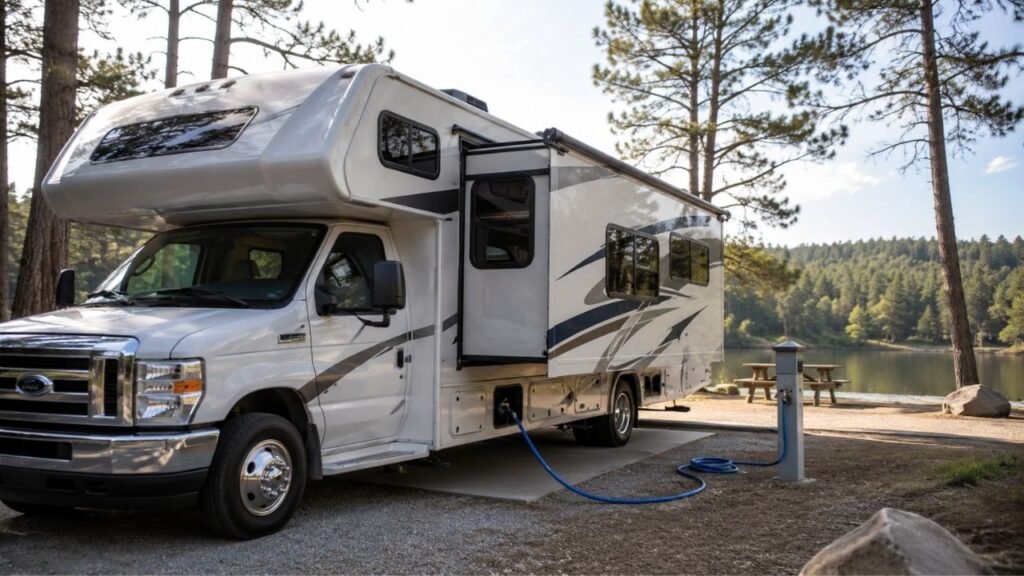
If it fails only on city water, inspect the regulator, hose, filter, and campground supply.
Step 8: Check for a Plumbing Crossover
Inspect your exterior shower first.
Make sure both hot and cold valves are properly closed when not being used.
Then check winterization and bypass valves.
A faulty mixing cartridge can also allow cold water into the hot line.
Step 9: Check Propane and 12-Volt Power
Verify propane is available.
Confirm the heater and controller have stable electrical power.
Do not open gas components.
If the flame repeatedly fails or the heater needs gas-pressure testing, call a technician.
Step 10: Read the Error Code
Write down the complete code before resetting anything.
Also record your heater brand and model number.
Use the correct troubleshooting chart for that heater.
Avoid repeatedly clearing a code that keeps returning.
Recurring errors usually deserve a proper diagnosis.
Step 11: Descale the Heater When Required
If flow has gradually decreased, scale may be restricting the heater.
Follow the recommended service procedure.
Some heaters require dedicated decalcification products or specific flushing steps.
Never assume one descaling method works for every brand.
Step 12: Get Professional Service When Needed
Stop DIY troubleshooting when the job requires opening combustion components.
Gas-pressure measurements, flame adjustments, internal electrical testing, and safety-device repairs belong with qualified technicians.
Why Does My RV Shower Turn Cold When I Add Cold Water?
Your RV shower can turn cold after adding cold water because the amount of water moving through the hot side decreases. If the hot-side flow drops below your heater’s operating threshold, the burner can shut off completely.
This feels backward at first.
You add a little cold water because the shower feels too hot.
Then the entire shower becomes cold.
You open the hot side farther.
The burner restarts and the water becomes hot again.
That cycle can continue throughout the shower.
Try lowering the heater temperature instead of making a very hot heater output comfortable with lots of cold-water mixing.
However, this advice depends on heater design.
Some RV tankless systems are designed for ordinary hot-and-cold mixing.
Always follow the operating instructions for your specific model.
Why Does My RV Tankless Water Heater Go Cold After Pausing the Shower?
A short cold burst after pausing your RV shower is often caused by normal tankless heater restart behavior. Water stops moving when you press the pause button, so the burner shuts down.
When you restart the shower, several things happen.
Hot water already inside the plumbing may reach you first.
Then cooler water that sat inside part of the system arrives.
The heater detects renewed flow and ignites again.
Freshly heated water finally reaches the shower.
That temporary cold section is commonly called a cold water sandwich.
It is different from repeated temperature cycling while water continuously flows.
Keeping the shower running steadily usually reduces this effect.
Does Water Pressure Cause an RV Tankless Water Heater to Turn Hot and Cold?
Water pressure can contribute, but stable flow through the heater matters more. Several parts of your RV water system can reduce that flow before water even reaches the heater.
Common examples include:
- Low campground water pressure.
- A restrictive water-pressure regulator.
- A dirty RV water filter.
- A clogged heater inlet screen.
- A partially closed campground spigot.
- A kinked drinking-water hose.
- A cycling RV water pump.
- A restrictive showerhead.
- Several fixtures being used together.
If water pressure seems fine at first, do not rule out restrictions.
A faucet may feel acceptable while the heater is barely receiving enough flow to remain active.
Does the Temperature Setting Affect Hot-Cold Cycling?
Yes, your temperature setting can sometimes make cycling worse.
Suppose your heater is producing water much hotter than you actually want.
You naturally add lots of cold water at the shower.
That reduces demand from the hot line.
If hot-side flow becomes too low, some heaters stop firing.
Setting the heater closer to your preferred usable temperature can reduce how much cold water you need.
That often helps maintain steadier hot-side flow.
Do not set the temperature excessively high.
Very hot water creates a scalding risk, especially when temperature control is already unstable.
How Minimum Flow Rate Differs Between RV Tankless Water Heaters
There is no universal minimum flow rate for every RV tankless heater. Manufacturers use different sensors, burners, controls, and operating strategies.
| Example Heater Type | Approximate Published Operating Flow | Why It Matters |
| Some Furrion RV tankless models | Around 0.32 GPM | Small restrictions may affect burner operation near minimum flow |
| Truma AquaGo | Around 0.4 GPM | Heater requires sufficient flow before heating begins |
| Girard GSWH-2 | Around 0.80 GPM | Requires more flow than some competing heater designs |
These numbers are examples rather than universal specifications.
Always check the manual for your exact model and revision.
This is especially important before buying a low-flow showerhead or changing your water system.
Why Does the Problem Happen Only on City Water or Only on the RV Pump?
Comparing both water sources can save you considerable troubleshooting time. If one source works correctly and the other does not, focus on components unique to the failing side.
Hot and Cold Only on City Water
If the heater works correctly using your water pump, inspect the campground connection.
Look for:
- Low campground pressure.
- Restrictive pressure regulator.
- Dirty inline filter.
- Kinked hose.
- Long hose runs.
- Partially opened spigot.
Try another campground spigot if one is available.
If the problem changes with the water source, the heater may be perfectly healthy.
Hot and Cold Only When Using the Freshwater Tank
Focus on your pump system.
Check the freshwater level first.
Then inspect the pump strainer and listen for unusual cycling.
Look for air entering the pump suction line.
If your RV uses an accumulator tank, make sure it is operating according to its specifications.
Hot and Cold on Both Water Sources
Now look for components shared by both systems.
That includes:
- Showerhead.
- Faucet cartridge.
- Water-heater inlet screen.
- Plumbing crossover.
- Mineral scale.
- Flow sensor.
- Propane supply.
- Electrical supply.
- Internal heater problems.
This comparison helps you avoid guessing.
Why Does Only My RV Shower Go Hot and Cold?
If sinks stay consistently hot but the shower changes temperature, start troubleshooting at the shower. A heater problem would usually affect more than one hot-water fixture.
Check these items first:
- Clogged showerhead holes.
- Low-flow showerhead restrictions.
- Mineral buildup.
- Kinked shower hose.
- Damaged faucet cartridge.
- Pressure-balancing valve problems.
- Excessive cold-water mixing.
- Pause valve not reopening fully.
Remove the showerhead and test flow directly through the hose.
If the heater becomes stable, you probably found the restriction.
When Mineral Buildup Is Probably Causing the Temperature Changes
Scale usually develops gradually rather than causing problems overnight. Look for several symptoms appearing together before assuming descaling will solve everything.
Possible signs include:
- Hot-water flow has slowly decreased.
- Temperature problems became worse over time.
- Your RV frequently uses hard campground water.
- Several hot-water fixtures are affected.
- Inlet screens collect mineral debris.
- Heating performance is weaker than before.
- Overtemperature faults appear repeatedly.
Follow the maintenance instructions for your heater.
Regular descaling can help prevent restricted passages and poor heat transfer.
When Hot-Cold Cycling Is Normal and When It Is Not
Not every temperature change means your heater is broken. The pattern usually tells you whether normal tankless behavior or a real problem is involved.
| Behavior | Usually Normal? | What It Suggests |
| Brief cool water during startup | Often | Travel time through plumbing |
| One cold burst after pausing | Often | Cold water sandwich |
| Constant hot-cold cycling | No | Flow or heater problem |
| Burner repeatedly starts and stops | No | Unstable or insufficient flow |
| Recurring error code | No | Model-specific fault |
| Water suddenly becomes dangerously hot | No | Stop use and investigate |
| Temperature changes when another faucet opens | Sometimes | System demand or pressure change |
When Should You Call an RV Technician?
Basic water-flow checks are usually safe for RV owners. Internal gas, combustion, and safety-control repairs are different.
Get professional help when:
- You smell propane.
- The heater repeatedly fails to ignite.
- Gas-pressure testing is required.
- Burner components need inspection.
- An overheating code repeatedly returns.
- Wiring appears burned or damaged.
- The heat exchanger leaks.
- Sensor errors continue after basic checks.
- The heater shuts down despite confirmed good flow.
- Internal safety devices need testing.
- Manufacturer procedures require opening gas components.
Never bypass a safety switch to keep the heater running.
Those switches exist to protect the heater and your RV.
How to Prevent Your RV Tankless Water Heater From Cycling Hot and Cold
A little preventive maintenance can keep water flow much more consistent. Most of these checks are simple and fit naturally into routine RV maintenance.
- Keep hot-water flow reasonably steady.
- Learn how your specific heater should be operated.
- Avoid unnecessarily high temperature settings.
- Clean faucet aerators periodically.
- Keep the showerhead free from mineral buildup.
- Replace clogged RV water filters.
- Clean accessible heater inlet screens.
- Maintain your pump strainer.
- Inspect hoses for kinks and restrictions.
- Use an appropriate RV water-pressure regulator.
- Descale according to manufacturer recommendations.
- Purge air after plumbing repairs or winterization.
- Keep exterior heater openings clear.
- Record recurring heater error codes.
You do not need to obsess over every component.
Just pay attention when water flow begins changing from its normal behavior.
Final Verdict
When an RV tankless water heater repeatedly turns hot and cold, I would investigate water flow before blaming the heater itself. Excessive cold-water mixing, clogged filters, restrictive showerheads, campground pressure changes, and pump cycling are much more common than complete heater failure.
Start by running one hot fixture steadily. Then compare city water with the onboard pump, remove obvious restrictions, and check your heater’s exact flow requirements. If good flow is confirmed but burner shutdowns continue, move on to propane, electrical, sensor, and internal heater diagnostics.
Related FAQs
Why Does My RV Tankless Water Heater Get Hot Then Suddenly Cold?
The hot-side water flow may be dropping below the heater’s minimum operating level. A clogged showerhead, cold-water mixing, dirty filter, weak water supply, or cycling pump can cause the burner to shut down.
Why Does My RV Tankless Water Heater Shut Off During a Shower?
Your heater may shut off when shower flow becomes too low or unstable. Check the showerhead, hot-water flow, filters, campground supply, pump behavior, and any error code displayed by the heater.
Should I Mix Hot and Cold Water With an RV Tankless Water Heater?
It depends on the heater design. Excessive cold mixing can reduce hot-side flow enough to shut some heaters down, while other models are designed for normal hot-and-cold mixing. Follow your heater’s manual.
Why Does My RV Tankless Water Heater Work Better With the Faucet Fully Open?
Opening the faucet farther increases water flow through the heater. If the heater becomes stable at higher flow, your normal faucet setting may be too close to the heater’s minimum activation threshold.
Can Low Campground Water Pressure Affect a Tankless Water Heater?
Yes. Low campground pressure can reduce available flow through your heater, especially when combined with a restrictive regulator, clogged filter, long hose, or simultaneous water use inside the RV.
Can an RV Water Filter Make My Tankless Heater Turn Cold?
Yes. A clogged water filter can restrict flow enough to make the heater cycle off. Replace an overdue filter and inspect other restrictions if hot-water flow has noticeably decreased.
Why Does My Tankless Heater Go Cold When I Pause the Shower?
Pausing stops water flow and shuts the burner down. When you restart, cooler water sitting in the plumbing can reach the shower before newly heated water arrives, creating a brief cold water sandwich.
Can an RV Water Pump Cause Hot and Cold Water Fluctuations?
Yes. A pump that cycles frequently or produces uneven flow can affect tankless heater operation. Check the pump strainer, freshwater level, suction plumbing, pressure switch, and accumulator tank if equipped.
How Do I Know if My Tankless Water Heater Has Enough Flow?
Open one hot-water faucet steadily and watch whether the burner remains active. If temperature becomes stable only when the faucet is opened farther, low flow is a strong possibility.
Can Hard Water Cause an RV Tankless Water Heater to Cycle?
Yes. Hard-water scale can restrict internal passages and reduce heat-transfer efficiency. Over time, this may lower water flow, cause temperature fluctuations, and contribute to overheating or shutdown faults.
Why Does Only My RV Shower Fluctuate While the Sinks Stay Hot?
The problem is probably near the shower rather than the heater. Check the showerhead, hose, faucet cartridge, mixing valve, pause valve, and any low-flow restrictions before troubleshooting the heater itself.
Why Does My RV Tankless Water Heater Work on City Water but Not the Pump?
If city water works normally, inspect the freshwater system. A clogged pump strainer, weak pump, low tank level, suction leak, or accumulator problem can cause inadequate or unstable flow.
Why Does My RV Tankless Water Heater Work on the Pump but Not Campground Water?
The campground side may have weak pressure or excessive restrictions. Check the spigot, pressure regulator, drinking-water hose, water filter, and campground supply before assuming your heater has failed.
Can Low Propane Make an RV Tankless Water Heater Turn Hot and Cold?
Yes. An unstable propane supply can cause weak combustion, flame loss, or shutdowns. Check that propane is available, then have the regulator and gas pressure professionally tested if ignition problems continue.
How Often Should an RV Tankless Water Heater Be Descaled?
There is no single descaling interval for every RV tankless heater. Water hardness and heater design matter, so follow the maintenance schedule and cleaning procedure listed by your heater manufacturer.

Steven Parker writes about everyday RV life, from setup tips to long-term living decisions. His content reflects a calm, experienced approach to RV ownership and travel. He focuses on comfort, reliability, and realistic expectations.